
Review · RHODES
Private Tour: Discover the Secret World of Olives in Afantou
Olive oil tastes better with a sea view. This three-hour private tour in Afantou gives you a close look at Rhodes farming traditions, from 150 olive trees and local herbs to hands-on recipes you can repeat at home. I like the small private setting, where your group gets direct attention, and I like the unusual Olive Arboretum, said to be the only one in Greece. The main consideration is timing: the tour begins at 4:00 pm and takes place outdoors, so poor weather can affect the visit.
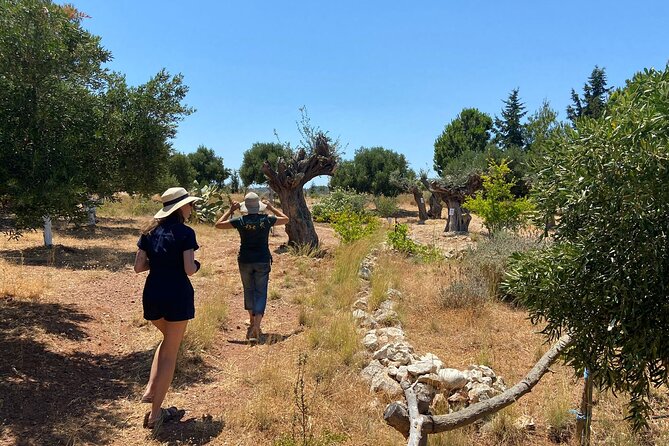
You begin with a welcoming drink on the farm terrace, then walk through the olive grove before meeting the farm animals. Guide Emma has been praised for showing the farm with care and making the workshop the highlight. You will learn about olive varieties, harvesting in Rhodes, and how to use oil well, not simply taste it.
This is not a polished food show in a city restaurant. It is a working farm with dogs, cats, donkeys, chickens, ducks, bees, butterflies, fruit trees, flowers, and herbs. Wear casual clothes and expect a little country dust. If you want a private introduction to Greek olive culture with something practical to take home, this is a strong choice. If you want a long list of sightseeing stops or a formal museum visit, it may feel too focused.
Key points to know before booking
- A private three-hour farm visit: Only your group takes part, making it easier to ask questions and set your own pace within the planned visit.
- A rare Olive Arboretum: The farm has 150 olive trees and explains an Olive Arboretum project described as the only one in Greece.
- Hands-on food preparation: You help prepare olive delicacies and another recipe using olive oil, with the recipes sent to you afterward.
- A terrace with a sea view: The welcoming drink begins the visit in a relaxed setting before you walk into the grove.
- A real working farm: Donkeys, chickens, ducks, dogs, cats, bees, butterflies, herbs, flowers, and fruit trees are part of the setting.
- Seasonal olive preparation: From mid-September through the end of November, the program includes preparing olives.
Arriving at the Afantou olive farm
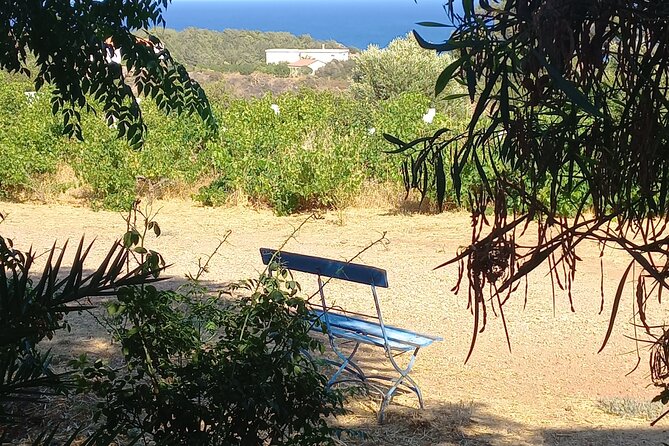
The meeting point is at 853F+R7X, Afantou 851 03, Greece. The tour ends back at the same place, which keeps the plan simple. You can arrive by car and use the free parking in front of the gate, or make use of nearby public transportation.
The setting matters here. You are not being taken from one attraction to another. You arrive at a farm and spend the full visit getting to know one place. That gives the tour a calm rhythm, but it also means you should arrive ready for outdoor conditions and uneven farm surroundings.
The start time is 4:00 pm. That late afternoon schedule can work well if you have spent the earlier part of the day at the beach or visiting Rhodes Town. It also places your terrace welcome and grove walk later in the day, when the heat may be less intense than at midday. The exact comfort of the outdoor portions will depend on the weather.
Wear casual clothing and practical shoes. The farm includes animals and natural areas, so this is not the place for formal clothes or footwear you want to keep spotless. You may also encounter bees and other farm life, which is part of the setting rather than an added attraction.
More Olive Oil Tours around Greece:
- Crete: Quad Safari, Olive Mill with Tasting & Ghost Village
★ 4.9 · 1,004 reviews - Knossos-Zeus Cave -Old Traditional Villages-Olive Oil Factory
★ 5.0 · 694 reviews - The Governor’s Olive Mill Tour with Olive Oil Tasting
★ 5.0 · 502 reviews
A sea-view welcome on the terrace
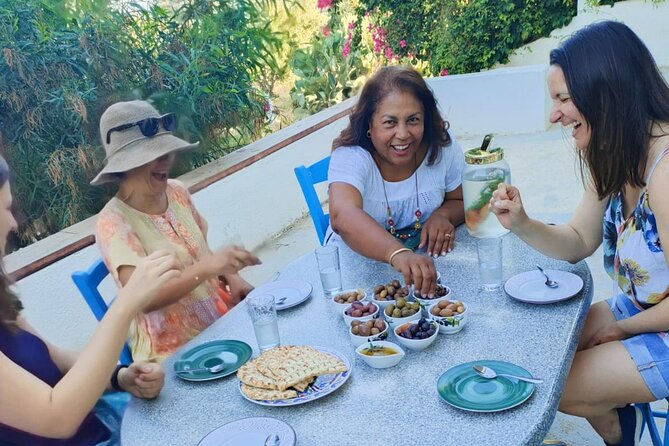
The visit starts with a welcoming drink on the terrace. The sea view gives you an immediate sense of place, and it provides a gentle introduction before the more informative part of the tour begins.
I like this opening because it lets you settle in instead of starting with a fast list of facts. Olive oil is closely tied to food, family, farming, and landscape in Greece, so beginning with a drink and a view helps connect the subject to daily life.
The terrace is also where you can get comfortable with your guide and ask what interests you most. Since the outing is private, you are not sharing the time with a large group. That can make a real difference if you want more explanation about farming, cooking, olive varieties, or the farm’s animals.
Do not expect a formal tasting room with a long row of products. The appeal is more personal and farm-based. You are visiting the source, seeing the trees, and learning how olive oil fits into local food traditions.
Walking among 150 olive trees
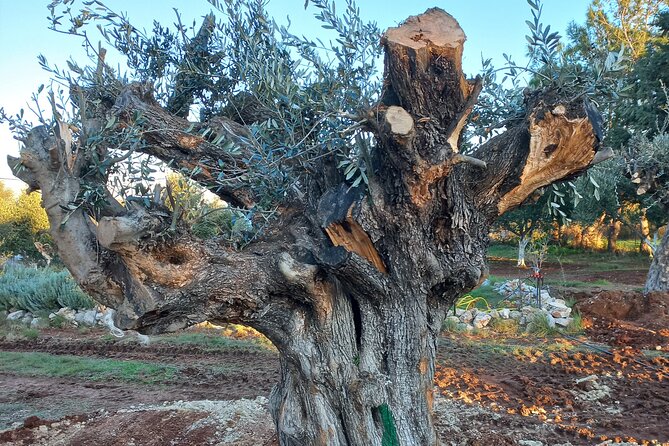
The grove is the heart of the visit. You will see about 150 olive trees and hear how different varieties of trees and olives vary. The tour also covers the history of olive harvesting in Rhodes and the process of making olive oil.
This part should appeal to you if you have ever wondered why olive oils taste different or why producers care about the type of tree, harvest timing, and handling. The tour promises practical information rather than a purely scenic walk. You learn how the crop moves from tree to oil, and you receive advice on how to use the finished product.
The farm’s Olive Arboretum project adds an unusual angle. An arboretum is a collection that allows different trees to be observed and compared. Here, the project is presented as the only Olive Arboretum in Greece. That makes the grove more than a collection of ordinary farm trees. It becomes a living place for learning about olive varieties.
The description does not give a detailed list of every variety or a formal technical tasting format, so you should not book this expecting a specialist certification course. You will, however, get an accessible introduction to trees, olives, harvest traditions, and oil production in a real farm setting.
Herbs, flowers, fruit trees, and farm animals
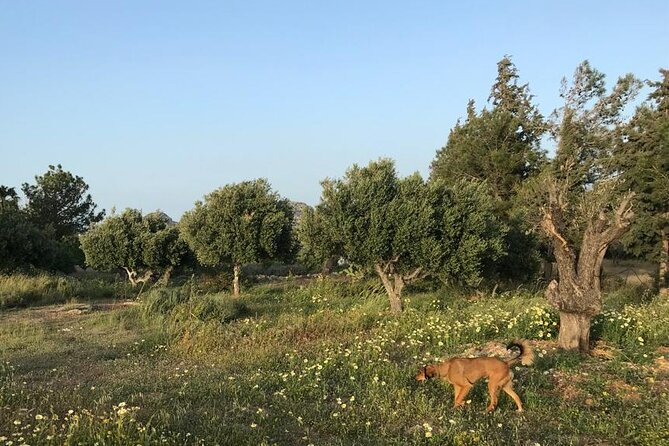
The olive grove is only one part of the property. You will also learn about local herbs and flowers, and see many other fruit trees. The farm is home to donkeys, dogs, cats, chickens, ducks, bees, and butterflies.
For me, this broadens the visit in a useful way. Olive farming does not happen in isolation. A small farm includes plants, animals, insects, shade, food, and seasonal work. The variety gives children and mixed-age groups more to notice, while adults can focus on the farming and cooking side.
The animals are part of the normal farm environment, not a separate animal show. You should come prepared for a natural setting where donkeys may be nearby and chickens or ducks may move around. If you enjoy tidy, highly controlled attractions, this may feel informal. If you like seeing how a small farm functions, it adds character.
The mention of bees and butterflies is also a reminder to dress sensibly and pay attention outdoors. The tour does not promise special animal handling, so keep your expectations reasonable. You are visiting a farm, not signing up for a petting zoo.
Same groves, a different afternoon:
- From Chania: Olive Oil, Wine, Cheese & Honey Tasting Tour
★ 4.6 · 490 reviews - Crete: Road-trip to Lasithi, Zeus Cave & Olive Mill Farm
★ 4.4 · 451 reviews - Heraklion: Olive Farm Tour with Tasting of Local Delicacies
★ 4.9 · 411 reviews - Lassithi, Zeus Cave, Olive Mill Farm & Knossos Combo Tour
★ 4.6 · 404 reviews
Learning how Rhodes harvests olives
The guide explains the history of olive harvesting in Rhodes and how olive oil is made. This local focus gives the tour more value than a general food demonstration because you are learning how one island’s traditions connect to the crop.
You will hear about the varieties of olive trees and olives, then move toward the finished oil. The guide also offers tips on using olive oil at home. That practical part is easy to overlook, but it may be the most useful after you return from Rhodes.
Many food experiences end when the tasting ends. This one aims to help you understand what to do with the oil afterward. You may come away with a better sense of how to use it in cooking and how to think about quality when buying or tasting olive oil.
You also receive an introduction to what happens at an olive oil exhibition or contest. That suggests a more careful look at judging and presentation, though the available information does not specify a full competition lesson. Think of it as useful background rather than professional training.
A workshop built around olive delicacies
The hands-on workshop is likely to be the most memorable part for many people. You will prepare olive delicacies together, then make another recipe using olive oil.
This changes the mood from listening to doing. You are not simply watching someone demonstrate a dish from a distance. You take part in preparing food, which makes the farming and oil-making information easier to remember.
The recipes are sent to you after the visit. That is a real benefit at this price because the experience does not end when you leave the farm. You can try the dishes at home and recreate part of the afternoon in your own kitchen.
The program also includes preparing olives from mid-September through the end of November. If your visit falls during that period, you get a seasonal activity that may not be available at other times of year. Outside that window, you should expect the olive delicacy and olive oil recipe workshop, but not necessarily the fresh olive preparation.
The exact recipes are not listed, so you should not plan around a specific dish. The stronger reason to book is the format: local ingredients, direct participation, and instructions you can use later.
What the private format adds
The activity is private, so only your group takes part. That is especially useful for a workshop. You can ask questions without waiting for a large group to finish, and the guide can explain the farm in a way that suits your interests.
A private format may be worthwhile if you are traveling as a couple, family, or small group with different levels of interest. One person can ask about cooking, another about trees, and someone else can focus on animals or local farming.
The tradeoff is that the visit stays centered on your group and this farm. You are not joining a larger social food tour or meeting a wide mix of people. I would choose it for attention and flexibility, not for a busy group atmosphere.
The strong praise for Emma is worth noting. She has been described as showing the small farm thoroughly and making the workshop especially enjoyable. That points to a host-led experience where the personality and care of the guide matter as much as the subject itself.
Is $62.48 a fair price?
At $62.48 per person, the cost is reasonable if you value a private activity with several parts: a welcome drink, terrace time, a guided farm walk, olive education, animal and garden viewing, food preparation, recipes to take home, and souvenirs.
The value improves for a small group because you are not paying only for a short tasting. You are reserving roughly three hours with a private guide and a hands-on workshop. The recipes and souvenirs also give you something lasting beyond the afternoon.
You should compare it with your own interests. If you only want to taste olive oil, the price may feel high for that single purpose. If you want a local food activity with a farm visit, practical instruction, and a private setting, the cost makes more sense.
The farm also offers a type of access that a standard shop tasting cannot. You see the trees, hear about the harvest, meet the animals, and learn how the oil fits into the farm’s wider life. That personal setting is the main reason to pay for this experience.
Who will enjoy this Afantou experience?
I would recommend it to couples, families, food lovers, and anyone curious about Greek agriculture. It should also suit people who prefer a slower activity with conversation rather than a packed sightseeing schedule.
The private format can work well for families because the property includes animals, flowers, herbs, and a workshop. Most people can participate, according to the activity information, but you should still be comfortable spending time outdoors on a farm.
It is less suited to you if you want a major archaeological visit, a city walk, or a full-day tour packed with landmarks. The experience has one clear subject: olives and the farm life around them.
It may also be less appealing if you dislike animals, insects, casual clothing, or outdoor settings. The farm includes bees, butterflies, dogs, cats, donkeys, chickens, and ducks. Those details are part of the charm, but they are also part of what you should expect.
Timing, weather, and cancellation
The tour begins at 4:00 pm and lasts about three hours. Since the activity requires good weather, check the forecast before you go and keep your plans flexible if conditions look poor.
You can cancel up to 24 hours before the start time for a full refund. Changes or cancellations made less than 24 hours before the start time are not accepted for a refund. The cut-off uses local time in Rhodes.
If bad weather causes the farm to cancel, you will be offered another date or a full refund. This policy is worth remembering because much of the visit takes place outdoors.
Souvenirs and the value after the visit
The experience ends back at the meeting point, where you receive souvenirs. The exact souvenirs are not specified, so I would treat them as a pleasant extra rather than the reason to book.
The more important takeaway is the set of recipes sent to you after the tour. Those instructions let you continue the food side of the visit at home. Along with your new understanding of olive varieties, harvesting, and oil use, they give the outing a useful afterlife.
I like that the experience combines something to see, something to learn, and something to make. You are not just collecting another photo from Rhodes. You are gaining a small piece of local food knowledge that can return to your kitchen.
Should you book the private olive tour in Afantou?
Book it if you want a personal, farm-based look at Rhodes olive culture. The sea-view welcome, 150-tree grove, unusual Olive Arboretum project, animals, seasonal work, and hands-on recipes create a full three-hour experience rather than a quick tasting.
I would give it extra weight if you are traveling with a small group and prefer direct attention. Emma’s warm, hands-on approach has been singled out as a strong part of the visit, and the private format gives the workshop room to work well.
Skip it if you want a formal museum, an intensive professional olive-oil course, or a busy sightseeing route. For everyone else, especially people who enjoy food, farming, and a relaxed afternoon outdoors, $62.48 is a fair price for a personal Rhodes experience with useful takeaways.
FAQ
Where does the tour begin?
The tour begins at 853F+R7X, Afantou 851 03, Greece.
What time does the experience start?
The tour starts at 4:00 pm.
How long does the tour last?
The experience lasts approximately three hours.
Does the tour end at the same place?
Yes. The activity ends back at the meeting point.
Is the tour private?
Yes. Only your group participates in the activity.
Is parking available?
Yes. Free parking is available in front of the farm gate.
Is public transportation nearby?
Yes. The meeting point is near public transportation.
What should I wear?
Wear casual clothes suitable for a farm setting. The property has animals, plants, insects, and outdoor areas.
Are recipes provided after the workshop?
Yes. The recipes prepared during the experience are sent to you so you can continue the activity at home.
Can the tour be canceled because of weather?
Yes. The experience requires good weather. If it is canceled because of poor conditions, you will be offered a different date or a full refund.
Just added around Greece
- Athens: Greek Wine & Olive Oil Tasting at Brettos Plaka★ 4.5 · 3 reviews
- Breakfast in the markets with olive oil and honey tasting★ 4.8 · 8 reviews
- PRIVATE RHODES TOUR + Lunch Stop & WINE/OLIVE OIL Tasting★ 5.0 · 2 reviews
- Olive Tour & Tasting★ 5.0 · 4 reviews
- Olive Facility Visit with Olive Oil Tasting Session★ 5.0 · 2 reviews
- SYSTASIS Olive Oil Tasting Experience in Ermioni Greece★ 5.0 · 4 reviews
- Olive Oil Tour close to Nafplio★ 4.5 · 3 reviews
- Olive Oil Tasting at the Mykonian Farm★ 4.5 · 3 reviews
Rhodes Olive Oil Tours, compared.
Butterfly Valley & Wine, Olive Oil, Honey Tasting Tour (Small Group)
Read our review →
1 Day Rhodes Island Tour including Lindos and Medieval City
Read our review →
Island Round Tour With Wine Olive Oil, Honey Tasting
Read our review →
Browse the lists this tour appears in