
Review · APULIA
Ostuni: Olive Oil Tasting Tour
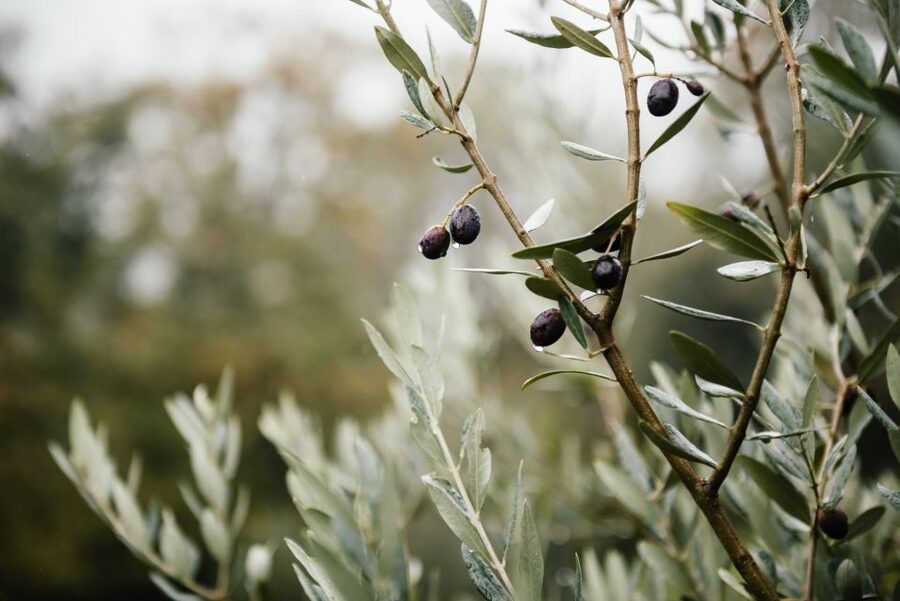
Ancient trees make this tasting special. At Masseria Valente, you walk among olive trees said to be more than 2,000 years old, then visit old underground and above-ground oil mills before tasting three organic oils. I especially like the quiet farm setting and the way the tour connects food with Puglia’s past. The main drawback is timing: it is advertised as one hour, while the full visit can run closer to 1.5 hours, and one account found the tour too quick for the price.
I also like that this is more than a table tasting. You see the 16th-century hypogeum mill, the 19th-century epigean mill, and the trees that shaped rural life around Ostuni. The price is $53 per person, which feels fair if you value the history and setting, but less convincing if you only want a few spoonfuls of oil.
Key points at a glance
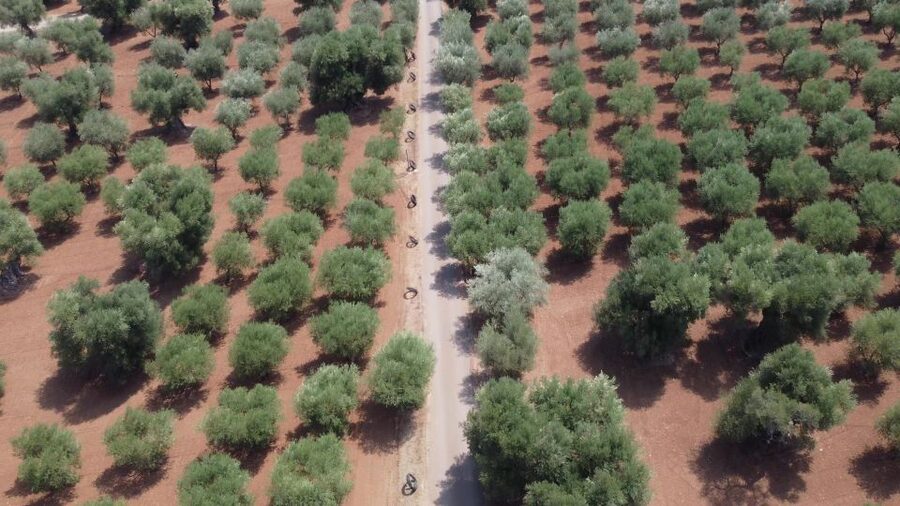
- Trees with a remarkable age: Walk among young, mature, millenary, and possibly 2,000-year-old olive trees.
- Two very different oil mills: See the underground 16th-century press rooms and the later 19th-century mill above ground.
- Three organic oils: Taste different oils with olives, tarallini, and fried broad beans.
- A real Masseria setting: The visit takes place at Masseria Valente, a traditional farm complex with a café and hotel on site.
- Strong guiding overall: Angela, Carla, Maria, and other guides have been praised for clear, friendly explanations, though English ability may vary.
- Bring your own transport plan: Transfers are not included, so you must reach Masseria Valente independently.
Why ancient olive trees are the main event

The oil tasting is appealing, but the grove gives this experience its character. You do not simply sit indoors and sample a local product. You first walk among trees of different ages, including ancient specimens that have survived for centuries.
Some trees are said to have been planted more than 2,000 years ago by veterans of the Punic Wars. That is a striking claim, and the tour presents it as part of the area’s long agricultural story. Even without treating every date as certain, the sight of these huge, twisted trunks makes the point. Olive farming in Puglia is not a recent food trend. It is an old way of life written into the countryside.
I would allow time to look closely at the trees rather than treating the walk as a quick route to the tasting room. The old trunks make good photographs, and several people have particularly enjoyed the peaceful grounds and the chance to see the grove up close.
The contrast between young and ancient trees is useful, too. It helps you understand that olive farming continues across generations. You see trees that are still growing beside trees that have been producing olives for an extraordinary length of time.
More Olive Oil Tours around Italy:
- Sorrento Farm and Food Experience including Olive Oil, Limoncello, Wine tasting
★ 5.0 · 2,524 reviews - Olive oil tasting in Sorrento
★ 5.0 · 434 reviews - Sorrento: Lemon, Olive Oil and Wine Tasting Tour with Lunch
★ 5.0 · 300 reviews
Masseria Valente gives the tour its sense of place
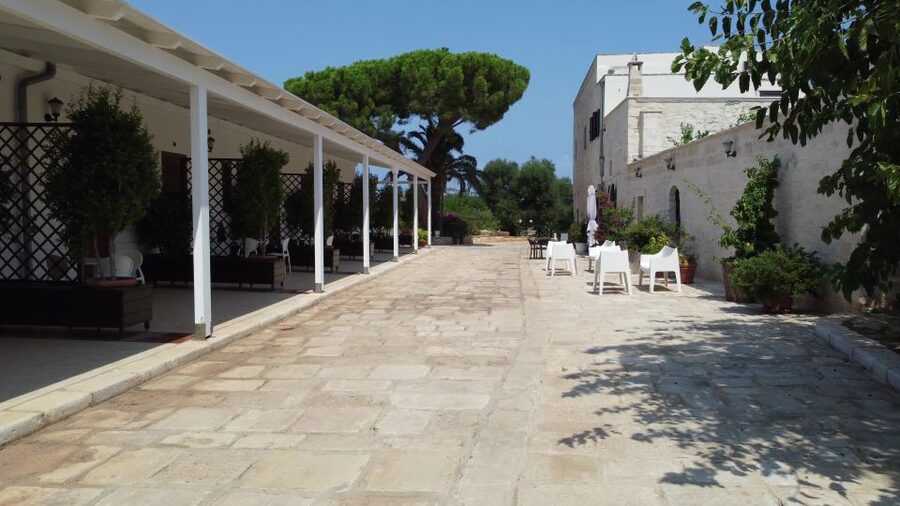
Masseria Valente is not just a meeting point. It is a traditional farm complex, and that matters because the setting links the food to the work that produces it. The visit takes place in a real rural property rather than a generic tasting room.
The farm also has a café and hotel on site. That gives you the option of extending your visit with food or drinks after the guided portion. One person added appetizers and wine in the dining room, while another had lunch after the tour. The oil experience itself includes only the tasting, so any extra meal is separate.
The setting has been praised for its beauty and calm. If you have been spending your time in Ostuni’s whitewashed streets, a short visit to the countryside gives you a useful change of pace. You trade stone lanes and town views for olive groves, old farm buildings, and the scent of oil and earth.
You should not expect a full farm day. The main activity is a compact guided visit, not a long agricultural workshop. Still, the property adds atmosphere and gives the tour more substance than a shop counter tasting.
The underground mill shows how oil was once made
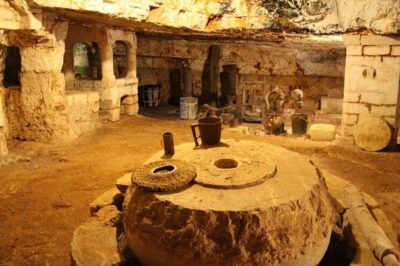
The hypogeum oil mill is the most unusual historical stop. It dates to the 16th century and was built underground. You walk through the old processing area and learn how olive oil was produced before modern equipment changed the work.
An underground mill is valuable because it shows the physical demands of older oil production. The rooms and equipment help you picture olives being brought in, crushed, and pressed with methods that were slower and more laborious than those used today.
The old processing floor has made a strong impression on visitors, and that is easy to understand. It is not polished history presented behind glass. It is a working space from an earlier period, cut into the farm itself.
The guide explains how oil was used in ancient times and compares older methods with more modern production. That context turns a short walk through the mill into something you can remember. You begin to see olive oil not just as a kitchen ingredient, but as an important product in everyday life, trade, and rural work.
Be prepared for the underground section to be the most atmospheric part of the tour. If you prefer machinery, food, or local history, this stop gives you something different from the grove and tasting.
The 19th-century epigean mill adds the modern comparison
After the hypogeum mill, you visit the 19th-century epigean mill. Unlike the underground press room, this mill is above ground. Seeing both spaces helps you follow the change from older production methods to later equipment.
That comparison is one of the best reasons to choose this tour. A tasting alone can tell you what the oil tastes like. The two mills explain how the product moved from tree to bottle and how that process changed over time.
The exact equipment demonstration can depend on the guide and the day. During the olive harvest, you might also see harvesting activity at close range. This is seasonal, so it should not be treated as guaranteed, but autumn can add a useful working-farm element.
A guide has to explain the mills well for this section to work. Most accounts describe the explanations as clear, friendly, and interesting. Angela, Carla, and Maria have all been singled out for warm and informed guiding. One English-speaking visitor found that a guide did not explain the Masseria’s workings well or understand questions easily. That appears to be the exception, but it is a fair point to keep in mind if detailed English discussion is important to you.
Same groves, a different afternoon:
- Alghero: Wine and Olive Oil Tasting at a Local Farm
★ 4.8 · 294 reviews - Ostuni: Masseria tour among thousand-year-old olive trees with oil tasting
★ 4.8 · 261 reviews - Balestrate: Olive Grove Tour with Wines & Olive Oil Tasting
★ 5.0 · 241 reviews - Bardolino: Vineyard Tour with Wine, Olive Oil & Food Tasting
★ 4.6 · 221 reviews
Tasting three oils with simple Puglian snacks
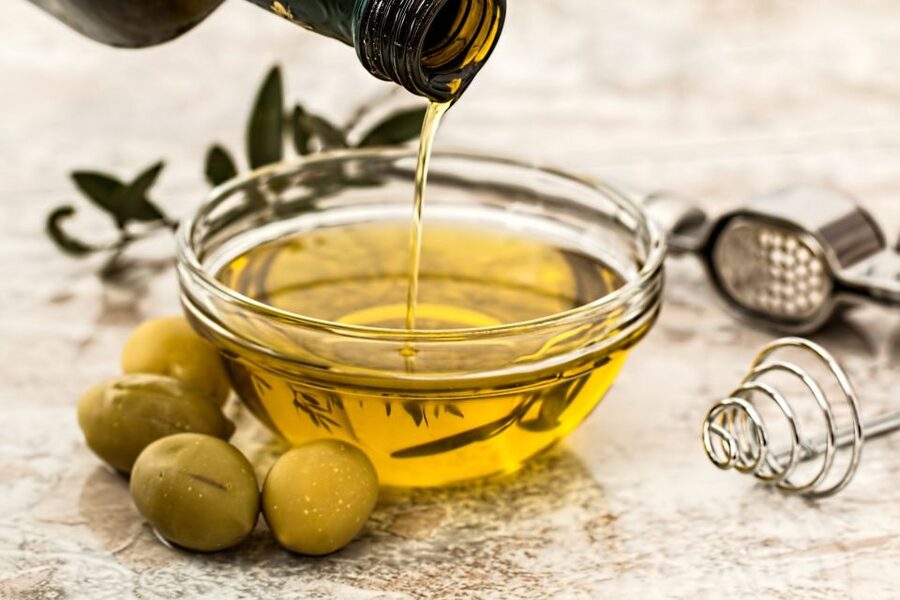
The tasting includes three organic olive oils, served with olives, tarallini, and fried broad beans. These are simple local foods, and that is a strength. The snacks give you something to eat alongside the oil without turning the session into a large meal.
The three oils let you compare flavor and style. You can focus on differences in aroma, bitterness, pepperiness, and freshness as the guide explains what you are tasting. The experience is especially useful if you normally buy olive oil by reading labels but have never compared several oils side by side.
One person came away feeling better able to choose good olive oil and olives. That is a practical benefit. You are not only tasting a product in Puglia, you are learning what to notice when you shop later.
The food portion is limited. If you arrive expecting a substantial lunch, you may be disappointed. One person wanted more oils and a lunch option included in the price. The property’s dining room can help solve that problem, but you pay separately and should plan extra time.
The tasting is best viewed as a guided introduction, not a large-scale food tour. Three oils provide enough comparison for a short visit, but serious food lovers may want to add a meal or purchase bottles afterward.
How much value do you get for $53?
At $53 per person, this is not the cheapest olive oil tasting you could find. The value depends on what you want from the visit.
If you only want to taste oil, the price may feel high. The tasting includes three oils and a few local snacks, not a full meal. One person specifically felt that the price was expensive for a quick tour and tasting.
If you care about the setting and history, the calculation looks better. Your ticket covers a guided walk through the grove, a visit to two historic mills, explanations about olive production, and the tasting. You are paying for access to a historic farm setting as well as the food.
I think the price makes the most sense for someone already planning time near Ostuni who wants a focused countryside experience. It is less attractive if you are rushing through Puglia and need a major meal or a long activity for the money.
The café, hotel, and dining room on site also give you flexibility. You can keep the official tour short, then stay for appetizers, wine, or lunch if available. Just remember that these extras are not included.
Timing, transport, and the one-hour question
The activity is presented as lasting one hour, but the detailed visit is also described as taking 1.5 hours. That difference matters when you plan a day around Ostuni. I would allow at least 90 minutes, plus time for arriving and any food afterward.
You should arrive 15 minutes before the start. Transfers are not included, so Masseria Valente is best suited to people with a car, a prearranged ride, or another clear plan for reaching the farm. Do not assume the tour includes pickup from Ostuni.
Starting times depend on availability. The experience runs with a live guide in English or Italian. If your schedule is tight, confirm the actual start time and leave room for the visit to run longer than the shorter advertised duration.
The short format is useful if you are combining this with Ostuni, Alberobello, or another Puglian stop. It may feel too brief if you want a slow farm visit with a long meal. The pace has been praised as comfortable, but the experience can feel quick when the group has many questions or when the guide spends more time on certain parts.
Who will enjoy this olive oil tour most?
I would recommend this experience to you if you like food with a sense of place. The tour gives you a better understanding of why olive oil matters in Puglia, rather than presenting it as a simple souvenir.
It also suits people who enjoy local history but do not want a long museum visit. The old mills offer a clear, physical link to the past, and the grove gives you plenty of visual interest.
Families with older children may enjoy the unusual underground rooms and enormous trees. The tasting snacks are approachable, and the visit is short enough to avoid becoming an all-day commitment. The suitability for very young children is not specified, so I would make that call based on your child’s interest in walking and food tasting.
Food-focused visitors should consider adding lunch or wine at the property. The included tasting is small, but the setting gives you a chance to turn it into a fuller stop.
You may want to skip it if you dislike short guided tours, have no convenient way to reach the farm, or expect a large tasting menu. You should also be ready for some variation in English explanations. Most feedback about the guides is very positive, but one less successful language experience shows why expectations matter.
A practical way to plan your visit
Treat the tour as a countryside stop, not just a tasting appointment. Arrive early enough to avoid feeling rushed, and keep extra time after the official visit if you want food or photographs.
Wear footwear suitable for walking around a farm and old mill. The information provided does not specify the ground conditions, so sensible shoes are a better choice than delicate city footwear.
If you are visiting during olive harvest season, especially in autumn, you might see harvesting activity. That can add a welcome working detail, but it depends on the timing of your visit.
If buying oil is part of your plan, leave room in your bag and ask the guide about the three oils while you taste them. The point of comparing them is not simply to choose a favorite on the spot. It is to notice what you like, then make a more informed choice later.
Should you book the Masseria Valente experience?
I would book this tour if you want a compact, authentic look at Puglia’s olive-growing tradition. The ancient trees and underground mill give it more depth than a standard tasting, and the three oils with local snacks make the history easy to connect with.
I would hesitate only if $53 feels high for a short visit, you need lunch included, or reaching Masseria Valente is difficult. In that case, the value may not match your plans.
For most people with an interest in food, farms, and Ostuni’s past, this is a worthwhile addition to a Puglia itinerary. Plan for up to 1.5 hours, arrive 15 minutes early, and consider staying afterward for a separate meal or drink.
FAQ
How long does the olive oil tour last?
The activity is advertised as one hour, while the detailed visit is described as taking 1.5 hours. Allow at least 90 minutes so you are not rushed.
How much does the tour cost?
The price is $53 per person.
What is included in the tasting?
You taste three organic olive oils with olives, tarallini, and fried broad beans. A guide is also included.
Does the tour include transportation?
No. Transfers are not included, so you must arrange your own way to Masseria Valente.
What languages are available?
The live tour guide is available in English or Italian.
Where does the tour begin?
The meeting point is Masseria Valente. You should arrive 15 minutes before the activity starts.
Just added around Italy
- Villa Castelli: Highlights Walking Tour w/ Olive Oil Tasting★ 4.8 · 12 reviews
- Umbria: E-Bike Rental and Fresh EV Olive Oil Tasting★ 5.0 · 4 reviews
- Vernazza (5 Terre): olive grove tour and oil and wine tasting★ 5.0 · 9 reviews
- Trieste’s Essence: Wine and Olive Oil Tasting★ 5.0 · 3 reviews
- Half-Day Chianti Wine and Olive Oil Tour from Viareggio★ 4.0 · 5 reviews
- From Venice: Olive Oil & Wine Tour in the Venetian Hills★ 5.0 · 9 reviews
- Valpolicella Wine and Olive Oil Tasting with Lunch from Verona★ 5.0 · 2 reviews
- Umbria: Guided tour to Traditional Olive Oil Mill and Tasting★ 5.0 · 2 reviews
Ostuni Olive Oil Tours, compared.
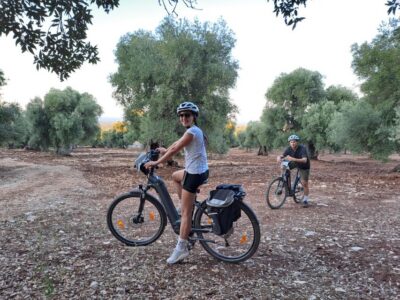
Guided e-bike tour to rock village & olive trees
Read our review →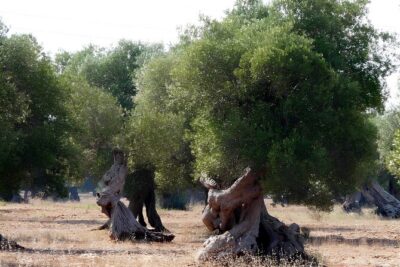
Puglia Olive Oil Tasting Experience with Olive Grove Walk
Read our review →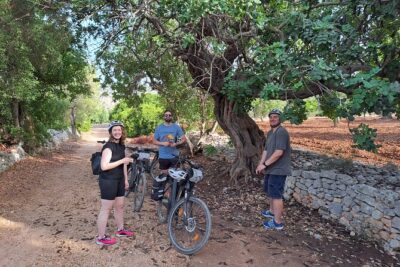
E-bike tour in Ostuni, the olive trees and the rock village
Read our review →Browse the lists this tour appears in