
Review · CENTRAL MACEDONIA
Thessaloniki: Cretan Olive Oil Tasting Experience
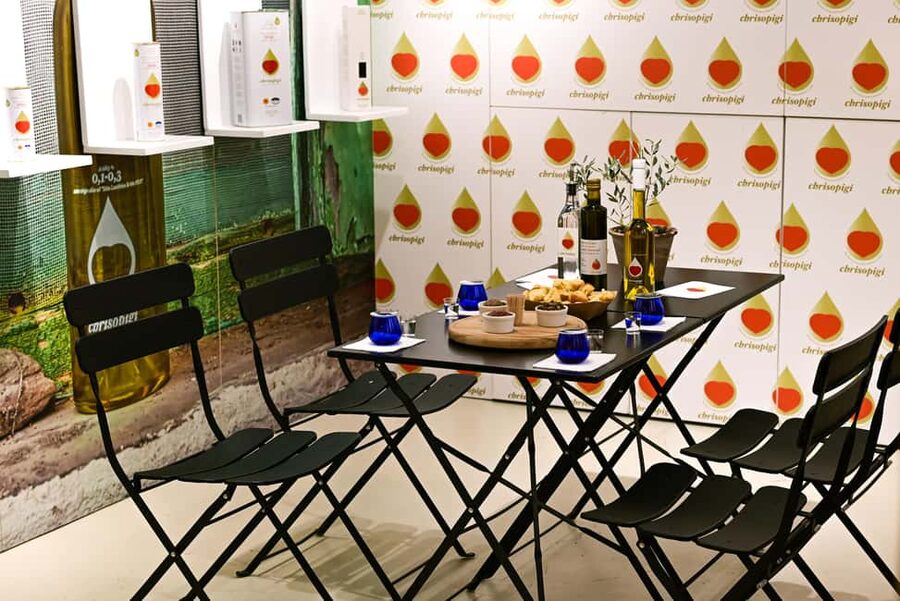
Fresh olive oil can change your lunch. This one-hour tasting at Chrisopigi Deli brings early harvest Cretan oil, olive paste, raki, rusks, and chutney into a small shop on Ermou Street. I like the direct, personal format, especially the chance to learn how to smell and taste oil instead of simply pouring it over bread.
I also like the local focus. The Koroneiki olives come from Sitia in Crete, and the products come from family businesses. Host Ioannis, also spelled Giannis or Janos in booking details, has been praised for his warmth and clear explanations. The main consideration is that this is a deli tasting, not a visit to an olive farm, and one visitor expected a wider range of oils than the two offered.
The tasting is a fine one-hour break from museums and city streets, but your expectations should be set correctly. You will learn a great deal about one producer and Cretan food traditions, then have the chance to buy the products you have sampled.
Key points at a glance
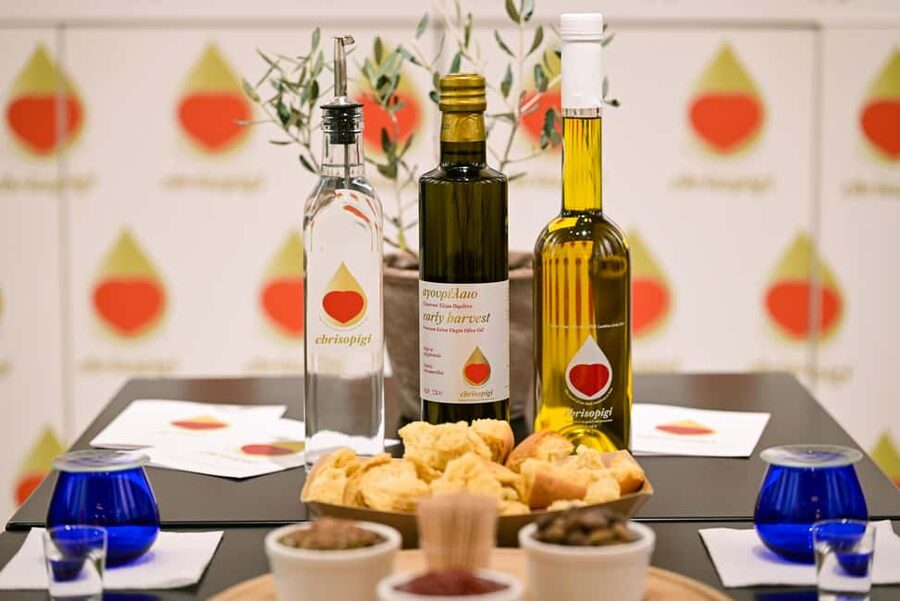
- Early harvest Koroneiki oil: Taste oil made from the Koroneiki variety grown around Sitia, Crete, with attention to aroma, texture, and flavor.
- A compact Cretan spread: The tasting includes olive paste, tsikoudia, a traditional rusk, and cherry tomato chutney.
- A central Thessaloniki meeting point: Chrisopigi Deli is at Ermou 25, about 20 meters from Venizelou Street and beside a bus stop.
- A personal host-led session: Ioannis has been praised for adjusting the start time, answering questions, and allowing extra time when needed.
- A shop with take-home options: Every item tasted is sold at the deli, along with other Cretan products from family-run makers.
- Good value for a short food activity: At $23 per person, the session offers instruction, tasting, and a private group setting without transport costs.
What this Thessaloniki tasting is really about
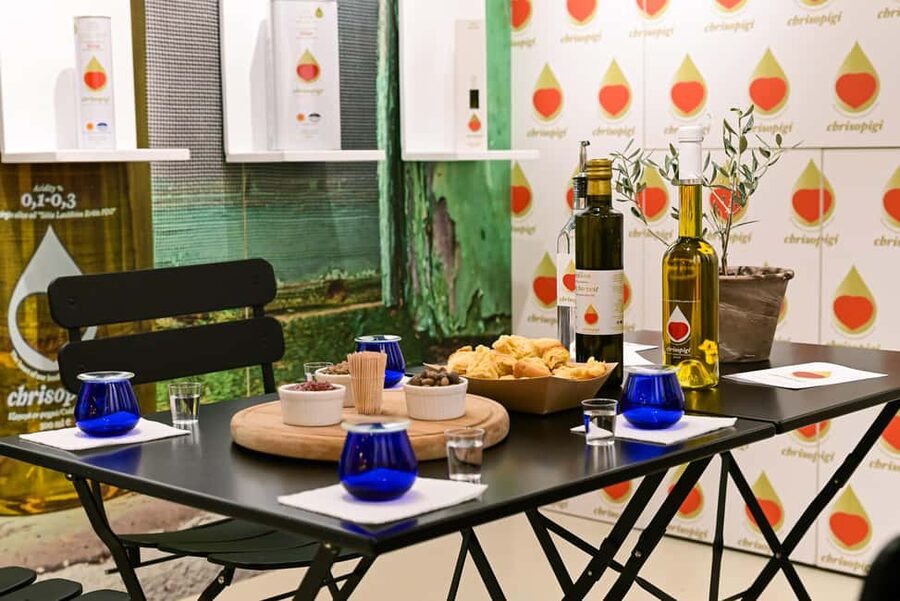
This experience is less about filling your stomach and more about teaching you to notice what is in the glass. Early harvest extra virgin olive oil is the focus, with the session explaining how production methods affect the finished oil.
You taste the oil in a deliberate way, paying attention to its aroma, texture, and flavor. That matters because supermarket olive oil is often treated as a basic cooking ingredient, while a fresh premium oil can have peppery, grassy, fruity, or bitter notes. The session aims to give you a vocabulary for those differences.
The host also connects the tasting to Cretan food culture. Crete has a strong olive-growing tradition, and the products here are selected from small family businesses. That makes the session more useful than a simple shop sample. You get some background, try several foods together, and see how Cretan ingredients work at the table.
The activity takes place at Chrisopigi Deli in central Thessaloniki. You are not being taken outside the city, and there is no farm machinery or grove visit. The appeal is convenience: you can fit it between sightseeing stops, and you do not need to spend half a day reaching an olive-growing area.
More Olive Oil Tours around Greece:
- Crete: Quad Safari, Olive Mill with Tasting & Ghost Village
★ 4.9 · 1,004 reviews - Knossos-Zeus Cave -Old Traditional Villages-Olive Oil Factory
★ 5.0 · 694 reviews - The Governor’s Olive Mill Tour with Olive Oil Tasting
★ 5.0 · 502 reviews
Finding Chrisopigi Deli on Ermou Street
The meeting point is Ermou 25, in the middle of Ermou Street. The shop is about 20 meters from Venizelou Street and next to a bus stop. That location is useful, but allow a little time to find the entrance, especially if you are moving through the city center for the first time.
One booking party had trouble locating the shop because the market nearby was approaching closing time. The practical lesson is simple: keep the full address with you and look for Chrisopigi Deli rather than expecting a large tour sign or a separate tasting room.
You arrange your own way to the venue. Transportation is not included, but the central address keeps the cost and effort low. Since the session lasts only one hour, it works well as a small addition to a day in Thessaloniki rather than as the main event.
The activity is listed as wheelchair accessible. It is also offered as a private group, with English and Greek available. Those two details matter if you prefer a more focused experience or want to ask questions without competing with a large crowd.
The first taste: early harvest extra virgin olive oil
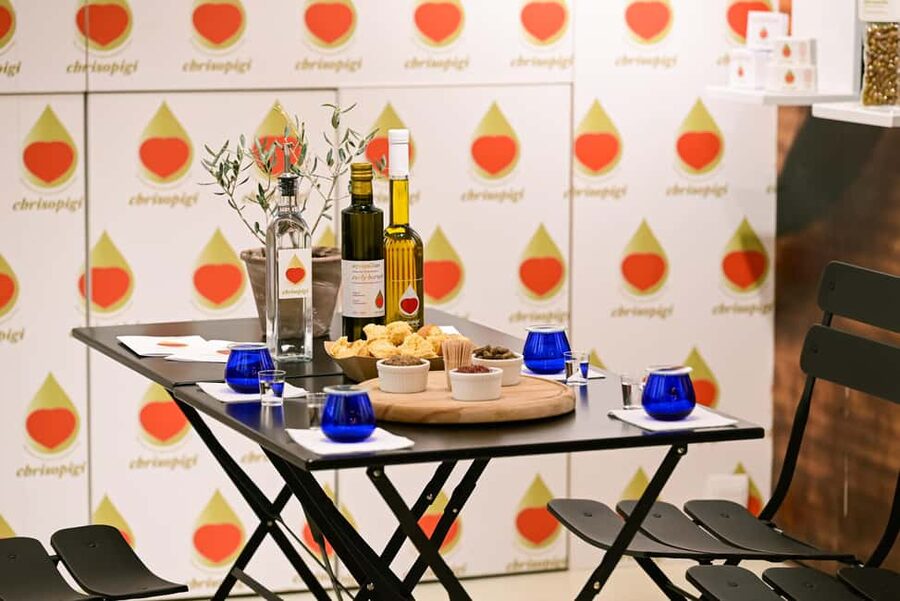
The session begins with early harvest extra virgin olive oil from the Koroneiki variety, associated here with Sitia in Crete. Early harvesting is part of the lesson. The timing of the harvest affects the oil’s character, and the tasting gives you a chance to compare your own impressions with the host’s explanation.
You should expect to pay attention before tasting. Smell is part of the process, followed by the feel of the oil and the flavors that remain. The goal is to recognize the organoleptic features of a premium extra virgin olive oil. In plain language, that means the qualities you can detect with your senses.
This is one of the most useful parts for anyone who buys olive oil at home. You learn that oil is not judged only by its color or by the label on the bottle. Aroma, bitterness, freshness, and a peppery finish can all help you understand what you are drinking.
The experience does not promise a broad professional tasting flight. One visitor was surprised to find that the shop represented one olive oil producer and that only two oils were sampled. If you want ten oils from several Greek regions, this will feel limited. If you want a friendly introduction to one Cretan producer and its methods, the narrower focus can make the explanation easier to follow.
Understanding how Cretan oil is made
The production talk gives context to the tasting. You learn about traditional olive oil production and how the olives move from the grove toward the finished oil. The supplied information does not give a detailed farm-to-bottle schedule, so you should not expect a technical factory tour or a full agricultural lecture.
What you do get is a clearer link between the olive variety, the harvest, and the taste in your glass. This is especially helpful when the producer’s family background enters the conversation. During one session, producer Vitsentzos joined Ioannis and explained more about growing and harvesting olives at his family farm.
That extra appearance is not something you should assume will happen every time, but it shows the personal character of the activity. You may be speaking with a shop host, and you might also get a direct connection to the producer behind the oil.
I value that kind of contact because food often makes more sense when you know who grows it and how it reaches the table. The information remains accessible rather than technical. You are there to understand and enjoy the oil, not to pass an exam.
Same groves, a different afternoon:
- From Chania: Olive Oil, Wine, Cheese & Honey Tasting Tour
★ 4.6 · 490 reviews - Crete: Road-trip to Lasithi, Zeus Cave & Olive Mill Farm
★ 4.4 · 451 reviews - Heraklion: Olive Farm Tour with Tasting of Local Delicacies
★ 4.9 · 411 reviews - Lassithi, Zeus Cave, Olive Mill Farm & Knossos Combo Tour
★ 4.6 · 404 reviews
Olive paste, raki, rusks, and cherry tomato chutney
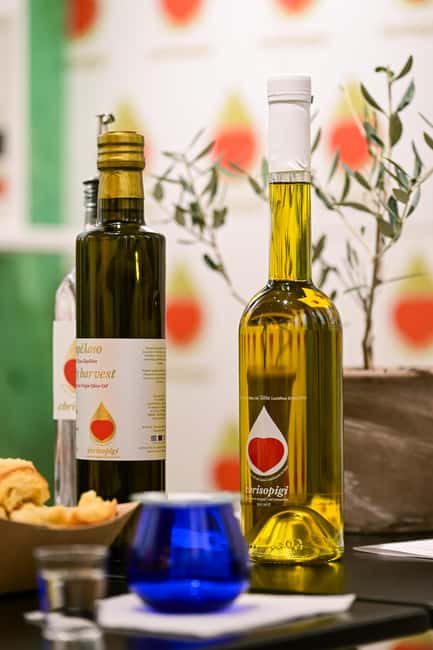
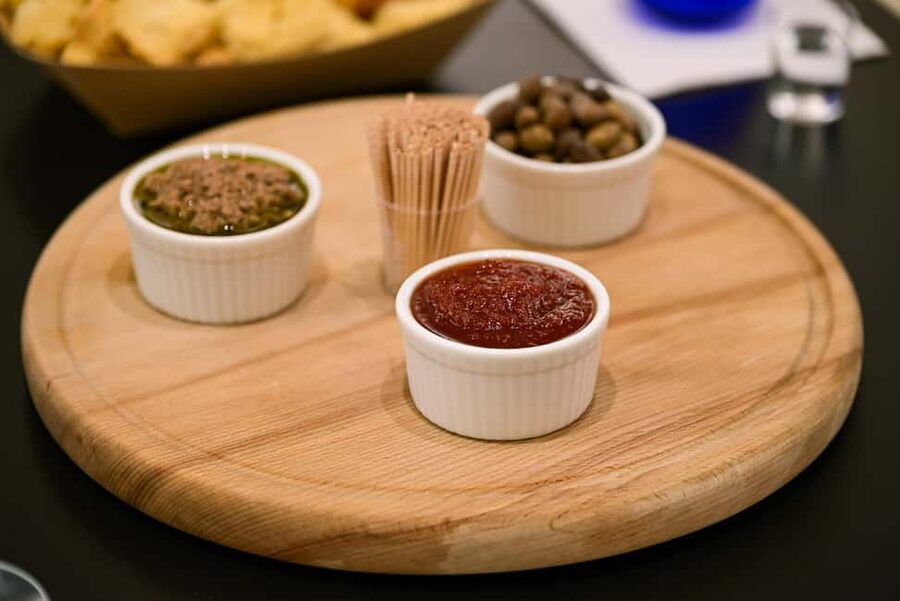
The oil is the star, but the accompanying foods give the tasting its Cretan personality. You sample handmade olive paste made from Koronian olives, a product with a thicker and more spreadable texture than oil.
You also taste tsikoudia, often called raki, the traditional drink of Crete. It is a small but important part of the regional food story. If you do not drink alcohol, keep in mind that the listed tasting includes it, and additional food or drinks are not included beyond the stated items.
The traditional Cretan rusk comes from a small bakery in Crete. Rusks are hard and dry by design, so they are made for dipping or pairing rather than eating like soft bread. Here, the rusk gives you a simple base for tasting the oil and other spreads.
A cherry tomato chutney rounds out the food. It adds a sweet and savory contrast to the oil and olive paste. This is not a full meal, but the combination makes the hour feel more complete than a few drops of oil in small cups.
The spread also helps you think about how the products might be used at home. You can taste the oil on its own, then consider how it works with a rusk, a tomato-based condiment, or olive paste. That practical side is valuable if you plan to buy a bottle before leaving.
The shop gives the tasting a practical finish
All the products you taste are available for purchase at Chrisopigi Deli. The shop also carries other Cretan foods from family-owned businesses, so the final part of the visit naturally becomes a chance to browse.
I like this arrangement because you can make a decision after tasting rather than buying a bottle based only on packaging. One group used the explanations to choose several products at what they considered fair prices. Another group arranged for many items to be sent to the United States, describing the process as easy.
You should still treat the shopping as optional. The activity price does not include personal purchases, and the tasting is not a shopping voucher. The value is in learning what you like, then deciding if a take-home bottle or food item earns space in your luggage.
The store setting also explains one limitation. This is a working deli, not a formal tasting laboratory. The atmosphere can feel friendly and informal, but the range of oils may be tied to what the shop sells. Ask questions if you want to know how many oils or producers will be included in your particular session.
A host who makes the hour feel personal
The strongest part of this experience is the host. Ioannis has been described as friendly, hospitable, and well informed about the products. He has also adjusted the timing when a booking party needed a last-minute change.
That flexibility is useful in Thessaloniki, where sightseeing plans can shift quickly. A delayed lunch or a crowded museum can throw off a tightly fixed schedule. The activity offers free cancellation up to 24 hours before the start, and you can reserve now while paying later, which gives you some room when planning.
The tone appears to be conversational. Questions are welcomed, and one group said the host did not rush them out when the session ran longer than expected. You should not count on extra time, but the experience is not built around pushing you through a line of samples.
The private group format adds to that sense of attention. It may suit couples, families, or a small circle of food-loving friends better than people seeking a large social tasting. English and Greek are available, making the session practical for international visitors.
Is $23 per person good value?
At $23 per person, I consider this a fair price for a one-hour private food activity in central Thessaloniki. You receive several tastings, an explanation of olive oil production, a lesson in sensory evaluation, and access to a shop with Cretan goods.
The value is strongest if you are curious about olive oil or want a compact local food experience. You are paying for guidance as much as for the food. Without the explanation, you could buy olive oil and rusk on your own. The host helps you understand what you are tasting and why it matters.
The value is weaker if you expect a large meal or an extensive comparison of oils from across Greece. The included food is a tasting spread, not lunch. One visitor also felt the oil selection was narrower than expected, so confirm your expectations before booking.
There are no transport costs built into the price, but the central location makes that less of a burden. Personal purchases and extra food or drinks cost more. For an hour between other plans, the price is sensible, especially if you are likely to buy a bottle that you have already tasted.
Who will enjoy this best?
I would recommend this to you if you enjoy regional food, small shops, and learning how everyday ingredients are made. It is particularly useful if you want to take Greek olive oil home but do not know how to judge different bottles.
It also suits anyone with limited time in Thessaloniki. You get a Cretan food lesson without leaving the city, and the one-hour length leaves most of the day free.
Families and small private groups may appreciate the informal setting, though the inclusion of raki means adults should decide if the tasting fits their group. The activity is wheelchair accessible, which makes it easier to include in a city itinerary.
I would be less likely to recommend it if your main goal is an olive grove visit, a full meal, or a large technical tasting with many producers. You should also look elsewhere if shopping is not of interest, since the deli setting is part of the experience.
My verdict on the Cretan olive oil tasting
Book this if you want a short, friendly introduction to Cretan olive oil with real food alongside it. I especially like the combination of Koroneiki oil, olive paste, raki, rusk, and tomato chutney, because it gives you more than a single isolated taste.
The best reason to go is the personal guidance from Ioannis, with the possible bonus of meeting producer Vitsentzos. The main caution is scope: you are learning about a focused selection from one producer, not touring the whole Greek olive oil world.
For $23, the session offers good value, a central address, and useful knowledge you can carry into future food shopping. Bring the exact street address, ask how many oils will be tasted, and leave room in your bag if you find a bottle worth taking home.
FAQ
Where is the olive oil tasting held?
The session takes place at Chrisopigi Deli, Ermou 25, in central Thessaloniki. The shop is about 20 meters from Venizelou Street and next to a bus stop.
How long does the tasting last?
The scheduled duration is one hour. Some sessions may take longer if the host has time for additional questions, but you should plan around the stated one-hour duration.
What foods and drinks are included?
The tasting includes early harvest extra virgin olive oil, Koroneiki olive oil from Sitia in Crete, handmade olive paste, tsikoudia or raki, a traditional Cretan rusk, and cherry tomato chutney.
Is transportation included?
No. You are responsible for getting to and from Chrisopigi Deli.
Is the activity wheelchair accessible?
Yes. The activity is listed as wheelchair accessible.
What languages are available?
The live host can conduct the session in English or Greek.
Can I buy the products after tasting them?
Yes. The tasted products are available for purchase at the deli, which also sells other Cretan products from family-owned businesses.
Just added around Greece
- Athens: Greek Wine & Olive Oil Tasting at Brettos Plaka★ 4.5 · 3 reviews
- Breakfast in the markets with olive oil and honey tasting★ 4.8 · 8 reviews
- PRIVATE RHODES TOUR + Lunch Stop & WINE/OLIVE OIL Tasting★ 5.0 · 2 reviews
- Olive Tour & Tasting★ 5.0 · 4 reviews
- Olive Facility Visit with Olive Oil Tasting Session★ 5.0 · 2 reviews
- SYSTASIS Olive Oil Tasting Experience in Ermioni Greece★ 5.0 · 4 reviews
- Olive Oil Tour close to Nafplio★ 4.5 · 3 reviews
- Olive Oil Tasting at the Mykonian Farm★ 4.5 · 3 reviews
Thessaloniki Olive Oil Tours, compared.


Olicatessen: Honey, Olive Oil and Traditional Greek Products
Read our review →
Browse the lists this tour appears in