
Review · CHANIA
Chania Old Town – Millennial Olive Tree – Olive Oil Mill
Chania’s past comes with a taste of olive oil. This private half-day trip links Chania’s layered old town with the ancient olive tree at Vouves and a working olive oil mill, giving you history, food, and countryside in one well-paced outing. I like the personal vehicle, hotel pickup, bottled water, and Wi-Fi, and I also like that your group of up to six gets a guide’s full attention. The main consideration is the price: at $752.43 per group, it makes the most sense for a small party rather than one or two people.
Guide Tatiana receives especially strong praise for her clear, engaging way of explaining both ancient and modern Chania. You should also allow room in your budget for personal drinks, lunch, souvenirs, and tips, since those costs are not included.
The best parts of this private Chania tour
- Chania’s old town in two focused hours: See traces of Minoan, Hellenistic, Ottoman, Venetian, Latin, and modern life without following a large group.
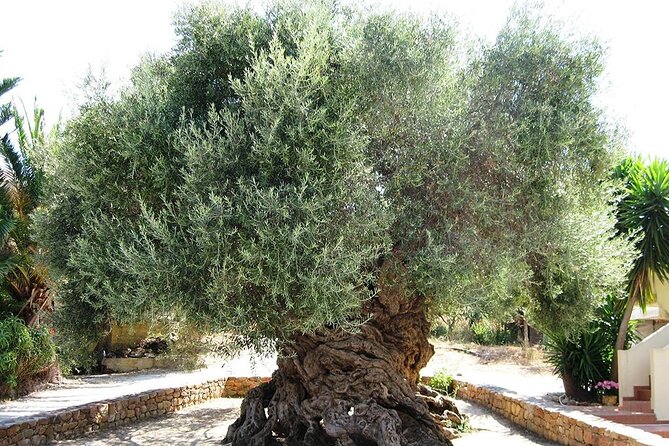
- A roughly 3,000-year-old olive tree: Vouves offers a memorable look at an ancient tree still tied to Crete’s daily culture.
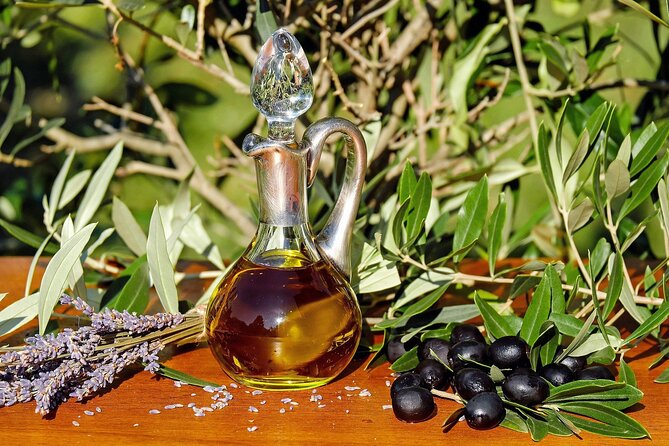
- Olive oil from tree to tasting: At Biolea, you see a stone mill and press, then sample the finished oil.
- A small-group format: The private vehicle carries only your party, up to six people, which helps with questions and timing.
- Hotel pickup in Chania: You avoid arranging a separate taxi or finding a meeting point.
- A peaceful finish at Biolea: Cretan snacks and wine can be enjoyed in the estate’s scenic backyard, though these extras are not included.
Why this tour works as a half-day plan
This is a smart choice if you want more than a quick walk around Chania but do not want to give up a full day. The total duration is about five to six hours, with roughly two hours in town, one hour at the Olive Tree Museum of Vouves, and an hour and a half at Astrikas Estate Biolea. Time is also needed for the drive between the city and the countryside.
I like the way the day moves from urban history to rural food culture. Chania gives you a sense of Crete’s many ruling periods, while Vouves and Biolea show how olive growing remains part of everyday island life. The two subjects are not forced together. They are connected by one of Crete’s oldest and most useful traditions.
The private format matters here. In a large group, an old-town walk can become a follow-the-flag exercise, with little chance to stop when a detail catches your eye. With only your own party, you can ask Tatiana about a church, a wall, a shop, or a local custom without waiting for a dozen other people.
Morning and afternoon departures are available. That gives you useful flexibility if you have a cruise schedule, a late breakfast, or another Chania plan. Since the tour requires good weather, a change of date or full refund is offered if poor conditions cause cancellation.
More Olive Mill and Factory Tours around Chania:
- From Chania Private half day Winery-Olive factory-Kournas lake
★ 5.0 · 50 reviews - Crete: Quad Safari, Olive Mill with Tasting & Ghost Village
★ 4.9 · 1,004 reviews - From Mendoza: 3 Wineries, Olive Oil Factory Tour & Tasting
★ 4.6 · 901 reviews
Chania Old Town, where several centuries share one street
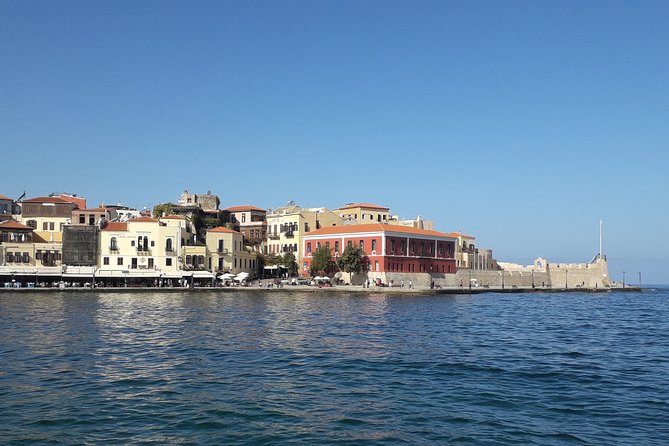
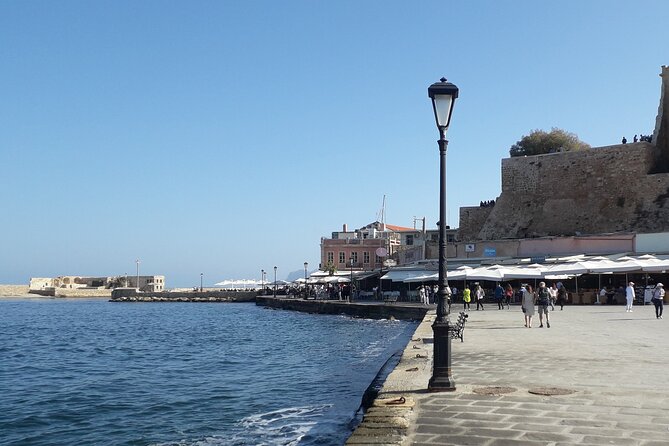
The first two hours take place in Chania Town, and there is no admission charge for this part of the experience. The walk covers an unusually broad span of the city’s past, from Minoan neighborhoods and Hellenistic walls to Ottoman bathhouses, Venetian fortifications, Latin inscriptions, and a harbor shaped by several cultures.
That range is the real value of the walk. You are not simply being shown pretty lanes. You are being given clues to how Chania changed hands and how different communities left marks on the same compact area.
The route may include a church carrying symbols from two religions, old boot-makers’ shops, knife-makers’ shops, underground cisterns, and the Venetian harbor. An African village is also part of the town’s multicultural story. These details help keep the visit grounded in real daily life rather than only grand monuments.
I especially like the mix of imposing and ordinary sights. Venetian bastions tell you about defense and power. A shoemaker’s or knife-maker’s shop tells you about work, trade, and local skill. The cisterns point to the practical problem of storing water. Each piece gives you a different way to read Chania.
The walk does require comfortable shoes. Old-town streets can be tiring over two hours, and the tour is built around walking rather than simply viewing the town from the vehicle. Sunglasses and a hat are sensible, especially in the warmer months.
Tatiana is worth mentioning by name because her role seems central to the quality of the experience. Her explanations cover pre-Minoan and later periods, along with recent events and present-day culture. She is described as intelligent, articulate, earnest, and genuinely excited to share the city. That combination suits Chania, where a short street can carry several different chapters of the island’s story.
Vouves and the ancient olive tree
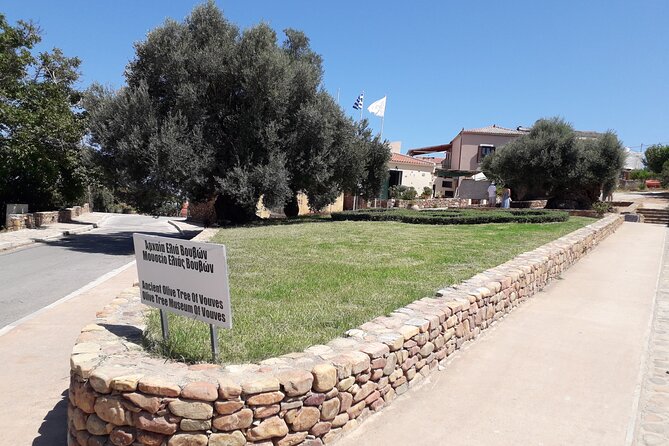
After a break, the vehicle heads into the Chania countryside toward the Olive Tree Museum of Vouves. The setting changes quickly from urban lanes and harbor buildings to an area shaped by olive trees, one of Crete’s defining plants.
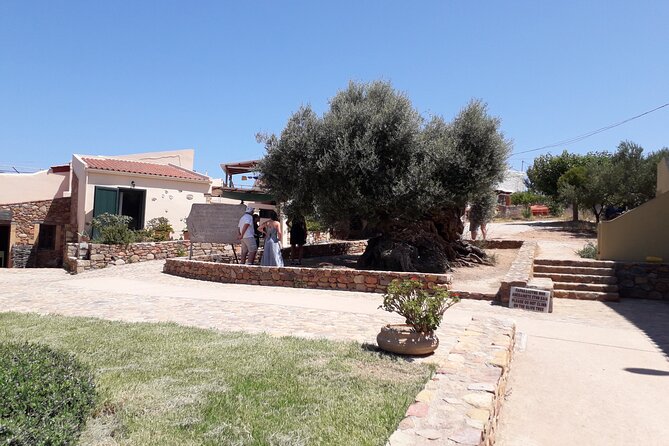
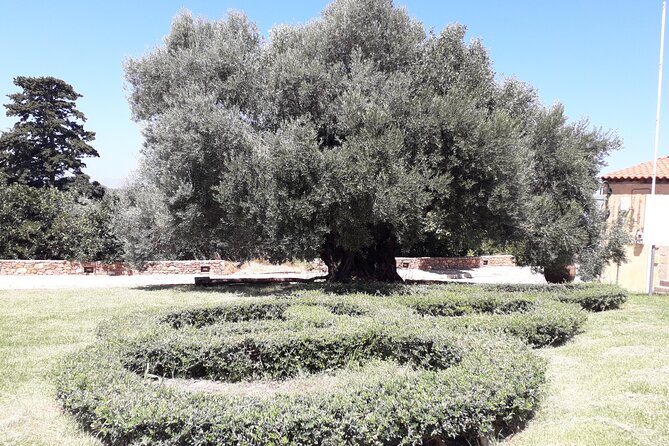
The main sight is the so-called grandmother olive tree, estimated at about 3,000 years old. Its trunk is the attraction, not a polished exhibit or a large museum complex. The age is difficult to picture until you see the thick, weathered wood in person. The tree gives a physical scale to Crete’s long relationship with olive growing.
The visit includes the small museum beside the tree, and admission is covered. The museum explains olive oil production on the island and adds practical facts about the tools, methods, and customs connected with it. Because the museum is small, this is not a place where you should expect hours of displays. Its value is that it gives context before you reach the mill.
This stop also helps explain why olive oil is more than a souvenir in Crete. It is tied to farming, cooking, trade, family life, and the shape of the countryside. Seeing the ancient tree before visiting Biolea gives the later tasting more meaning. You are not tasting an isolated product. You are seeing part of the process and tradition behind it.
The scheduled visit lasts about an hour. That is enough for the tree and museum without turning the stop into a long lecture. If you prefer major museums with extensive collections, this may feel modest. If you enjoy specific places with a clear connection to local life, Vouves should be one of the most memorable stops.
Biolea Olive Oil Mill, where tradition meets modern equipment
The final main stop is Astrikas Estate Biolea, where you can see olive oil being produced in a traditional way with modern equipment. The process includes a stone mill and press, giving you a direct look at how olives are turned into oil.
This is the part I would not skip. A bottle of olive oil on a shop shelf tells you almost nothing about how it was made. At Biolea, you get to see the equipment and then taste the result. The visit makes the difference between ordinary cooking oil and carefully produced olive oil easier to understand.
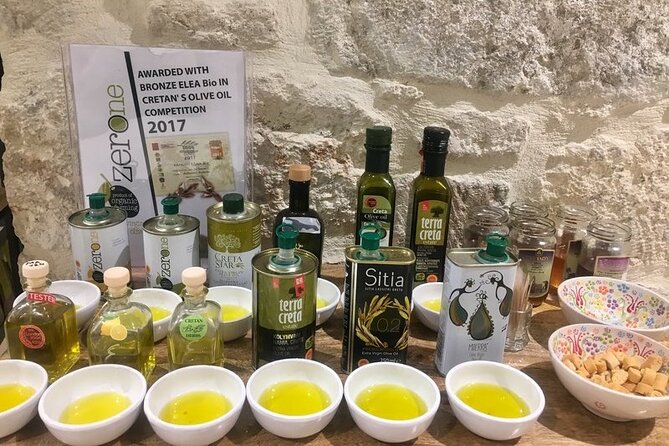
The tasting is included, as is the guided visit. The experience lasts about an hour and a half, which allows time for the production explanation and sampling. The guide can connect what you saw at Vouves with what happens at a working estate, from the old tree to the mill.
Biolea’s equipment is described as traditional yet modern, with the stone mill and press retaining an older method while the estate uses current machinery. That balance is useful for understanding Cretan food production. Tradition here is not presented as a museum piece. It is still part of a working process.
The tour ends in the peaceful backyard of Biolea, where the estate café and bar serve Cretan snacks and wine. These are not included in the tour price, so bring money if you want to extend the stop with food or drinks. This ending sounds less formal than a restaurant meal and gives you time to enjoy the setting after the guided portion is finished.
Keep your expectations clear: the provided details do not promise a full lunch. If you need a substantial meal, ask about timing and plan for that expense. The included tasting and the optional snacks are better understood as part of the food experience, not a replacement for every meal.
More Olive Grove Walks around Chania:
- Rethymnon Olive Tree Sponsorship Protect and Plant Tour
★ 5.0 · 5 reviews - Monastery – Ancient Olive tree & Museum-Cretan Brewery Private Tour from Chania
★ 5.0 · 5 reviews - Crete: Local Wine Tasting & Visit to the Ancient Olive Tree
★ 5.0 · 2 reviews - Ostuni: Masseria tour among thousand-year-old olive trees with oil tasting
★ 4.8 · 261 reviews
What the $752.43 group price really means
The listed price is $752.43 for a private group of up to six people. That works out to about $125.41 per person if six people share the cost. For two people, the same price becomes much harder to justify.
The cost includes hotel pickup and drop-off, a comfortable vehicle with a professional driver, a professional guide, Wi-Fi, bottled water from the springs of the White Mountains called Samaria, the entrance ticket to the Olive Tree Museum of Vouves, the guided tour, tasting, fees, and taxes.
For a full group, the value is easier to see. You are paying for private transport, a flexible departure time, a dedicated guide, admission, and three connected experiences. You also avoid piecing together taxis, regional transport, and separate tickets.
The price is less attractive if your main goal is simply to walk Chania or buy olive oil. You could explore the old town independently at no admission cost. This tour earns its price through the countryside transport, guide, private setting, and organized visits to Vouves and Biolea.
The private vehicle also adds comfort. You can leave your hotel without finding a meeting place, keep water with you, and travel with your own party. Wi-Fi is included, though the strongest reason to book is not connectivity. It is the convenience of having the day arranged from start to finish.
Who will enjoy this experience most
I would recommend this tour to a small family, a group of friends, or a couple who places a high value on private guiding and simple logistics. It is also a good fit if you want Chania’s culture explained rather than only photographed.
Food-focused visitors should pay close attention to the Biolea portion. You get a production visit and tasting, plus the option to buy snacks and wine at the estate. People interested in ancient sites will also appreciate Vouves, though the attraction is one very old tree and a small museum rather than a large archaeological site.
The tour is suitable for most people, according to the provided participation information. Still, you should be ready for walking and bring comfortable clothes and shoes. Tell the operator in advance about severe allergies, food intolerances, bee-sting allergies, or other medical concerns so proper safety planning can be made.
The vehicle has Wi-Fi and water, but personal expenses remain your responsibility. Bring money for souvenirs, drinks, lunch or dinner, and customary tips for the driver, guide, or escorts.
Practical booking advice before you go
This experience is commonly booked well ahead, with an average booking time of about 45 days. That matters if your dates are fixed, especially during a busy season. Morning and afternoon options make it easier to fit the tour around other plans, but the private vehicle and guide still need to be available.
Hotel pickup and drop-off are offered in Chania. At booking, make sure your accommodation details are correct and share any health information that could affect the day. Confirmation is received at the time of booking, and the activity is also near public transportation if you need that for another part of your trip.
The cancellation rule is generous if you act early. You can cancel up to 24 hours before the start time for a full refund. Changes or cancellations inside that 24-hour window are not accepted, and the paid amount is not refunded. Cut-off times follow local time in Crete.
The operator, Moysidis Travel, carries professional liability insurance. You are still advised to arrange your own health or travel insurance before visiting Crete.
Should you book the Chania olive oil tour?
Book it if you want a private, guided day that combines Chania’s old town with a clear look at Cretan olive oil culture. The best reasons are Tatiana’s engaging approach, the unusual Vouves tree, the working Biolea mill, and the ease of hotel pickup. A full group of six gets the strongest value from the $752.43 price.
Think twice if you are traveling alone, watching every euro, or mainly want free time in Chania. You can visit the old town without paying admission, and the Biolea snacks and wine cost extra. For a small group that values context, comfort, and a well-connected route, this is a strong half-day choice.
FAQ
How long does the tour last?
The experience takes approximately five to six hours, including the Chania Old Town walk, the visit to Vouves, the Biolea olive oil mill, and transportation between stops.
Is this a private tour?
Yes. Only your group participates, with a maximum group size of six people.
Is hotel pickup included?
Yes. Pickup and drop-off at your hotel in Chania are included.
Are the Olive Tree Museum tickets included?
Yes. Entrance tickets to the Olive Tree Museum of Vouves are included in the tour price.
Are food and drinks included?
The olive oil tasting is included. Cretan snacks, wine, personal drinks, and lunch or dinner are not included.
What happens if bad weather cancels the tour?
Because the experience requires good weather, you will be offered a different date or a full refund if it is canceled for weather reasons.
Just added around Chania
- Wine, Beer, Olive Oil Tasting Private Tour (price per group of 6)★ 5.0 · 4 reviews
- Discover Rethymno, Lake Kournas & the Secrets of Cretan Olive Oil★ 5.0 · 10 reviews
- Wine & Olive Oil tasting one day private tour in Crete★ 5.0 · 2 reviews
- Rethymnon Olive Tree Sponsorship Protect and Plant Tour★ 5.0 · 5 reviews
- Crete Off-Road & Flavors Safari: Wine, Olive Oil & Mountain Life★ 5.0 · 9 reviews
- Monastery – Ancient Olive tree & Museum-Cretan Brewery Private Tour from Chania★ 5.0 · 5 reviews
- Private Tour Elafonisi Beach with Honey Olive Oil & Wine Tastings★ 5.0 · 12 reviews
- Crete: Local Wine Tasting & Visit to the Ancient Olive Tree★ 5.0 · 2 reviews
Olive Mill and Factory Tours, compared.
Knossos-Zeus Cave -Old Traditional Villages-Olive Oil Factory
Read our review →
The Governor’s Olive Mill Tour with Olive Oil Tasting
Read our review →
Road-trip to Lasithi, Zeus Cave & Olive Mill Farm
Read our review →
Lassithi, Zeus Cave, Olive Mill Farm & Knossos Combo Tour
Read our review →
Zeus Cave, Lassithi Plateau, Olive Oil Factory, Kritza, Pottery
Read our review →
Zeus Cave, Lassithi Plateau, and Olive Factory Tour
Read our review →Browse the lists this tour appears in