
Review · FARO
Tavira Olive Experience Factory Tour and Tasting
Olives tell a bigger story than you expect. This small factory visit near Tavira offers clear explanations of table-olive production and a generous tasting of local food. I especially like the personal touch from guides such as Andreia and Liliana, and the chance to support a three-woman family business. The main caution is simple: this is about processing olives for eating, not a full olive-oil mill tour.
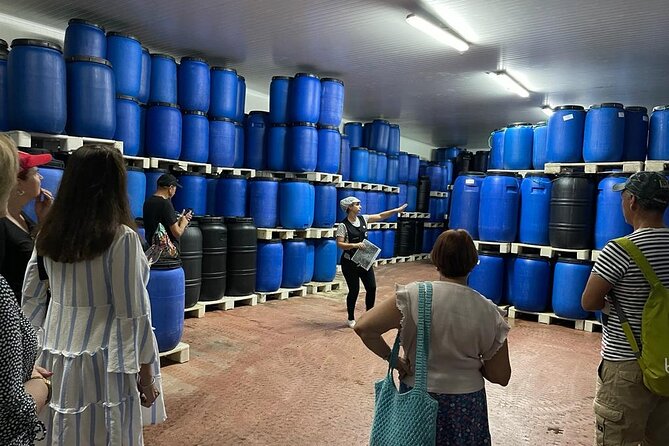
The factory may be quiet outside the September and October picking season, and production does not run every day. Still, the tour works well when the machines are idle because the guide explains what each piece of equipment does. Allow 90 minutes, and arrive with room for bread, cheese, cured meat, sauces, honey, marmalade, wine, and plenty of olives.
Key points to know before you go
- Table olives are the focus: You learn how olives are prepared for eating, including preservation, salt, texture, and the reason some olives keep their pits.
- A small family operation: The factory is managed by three women, giving the visit a direct, personal feel rather than a polished corporate-tour style.
- Andreia brings the process to life: Her presentation combines practical detail with humor, even when the machinery is not running.
- The tasting is generous: Expect olives, olive oil, bread, cheese, honey, orange marmalade, sauces, and wine, with other local foods sometimes included.
- Production is seasonal: September and October are the main olive-picking months, but even then, processing may not happen every day.
- Map directions can be unreliable: Google Maps and Apple Maps have caused trouble for some visitors, so leave extra time and keep the factory phone contact handy.
A small factory with a clear local purpose
The Olive Factory is at Estrada do Arraial Ferreira Neto, outside Tavira, in the Faro area. The meeting point is also where the tour ends, and the scheduled start is 4 p.m.
This is not a grand industrial complex. That is part of its appeal. You are visiting a working small business where the people explaining the process are closely connected to the products. The operation is described as being managed by three women, and that family-business character shapes the visit from the start.
I like tours that show the ordinary work behind food you see on every Portuguese table. Here, the subject is not just olive oil as a luxury product. It is the practical business of preparing olives for eating, preserving them, seasoning them, and getting their texture right.
The factory is small enough for the explanation to feel direct. With a maximum of 30 people, the group is not guaranteed to be tiny, but it is still a manageable size for a short walk through the facility. Most people can take part, and the ticket is mobile, so you do not need a printed voucher.
More Olive Mill and Factory Tours around Portugal:
- Tavira: Olive Factory Tour and Tasting
★ 4.8 · 272 reviews - Tavira City & Olive Factory
★ 5.0 · 4 reviews - Crete: Quad Safari, Olive Mill with Tasting & Ghost Village
★ 4.9 · 1,004 reviews
What you learn about table olives
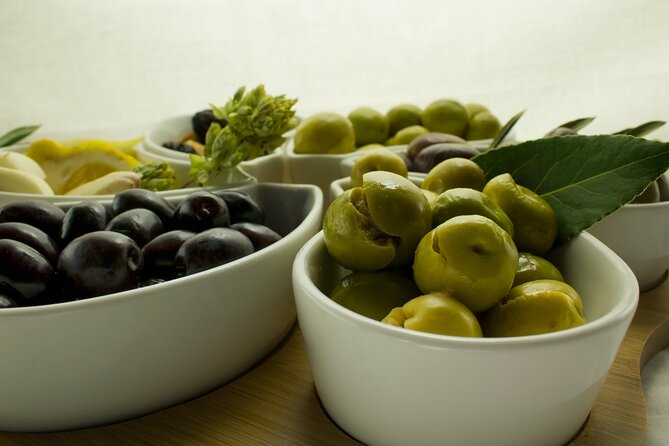
The main lesson is that an olive is not ready to eat straight from the tree. The factory explanation covers the work needed to turn raw olives into the familiar food served in bowls, salads, and petiscos.
You learn about the machines used in processing, as well as the role of salt and other elements in preserving and preparing the olives. The explanation also addresses questions many people have never thought to ask: why some olives retain their pits, how texture is affected, and why different preparation methods produce different results.
That practical information is the strongest part of the tour. You leave with a better sense of the labor between the orchard and the table. One especially useful point is the distinction between olive processing and olive-oil production. This factory experience focuses mainly on olives for consumption, so book it for that purpose.
A few comments about the tour describe the production as manual and without pesticides. Since the exact farming practices and certification details are not provided, I would treat that as part of the owners’ explanation rather than assume a formal organic certification.
When the machines are running, and when they are not
The factory does not operate every day. Olive picking generally takes place in September and October, but even during those months, there may be no production at the exact time of your visit.
That means the machinery may be switched off. This is the most important expectation to set before booking. If you want to see olives moving through the equipment, contact the factory in advance and ask whether processing will be happening on your date.
An off-season visit is not automatically a poor choice. Andreia’s presentation is designed to explain what the machines do, and several parts of the process can still make sense when the equipment is quiet. The visit becomes more like a guided look at a small food factory than a live production demonstration.
I would compare it to visiting a bakery after closing time. You can understand the tools and methods, but you will not see every stage in action. If your priority is the machinery, choose your timing carefully. If your priority is Portuguese food and a friendly explanation, the season matters less.
Andreia and the personal style of the tour
The guide can make or break a short factory visit. Here, Andreia is repeatedly praised for being warm, funny, and easy to follow. She explains the process while walking through the facility, rather than delivering a dry lecture.
That matters because olive processing can sound technical at first. Salt, preservation, texture, pits, and machinery are useful topics, but they need a human voice. Andreia’s humor helps keep the presentation lively, especially when there is no active production to watch.
Liliana and other members of the team also help create the welcoming atmosphere. The visit feels like an introduction to the people behind a local product, not just a stop at a sales counter.
If you have a food allergy, contact the factory before arriving. One group received advance attention for an allergy, which is a good sign that the staff will try to help when told ahead of time. Still, the food included in the tasting can vary, so you should explain your needs clearly before the visit.
More Olive Oil Tours around Portugal:
- Arrábida, Setúbal, Sesimbra, Olive with wine tasting
★ 5.0 · 75 reviews - Douro Valley: A Sensory Experience in the Douro: Wines, Olive Oil, and History
★ 4.9 · 15 reviews - Premium gastronomic mountain tour: Wine, olive oil, spirits, food
★ 5.0 · 8 reviews - Tour with Wine and Olive Oil Tasting
★ 4.6 · 8 reviews
The tasting is the real payoff
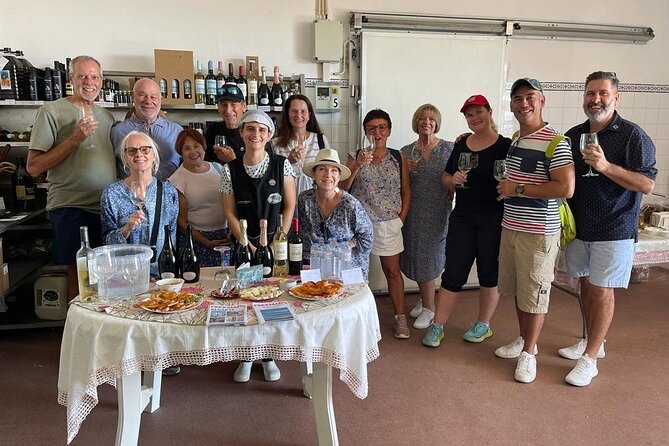
After the factory explanation, you sit down to try the products. The included food is more substantial than the word snack suggests. You can expect local olives, olive oil, special bread or homemade sourdough, cheese, honey, orange marmalade, and wine.
Additional foods described during the tasting include cured meat, sauces, lupini beans, peas, and other local products. The exact selection may change, but the general format is a shared spread rather than a single spoonful of oil and one olive.
This is where the factory lesson becomes useful. You can compare different olives by flavor and texture, try the oil with bread, and connect the earlier explanation about salt and preservation with what is on your plate. The tasting also shows how olives fit into a wider Portuguese table, alongside cheese, bread, preserves, and wine.
The generous portions are a major reason the experience feels worthwhile. You are not simply buying a lesson, then paying again for every sample. The food is part of the experience, and the relaxed setting gives you time to talk with the people around you.
Wine is included with the tasting, but do not confuse that with drinks at the bar before the tour. If you arrive early, you may come up to one hour before the start and order drinks, but those are charged separately. Other alcohol outside the tasting is also not included.
The small shop and local products
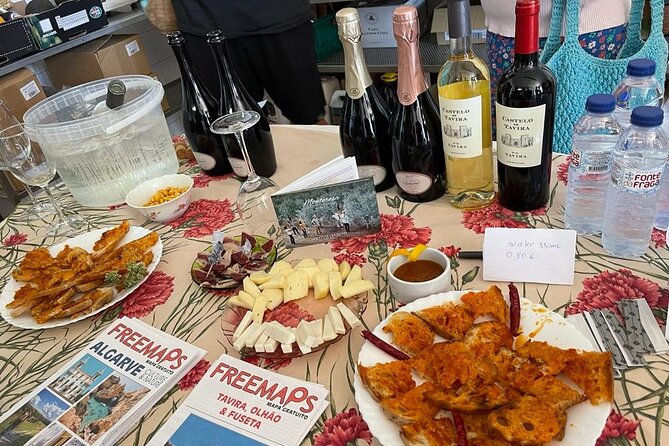
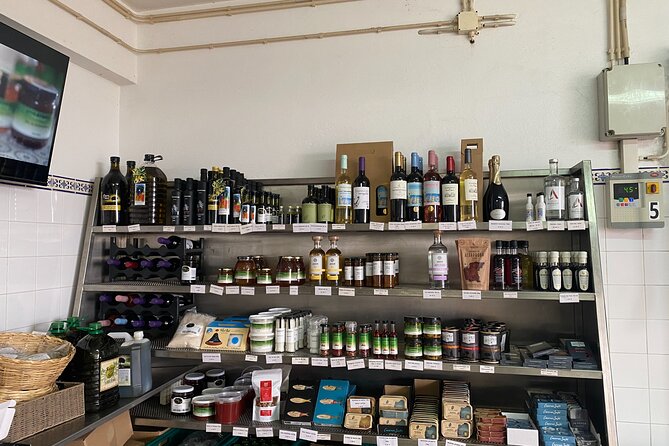
At the end, you have the chance to buy some of the products you tasted. Souvenirs are not included, and the suggested spending range is roughly 15 to 20 euros.
This is not an obligation, but it can be a useful way to take home something connected to the visit. Olive products travel better than many fragile food souvenirs, and buying directly from the factory supports the small local business you have just visited.
I would wait until after the tasting before deciding what to purchase. You will know which olives, oils, jams, or sauces suit your taste instead of choosing a jar based only on its label.
Price and value at $35.09
At $35.09 per person, this is not the cheapest way to taste olives in Portugal. You could buy a plate of olives and a bottle of oil for far less. The price makes more sense when you consider the factory explanation, the hosted tasting, the wine, and the access to a small producer.
The value is strongest if you enjoy food education and want something different from another church, viewpoint, or beach afternoon. It is also a useful rainy-day activity. The tour lasts about 90 minutes, so it does not consume an entire day or require a major change to your Tavira plans.
The value is weaker if you expect a working olive-oil mill, a visit to an olive grove, or a full agricultural tour. You are paying for a table-olive factory experience and tasting. That distinction should guide your decision.
The high overall rating and 99 percent recommendation fit the experience as described: the hosts, the food, and the clear explanation receive the strongest praise. The one recurring limitation is the possibility of inactive machinery, not poor hospitality or a thin tasting.
Getting there without losing your patience
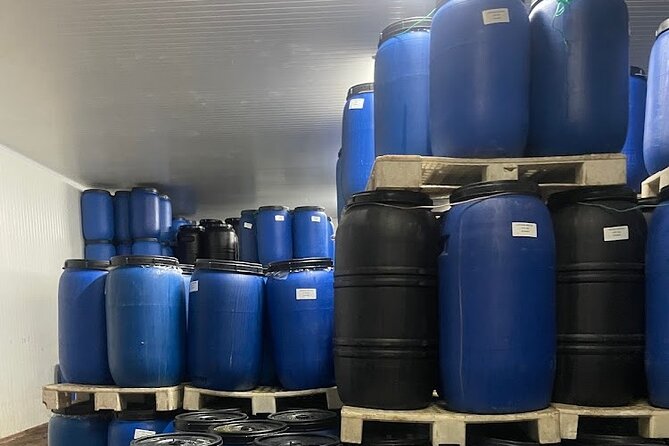
The address is Estrada do Arraial Ferreira Neto S/N, 8800-228 Tavira, Portugal. Some people have had trouble finding the entrance because common mapping apps did not lead them correctly.
I would not cut arrival time close. Plan to reach the area early, especially if you are driving or unfamiliar with Tavira’s roads. The factory allows you to arrive up to one hour before the tour, so an early arrival is useful rather than awkward.
If your map sends you in circles, call the factory. Andreia has helped people locate the site by phone, including one group that could not find it with either Google Maps or Apple Maps. That small detail may save you from starting the experience stressed and late.
The tour starts at 4 p.m. and ends back at the same meeting point. No separate return transport is involved.
Who will enjoy this most
I would recommend this to anyone curious about Portuguese food, small producers, and the everyday work behind local ingredients. It suits couples, families, and small groups looking for a calm activity with plenty to taste.
It is also a good choice for people who prefer a personal tour over a large commercial attraction. The staff’s warm style is a central part of the experience, and the food gives the visit a social feel.
You may want to skip it if you only want olive oil production, an orchard walk, or active machinery. You should also think twice if you do not eat olives, cheese, bread, preserves, or drink wine, since the tasting is a major part of what you pay for.
The tour is offered in English. Confirmation arrives at booking, and free cancellation is available until 24 hours before the 4 p.m. start time. Cancellations or changes made inside that window are not refunded or accepted.
Should you book the Tavira Olive Experience?
Book it if you want a friendly, food-centered look at table-olive production and a generous Portuguese tasting afterward. The best parts are the personal guides, the small factory setting, and the chance to sample products you can later buy directly from the producer.
Before booking, accept two limits: the machinery may not be operating, and this is not primarily an olive-oil tour. If those points suit you, $35.09 is fair value for 90 minutes of explanation, food, wine, and local contact. I would especially consider it on a rainy afternoon or when you want a break from standard sightseeing in Tavira.
FAQ
Where does the Tavira Olive Experience start?
It starts at Olive Factory Tavira, Hélder Madeira, Estrada do Arraial Ferreira Neto S/N, 8800-228 Tavira, Portugal. The tour also ends at this same meeting point.
What time does the tour start?
The scheduled start time is 4 p.m.
How long does the experience last?
The experience lasts approximately 1 hour and 30 minutes.
Is olive oil production the main focus?
No. The main focus is processing olives for consumption. The tour explains the machinery, preservation, salt, texture, and other parts of preparing table olives. It is not an olive grove or dedicated olive-oil mill tour.
Will the machines be operating during the visit?
Not always. Production depends on the olive-picking season, generally September and October, and the factory does not process olives every day.
What food and drinks are included?
The tasting includes snacks such as olives, olive oil, special bread or sauce, cheese, honey, orange marmalade, and wine. Other products may also be served. Drinks ordered separately at the bar are not included.
Can I cancel for a full refund?
Yes. You can cancel at least 24 hours before the experience start time for a full refund. Cancellations or changes made less than 24 hours before the start are not accepted.
Just added around Portugal
- Unveiled Secrets of Porto + Olive Oil Tasting★ 4.8 · 3 reviews
- Premium gastronomic mountain tour: Wine, olive oil, spirits, food★ 5.0 · 8 reviews
- Historical Évora – PRIVATE Full Day Tour – Cork, Wine and Olive Oil Haven★ 5.0 · 3 reviews
- Olive Oil Private Tour in Portugal★ 5.0 · 6 reviews
- Tour with Wine and Olive Oil Tasting★ 4.6 · 8 reviews
- Tavira City & Olive Factory★ 5.0 · 4 reviews
- Porto: Tuk Tuk Tour with Olive Oil Tasting★ 4.4 · 5 reviews
- Douro Valley: Private Tour & Guided Wine & Olive Oil Tasting★ 5.0 · 3 reviews
Olive Mill and Factory Tours, compared.
Knossos-Zeus Cave -Old Traditional Villages-Olive Oil Factory
Read our review →
The Governor’s Olive Mill Tour with Olive Oil Tasting
Read our review →
Road-trip to Lasithi, Zeus Cave & Olive Mill Farm
Read our review →
Lassithi, Zeus Cave, Olive Mill Farm & Knossos Combo Tour
Read our review →
Zeus Cave, Lassithi Plateau, Olive Oil Factory, Kritza, Pottery
Read our review →
Zeus Cave, Lassithi Plateau, and Olive Factory Tour
Read our review →Browse the lists this tour appears in