
Review · HALKIDIKI
Olive oil tasting with seminar in Metagitsi – Halkidiki
Olive oil gets its own classroom here. In Metagitsi, this two-hour workshop brings you close to a family producer and the traditions behind Halkidiki olive oil. I like the small producer setting, which feels more personal than a large commercial tour, and the chance to taste the oil with feta, tomatoes, and tzatziki.
I also like that the tasting comes with useful context. You learn how the oil is made, why it matters in the Mediterranean diet, and how different oils can vary. The main consideration is practical: at $63.67 per person, this is a focused food experience, not a full-day farm visit or a broad Halkidiki sightseeing tour.
Key points to know before you book
- A two-hour olive oil workshop: You learn about Halkidiki oil, its production, history, and cultural role.
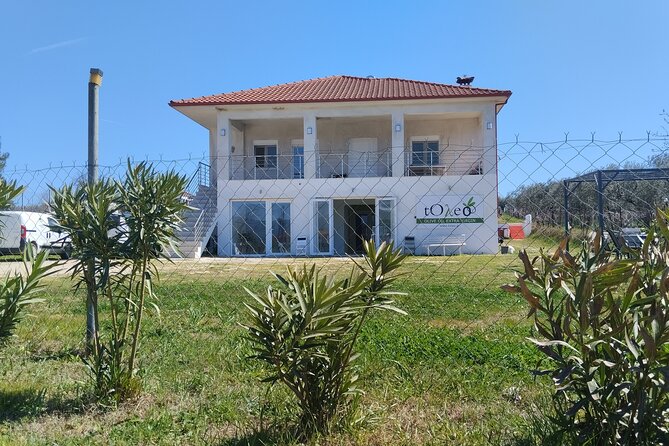
- A family-run producer setting: Toleo Halkidiki Olive Grove presents the experience through its own local production.
- Food pairing included: Taste olive oil with feta cheese, tomatoes, and tzatziki, plus snacks and bottled water.
- A small maximum group: The experience accepts up to 16 people, allowing room for questions and conversation.
- A useful take-home package: You receive a participation certificate and a brochure with information to reference later.
- Products are sold separately: You can buy olive oil products at the end, but they are not included in the price.
Starting at Toleo in Metagitsi
The experience begins at Toleo Olive Oil, Producer Market, at Metaggitsi 1 in Metagkitsi, Halkidiki. It also ends at this same meeting point, so you do not need to arrange a separate return transfer after the session.
That simple setup matters. You arrive at a working producer rather than a general meeting point in a busy resort area. The address is in Metagitsi, so you should plan your route carefully and allow time to arrive before the start. No transportation is included in the tour details, so getting to the producer is your responsibility.
The group limit is 16 people. That is not a private lesson, but it is small enough for the session to feel more like a conversation than a formal lecture. The strongest impression from the available feedback is the friendly, family-gathering atmosphere. That is a good sign if you prefer direct contact with a local business over a polished, high-volume attraction.
More Olive Oil Tours around Greece:
- Crete: Quad Safari, Olive Mill with Tasting & Ghost Village
★ 4.9 · 1,004 reviews - Knossos-Zeus Cave -Old Traditional Villages-Olive Oil Factory
★ 5.0 · 694 reviews - The Governor’s Olive Mill Tour with Olive Oil Tasting
★ 5.0 · 502 reviews
Why Halkidiki olive oil deserves two hours
In Halkidiki, olive oil is treated as more than a cooking ingredient. It is part of the Mediterranean diet and an important part of local food culture. The workshop uses olive oil as a way to explain the region itself, from the groves to the final bottle.
You learn about the history and cultural importance of olive oil in Halkidiki. You also learn about the production process, including how different oils are made. The details provided do not list every stage of production, so you should not expect a technical laboratory course. Instead, the focus is on helping you understand the product and taste it with more confidence.
I find that approach useful. Olive oil labels can be confusing, and many people buy a bottle based only on price or attractive packaging. A session like this gives you a framework for noticing quality, flavor, and production choices. The aim is not simply to tell you that one oil is good. It is to help you answer basic questions yourself after the tasting.
The two-hour length is also well judged for this subject. A shorter visit might rush the explanations and tasting. A much longer one could become repetitive, especially if you are visiting with family members who are less interested in food production. Here, the time should give you enough room for the workshop, the tasting, and questions without taking over your entire day.
Walking among the olive groves
Part of the experience involves exploring the groves and learning about the source of the oil. This connects the product on your plate with the trees and agricultural setting that produce it.
The grove portion is important because olive oil can seem abstract when you encounter it only in a shop or restaurant. Seeing where the olives grow helps explain why place and production methods matter. You get a better sense of the connection between Halkidiki’s farming traditions and its everyday food.
The available information does not specify the walking distance, terrain, or season-specific conditions. For that reason, I would treat this as a guided look at the groves rather than a demanding countryside hike. Most people can participate, and service animals are allowed. Still, sensible footwear is a good idea for any activity that includes an outdoor grove visit.
Do not expect the olive grove segment to replace a separate nature excursion. Its purpose is to support the food lesson. The trees are part of the story, not a long hiking route.
Learning how the oil reaches your table
The workshop explains how premium Halkidiki olive oil is produced. You get a broad picture of the process and learn how different oils are made. That is the part that can turn a pleasant tasting into a useful skill.
A good tasting is not only about liking or disliking a flavor. You want to notice how the oil works with food, how its character changes beside salty cheese or fresh tomatoes, and how it compares with other oils. The session gives you a chance to build those comparisons in a relaxed setting.
The producer’s own connection to the product adds value. Toleo Halkidiki Olive Grove is not presented as a detached classroom. It is a local business sharing its own olive oil and its approach to quality. The available feedback points to a small family business that takes that quality seriously. That personal connection is one of the best reasons to choose this activity over a basic shop tasting.
The explanations may be especially helpful if you are new to olive oil. You do not need to arrive with specialist knowledge. Most people can participate, and the format is designed to teach through discussion and tasting rather than through a long technical presentation.
Same groves, a different afternoon:
- From Chania: Olive Oil, Wine, Cheese & Honey Tasting Tour
★ 4.6 · 490 reviews - Crete: Road-trip to Lasithi, Zeus Cave & Olive Mill Farm
★ 4.4 · 451 reviews - Heraklion: Olive Farm Tour with Tasting of Local Delicacies
★ 4.9 · 411 reviews - Lassithi, Zeus Cave, Olive Mill Farm & Knossos Combo Tour
★ 4.6 · 404 reviews
Tasting olive oil with feta, tomatoes, and tzatziki
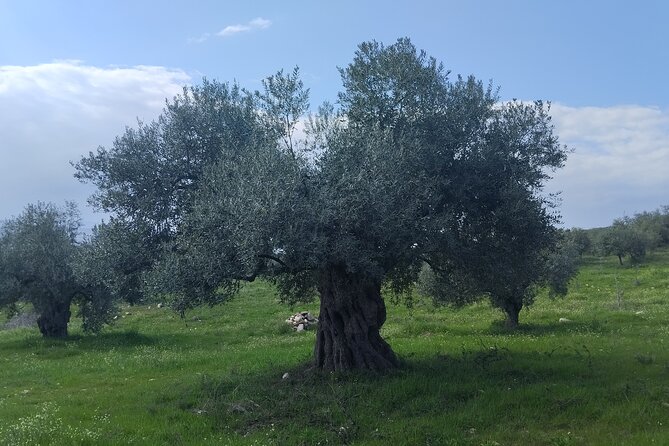
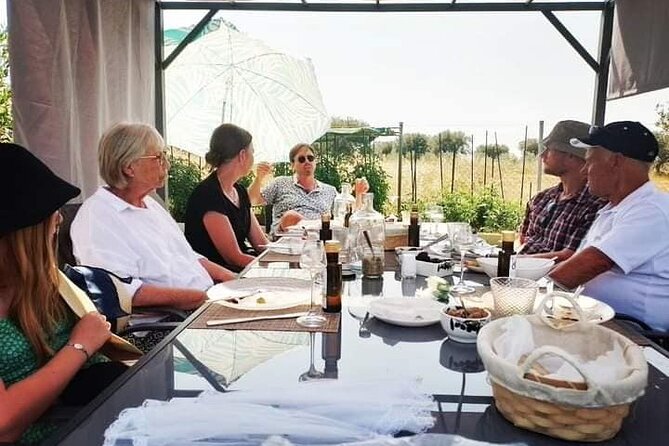
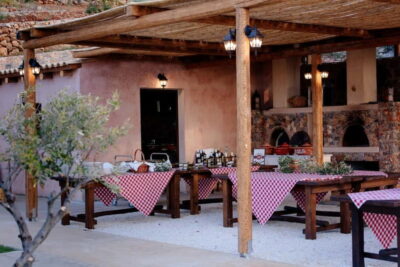
The food pairing makes the tasting feel grounded in everyday Greek eating. You sample the olive oil with feta cheese, tomatoes, and tzatziki, along with snacks and bottled water.
These pairings are practical rather than decorative. Feta brings salt and a firm dairy flavor. Tomatoes offer freshness and acidity. Tzatziki adds a cool, creamy element. Together, they show how olive oil behaves with several familiar Greek foods.
I like this part because it helps you connect the lesson with meals you can actually repeat at home. A small sip from a tasting glass can be hard to understand on its own. Try it with food, and you have a clearer idea of how you might use the oil in a salad, with cheese, or alongside a simple meal.
The tour details do not promise a full lunch. Snacks are included, but you should not book this expecting a substantial meal. If you have dietary restrictions, the listed foods include dairy, so it would be sensible to ask the provider before booking if that matters to you.
Bottled water is included, which is a small but welcome detail during a tasting. It gives you a neutral drink between samples and helps keep the food portion comfortable.
The warm, family-style atmosphere
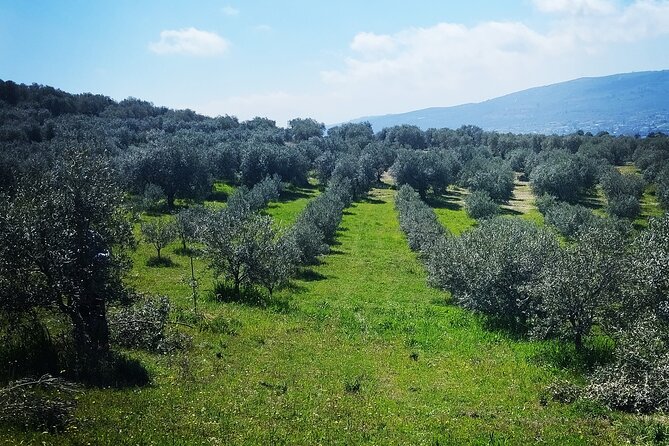
The tone appears to be one of the experience’s strongest qualities. The available feedback describes the event as a warm family gathering filled with useful information and discussion. That suggests a relaxed setting where you can ask questions instead of simply moving from one display to another.
A family business cannot always offer the scale or slick presentation of a major food museum. That is the trade-off. You may get fewer formal exhibits and less predictable staging. In exchange, you get a more direct connection with the people who make and sell the product.
I would choose this activity if you enjoy meeting local producers and learning through conversation. If you want a fast tasting with little explanation, two hours may feel long. If you want to understand why Halkidiki olive oil matters, the pace should work well.
The maximum group of 16 helps protect that atmosphere. It gives the presenter a reasonable chance to address questions, while still allowing the business to host several people at once. The format is not private, but it should feel more personal than a large coach-group stop.
What you take home after the tasting
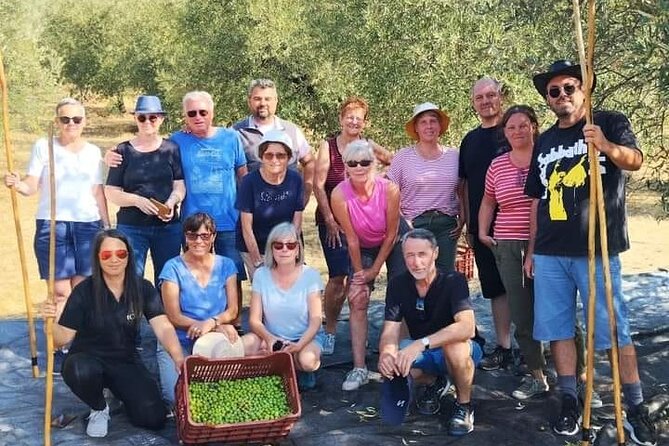
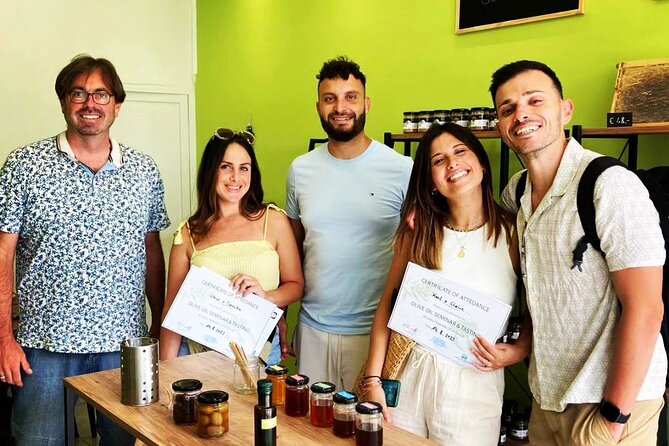
You receive a certificate of participation and a brochure with information about the seminar. The certificate is a pleasant souvenir, especially if you enjoy collecting small reminders of local food experiences. Its practical value is modest, but it gives the visit a clear sense of completion.
The brochure is more useful. You can refer back to the information after you leave, when you are trying to remember what you learned about the oil or explaining the tasting to someone at home. Printed material also helps if the session covers more details than you can remember in one sitting.
Olive oil products are available to purchase, but they cost extra. This is worth keeping in mind when judging the price. The $63.67 fee covers the two-hour workshop, tasting, snacks, water, and the take-home materials. It does not include a bottle or other products.
I see the price as reasonable for someone who values the educational side and the producer setting. It is less compelling if you mainly want a few samples and a quick souvenir bottle. In that case, a shop visit could cost less, though it would not provide the same guided context.
Who will get the most from this experience
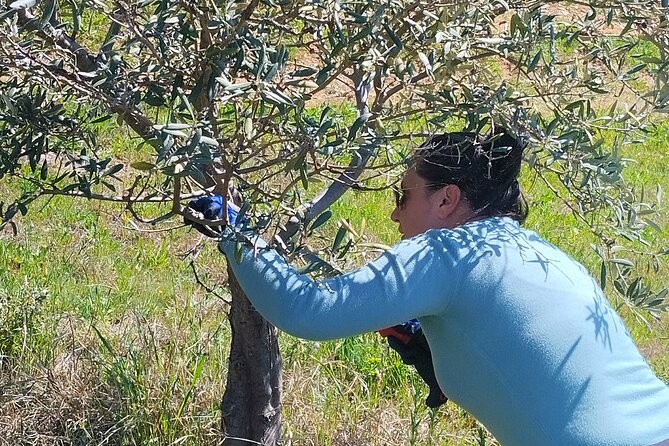
This activity suits food-focused visitors who want a local connection without committing to a full-day tour. It is also a good choice for couples, small groups, and families with an interest in Greek cooking and agriculture.
You will probably enjoy it most if you:
- Like learning how regional foods are produced
- Want to taste olive oil with familiar Greek foods
- Prefer small-scale producer visits
- Have two hours available in or near Metagitsi
- Want a certificate and brochure to take home
- Are happy to arrange your own transportation to the meeting point
It may be less suitable if you are looking for extensive sightseeing, a long hike, or a full meal. The activity has a clear focus, and that focus is olive oil. That narrow subject is a strength for food lovers, but it limits the range of the outing.
Most people can participate, and service animals are allowed. The experience is offered with mobile ticketing, which makes access to your booking convenient. Confirmation is provided at the time of booking.
Timing, cancellation, and practical planning
The experience lasts about two hours. It is booked, on average, 13 days in advance, so I would not leave it until the last minute during a busy Halkidiki holiday.
You can cancel for a full refund up to 24 hours before the scheduled start time. Cancellations or changes made less than 24 hours before the start are not accepted for a refund. The cut-off follows local time in Greece.
Because the tour begins and ends at the same producer market, it can fit neatly into a day based around Metagitsi. You should still check your own driving or taxi arrangements, since transport is not included. The meeting point is specific, so save the address before setting out.
Should you book the Metagitsi olive oil seminar?
I would book this if you want more than a quick taste. The combination of grove access, production talk, local food pairings, and a family-run setting gives the experience real substance. The strongest reasons to go are the personal atmosphere and the chance to understand Halkidiki olive oil through food, not just through a sales pitch.
I would skip it if your priority is a broad Halkidiki tour, a long countryside walk, or a full meal. At $63.67, the value depends on how much you care about the workshop and conversation.
For food lovers, the certificate and brochure are pleasant extras, but the real souvenir is the ability to taste olive oil with a sharper eye. That makes this a sensible two-hour stop for anyone who wants a closer look at one of Greece’s most important everyday foods.
FAQ
Where does the olive oil tasting take place?
It takes place at Toleo Olive Oil, Producer Market, Metaggitsi 1, Metagkitsi 630 78, Greece.
How long does the experience last?
The seminar and tasting last approximately two hours.
What food is included?
The tasting includes feta cheese, tomatoes, and tzatziki. Snacks and bottled water are also included.
Are olive oil products included in the price?
No. Olive oil products are available to purchase, but they are not included in the experience price.
What is the maximum group size?
The activity accepts a maximum of 16 participants.
Can I cancel for a full refund?
Yes. You can cancel at least 24 hours before the scheduled start time for a full refund. Cancellations or changes made less than 24 hours before the start are not accepted for a refund.
Just added around Greece
- Athens: Greek Wine & Olive Oil Tasting at Brettos Plaka★ 4.5 · 3 reviews
- Breakfast in the markets with olive oil and honey tasting★ 4.8 · 8 reviews
- PRIVATE RHODES TOUR + Lunch Stop & WINE/OLIVE OIL Tasting★ 5.0 · 2 reviews
- Olive Tour & Tasting★ 5.0 · 4 reviews
- Olive Facility Visit with Olive Oil Tasting Session★ 5.0 · 2 reviews
- SYSTASIS Olive Oil Tasting Experience in Ermioni Greece★ 5.0 · 4 reviews
- Olive Oil Tour close to Nafplio★ 4.5 · 3 reviews
- Olive Oil Tasting at the Mykonian Farm★ 4.5 · 3 reviews
Greece Olive Oil Tours, compared.
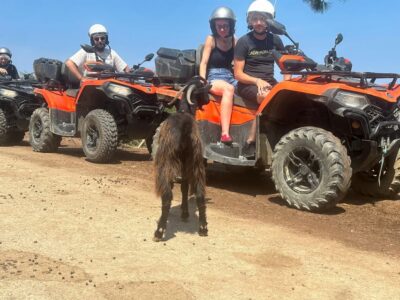
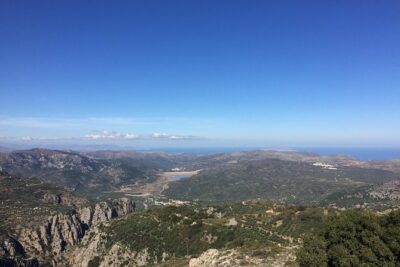
Knossos-Zeus Cave -Old Traditional Villages-Olive Oil Factory
Read our review →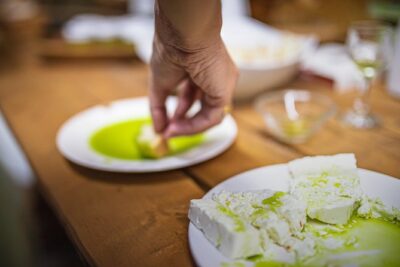
The Governor’s Olive Mill Tour with Olive Oil Tasting
Read our review →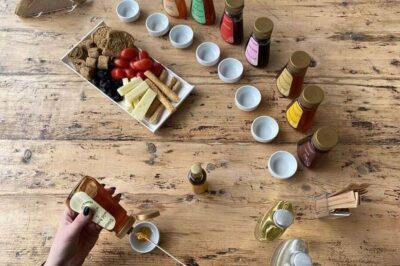
Road-trip to Lasithi, Zeus Cave & Olive Mill Farm
Read our review →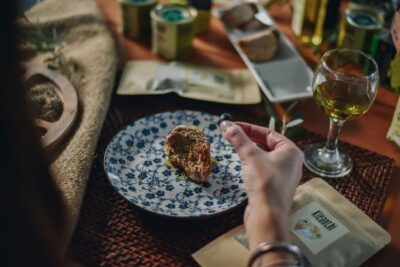
Olive Farm Tour with Tasting of Local Delicacies
Read our review →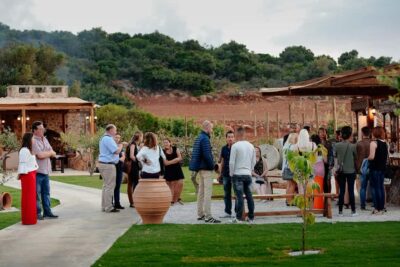
Lassithi, Zeus Cave, Olive Mill Farm & Knossos Combo Tour
Read our review →
Zeus Cave, Lassithi Plateau, Olive Oil Factory, Kritza, Pottery
Read our review →Browse the lists this tour appears in