
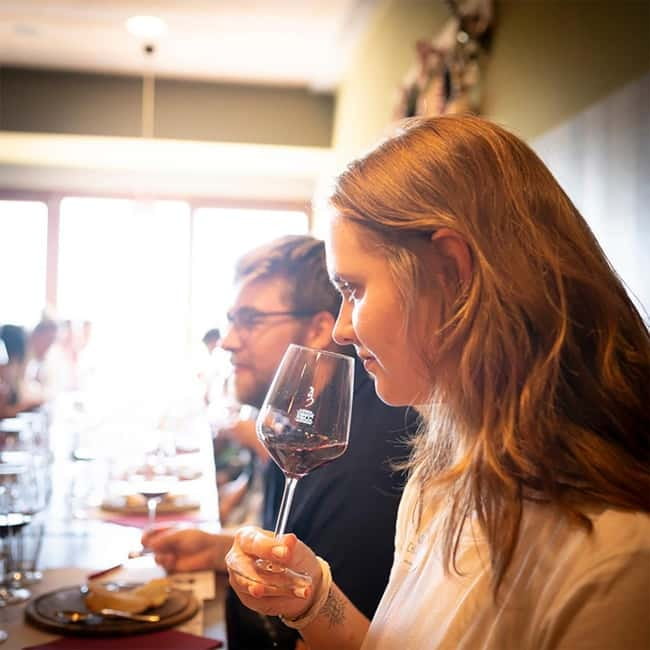
Review · TUSCANY
Chianti: Premium Wine, Olive Oil and Vinegar Tasting
Good wine needs good company. At Poggio ai Laghi, that company comes in the form of Tuscan salami, pecorino, bruschetta, olive oil, balsamic vinegar, and a six-wine tasting in a private setting. I especially like the broad range of samples, from two sparkling wines to four reds, and the way the food helps you understand what belongs on a Tuscan table. The wine expert also adds art and winemaking history, so this is more than a row of glasses.
I also like the price: $36 for 1.5 hours is fair for a guided tasting with wine, oils, vinegars, and a full spread of appetizers. The main consideration is that this is a tasting, not a full winery visit. Your booking does not include a tour of the estate, vineyard, or winery, and you must arrange your own transportation to Poggio ai Laghi.
Five useful things to know before booking
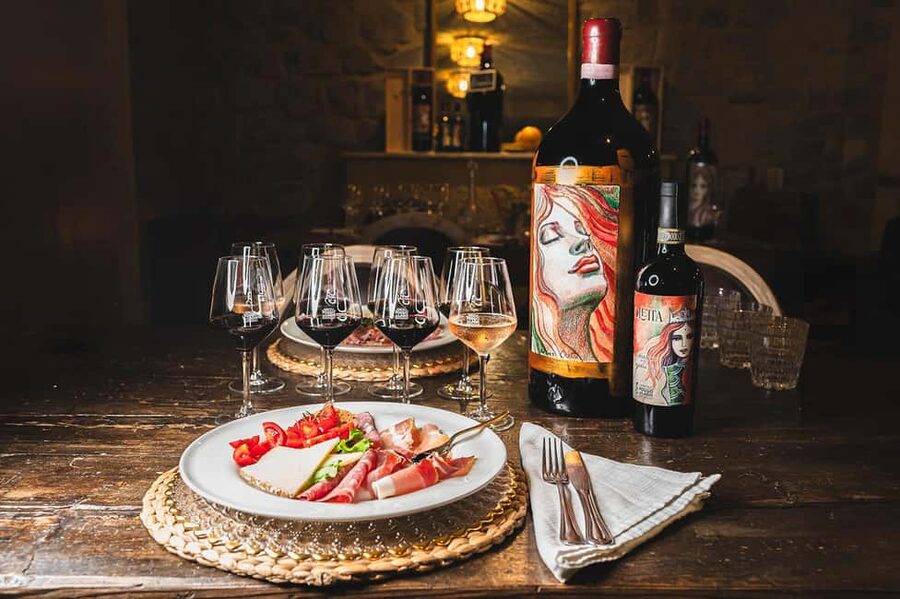
- Six wines are served: Two extra-dry sparkling wines and four Tuscan red wines, including Chianti Classico, Chianti Riserva, and a Supertuscan.
- The food is substantial: Salame, finocchiona, prosciutto, pecorino, bruschetta, and toasted bread with extra virgin olive oil accompany the tasting.
- Oil and vinegar get equal attention: You taste plain, truffle, and chili-pepper olive oils, plus Modena balsamic and balsamic onion vinegar.
- The session lasts 1.5 hours: That gives you time to taste at a relaxed pace, but not time for a full property tour.
- Language support is broad: The host or greeter can assist in English, French, Spanish, or German. One French-speaking visit had no dedicated French speaker, though the team made extra effort to explain the products.
- The setting is accessible: The experience is wheelchair accessible and uses a separate entrance.
A tasting built around Tuscan contrasts
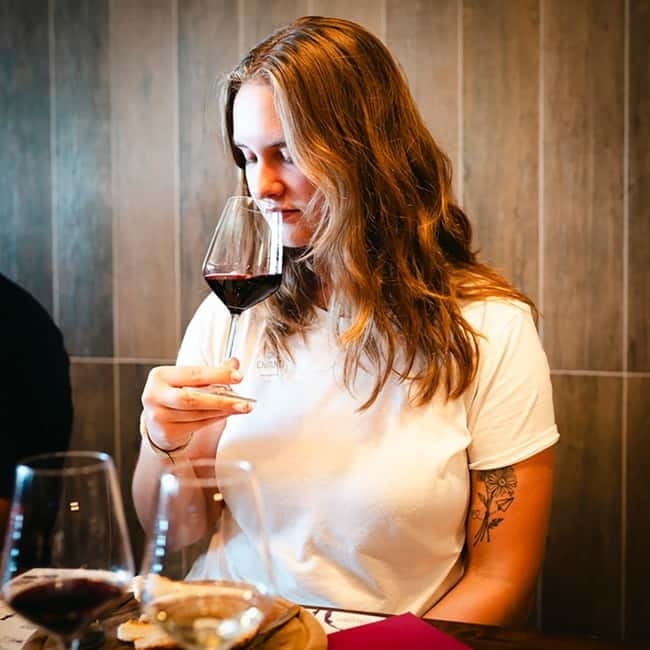
The clever part of this experience is its range. You are not handed six similar glasses of red wine and asked to find imaginary differences. The tasting begins with sparkling wine, moves into several kinds of red, and then brings in olive oil and vinegar. That progression gives you a useful picture of how Tuscan food and drink work together.
Poggio ai Laghi presents the session as a private tasting, guided by a wine expert. The expert explains the path from grape to bottle and discusses both the art and science of winemaking. For a first-time wine tasting, that structure matters. You get a simple framework for thinking about aroma, texture, sweetness, acidity, and finish instead of simply drinking whatever appears in front of you.
The art and history element adds another layer. You are not only tasting products. You are hearing how winemaking fits into Tuscan culture and how a bottle reflects choices made in the vineyard and cellar. The information is designed for beginners, but wine lovers should still find useful comparisons among the bottles.
The experience is held at the estate in the Chianti region. However, keep your expectations in check. The estate, vineyard, and winery tour are not included. If you want to walk among the vines or see production areas, you will need a different activity or a separate visit.
More Balsamic Vinegar Tastings around Italy:
Starting with Arella and Firmina sparkling wines
The first two pours are sparkling wines: Arella, a Spumante Cuvée Extra Dry, and Firmina, a Spumante Rosé Extra Dry. Starting with bubbles is a smart choice because sparkling wine wakes up the palate and gives you an easy first comparison.
Both are extra dry, but the rosé provides a different visual and flavor profile from the white sparkling wine. The point is not to crown a winner. It is to notice how the same general style can feel different when the blend and color change.
These opening pours also work well with the appetizers. Salame and prosciutto can be salty, so sparkling wine gives your palate a clean, lively contrast. Bruschetta with fresh tomato and basil offers a lighter pairing and helps you notice how acidity in both food and wine can work together.
If you are new to wine, do not worry about having the right vocabulary. Pay attention to what you like. Is the wine crisp or soft? Does it feel dry? Does it make you want another bite of food? Those simple questions are more useful than trying to sound like a professional taster.
Four reds, from Chianti to Supertuscan
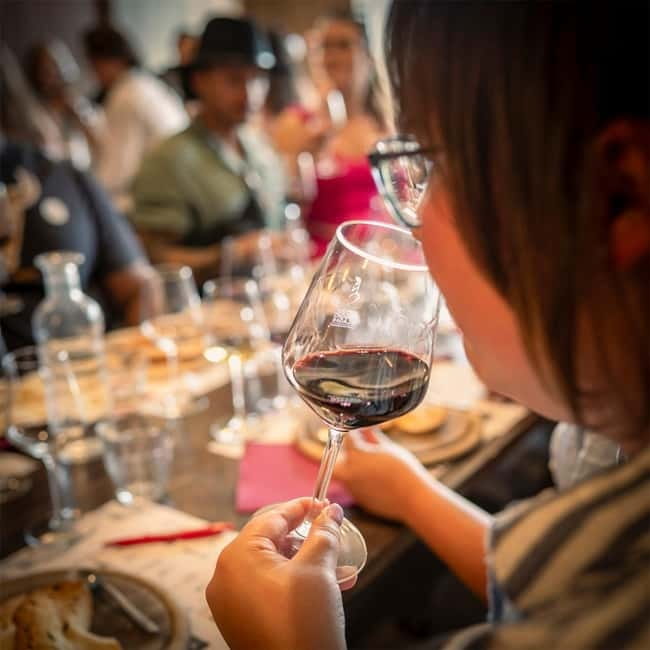
The red wine portion is the heart of the session. You taste Oletta Chianti Riserva DOCG, Aranda Supertuscan IGT, Donna Ava Toscana Rosso, and Lucilla Chianti Classico.
The two Chianti wines let you compare bottles tied to the Chianti tradition. Chianti Classico and Chianti Riserva are not just different labels. The designations tell you something about the wine’s place and aging requirements. The expert’s explanation is useful here because the names can be confusing if you are seeing them for the first time.
Aranda Supertuscan IGT gives you a look at a more flexible Tuscan category. Supertuscans are often made outside the strict rules used for traditional appellations, allowing winemakers more freedom with grapes and methods. The tasting lets you consider that modern approach beside the more regulated Chianti examples.
Donna Ava Toscana Rosso adds another point of comparison. By placing several reds together, the expert can show how grape choices, aging, and production methods affect color, body, aroma, and finish. This is the sort of context that turns a pleasant drink into a useful lesson.
Tuscan appetizers are important during this part. Finocchiona, a fennel-scented salami, brings a distinct flavor that differs from ordinary salame. Tuscan prosciutto adds salt and richness, while pecorino gives you a firm sheep’s-milk cheese with enough character to hold up to red wine.
The pairing is also practical. You can see why local meals often place cured meats, cheese, bread, and wine together. These foods are not decoration on a plate. They change the way the wine tastes, and the wine refreshes your palate after each savory bite.
Olive oils that change the tasting
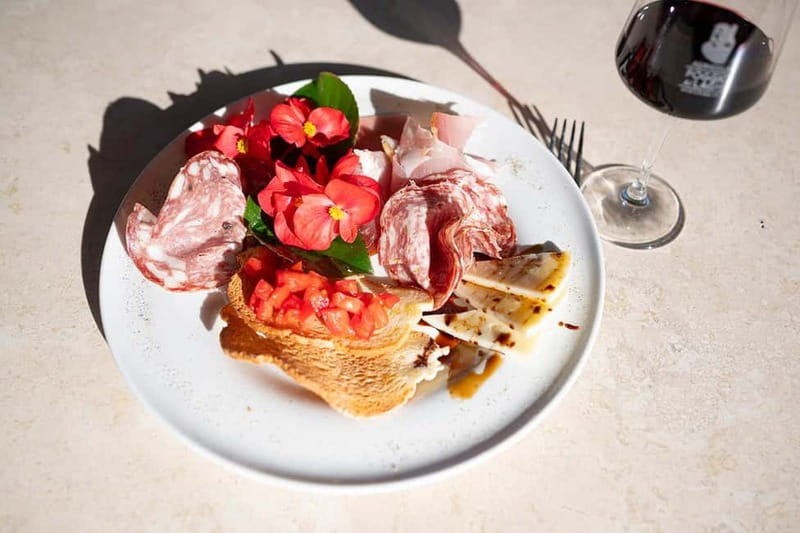
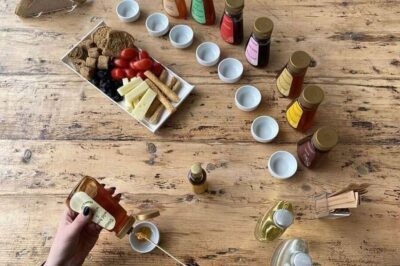
The olive oil tasting gives the session a useful break from wine. You sample extra virgin olive oil, white truffle extra virgin olive oil, and chili-pepper extra virgin olive oil.
Plain extra virgin olive oil is the baseline. Taste it with the toasted bread, then compare it with the flavored oils. The white truffle version brings a more pronounced savory aroma, while the chili-pepper oil adds heat. You may prefer the simple oil, or you may find that one of the flavored versions works better with certain foods.
This portion is especially valuable if you plan to buy olive oil in Tuscany. Labels and attractive bottles can be confusing, and a tasting helps you identify what you actually enjoy. The session also shows why olive oil is treated as a featured ingredient rather than a cooking afterthought.
The food pairing here is simple and effective: toasted bread with extra virgin olive oil. It lets the oil speak clearly without competing flavors. Bruschetta with tomato and basil offers another test, since the tomato’s acidity and basil’s freshness create a different combination.
Do not expect an agricultural lesson about harvesting or milling. The activity focuses on tasting and explanation, not on visiting production facilities. That is a limitation, but it also keeps the program focused within its 1.5-hour schedule.
More Olive Oil and Wine Tastings around Italy:
- Sorrento Farm and Food Experience including Olive Oil, Limoncello, Wine tasting
★ 5.0 · 2,524 reviews - Sorrento: Lemon, Olive Oil and Wine Tasting Tour with Lunch
★ 5.0 · 300 reviews - Alghero: Wine and Olive Oil Tasting at a Local Farm
★ 4.8 · 294 reviews - Balestrate: Olive Grove Tour with Wines & Olive Oil Tasting
★ 5.0 · 241 reviews
Balsamic vinegar, including the unusual onion version
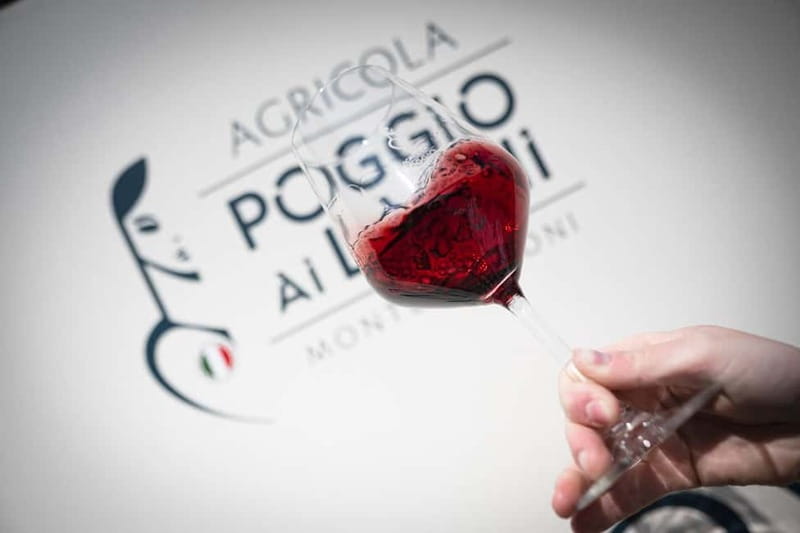
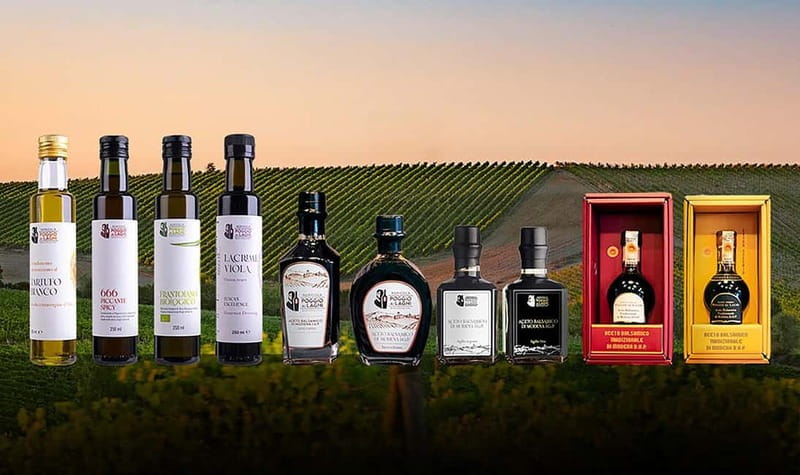
The vinegar tasting includes Aceto Balsamico di Modena IGP Gold and Lacrime Viola Balsamic Onion Vinegar, described as a Tuscan excellence.
The Modena balsamic gives you a familiar reference point. It can be tasted with food to show how sweetness and acidity balance salty meats and cheese. The onion vinegar is the more unusual pour, offering a chance to try a Tuscan-style product that many visitors may not encounter elsewhere.
Vinegar can easily overpower a dish, so the appetizer plate matters here. A small taste with pecorino or cured meat shows how a few drops can change the balance of a bite. This is a practical lesson you can use later when ordering food or choosing ingredients at home.
The combination of wine, oil, and vinegar also makes this more useful than a standard wine-only tasting. You are sampling several products that appear in everyday Tuscan cooking. If you enjoy food markets and regional ingredients, this broader format may be more interesting than six glasses of wine alone.
The appetizer plate is part of the value
At $36, the food helps make the experience worthwhile. The spread includes salame toscano, finocchiona, prosciutto crudo toscano, pecorino, bruschetta with fresh tomato and basil, and toasted bread with extra virgin olive oil.
This is not a token bowl of crackers. You get a selection of recognizable Tuscan ingredients, each chosen to support the drinks. The salty meats pair well with sparkling and red wine. Pecorino gives the reds a hearty partner. Tomato and basil bring freshness, while bread provides a neutral base for the oils and vinegars.
I would treat the food as a generous tasting plate rather than a full lunch. The information provided does not promise a meal, and the session lasts only 1.5 hours. If you are arriving hungry, plan around it rather than assuming the appetizers will replace lunch.
The menu also makes the tasting friendly for people with different levels of wine experience. A serious wine enthusiast can focus on structure and comparison. A beginner can start with familiar foods and use them to understand the drinks.
What the 1.5-hour format means
Ninety minutes is long enough for a guided tasting without turning the experience into an all-day commitment. You can sample six wines, several oils, two vinegars, and food while listening to explanations about winemaking and Tuscan culture.
The short format is convenient if you are fitting the tasting between other Chianti stops. It also suits visitors who want a focused introduction rather than a large estate program. The trade-off is that there is no time for a full property visit, and the estate, vineyard, and winery are specifically excluded.
Starting times vary, so you need to check availability when booking. The experience includes a separate entrance, which may help you get settled without waiting in a general line.
Transportation is not included. You will need to make your own way to Poggio ai Laghi, so check the location carefully before committing to a time. This matters more in the countryside than it would in a city center, especially if you are planning to combine the tasting with other Chianti activities.
Service, explanations, and language support
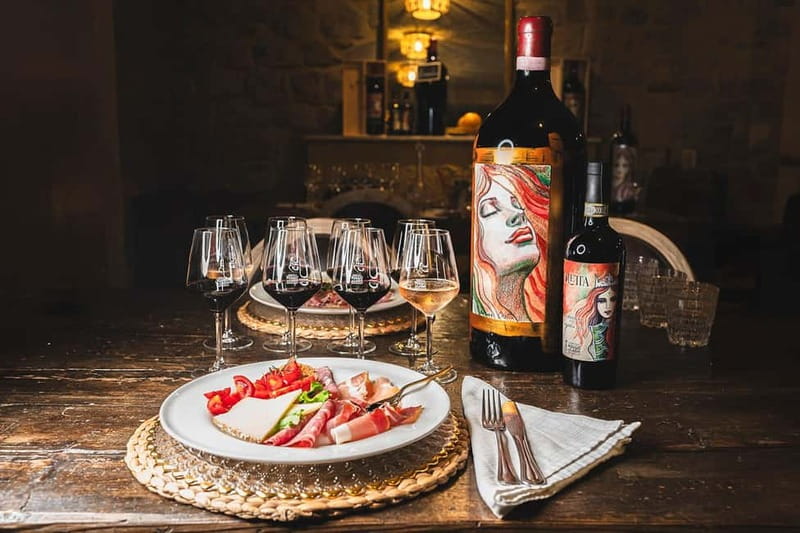
The strongest part of the service is the attention given during the explanations. The facilities are described as very good, and the wine expert is there to guide the tasting rather than simply pour glasses and disappear.
Language support is available in English, French, Spanish, and German through the host or greeter. Still, you should not assume that every session will have a dedicated speaker for your preferred language. On one French-language visit, no French-speaking person was present, but the team made a clear effort to explain the products and help the group appreciate them.
That detail is worth knowing because it shows both the strength and the limit of the language promise. If your language is not English, you may want to confirm the exact support available at your chosen time. The staff’s willingness to help is encouraging, but the experience may not be delivered entirely in your language.
The setting is wheelchair accessible, which makes this a practical option for many visitors. Specific details about every part of the property are not provided, so it is sensible to confirm any individual access needs in advance.
Who will enjoy this tasting most
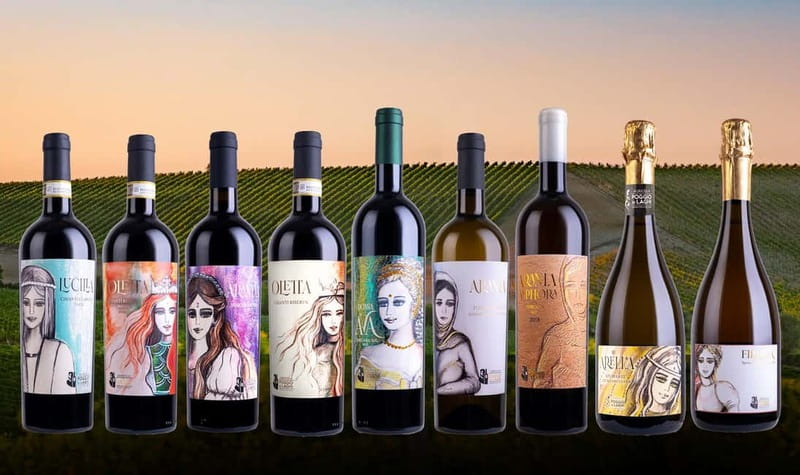
I would recommend this experience to you if you want a compact introduction to Tuscan wine and food. It works especially well for first-time visitors who want guidance without committing to a full winery program.
It also suits couples and small groups looking for a calm food-and-drink activity. The private setting, appetizer plate, and range of samples give the session a social feel without requiring advanced wine knowledge.
Wine enthusiasts may appreciate the comparison among Chianti Classico, Chianti Riserva, Supertuscan, and Toscana Rosso. The oil and vinegar samples add variety, though anyone seeking a detailed vineyard or cellar tour may find the program too limited.
This may not be the right choice if you want transportation, a long visit among the vines, or a full meal. It is also less suitable if you prefer to sample only one type of wine. Here, variety is the point.
Is $36 a fair price?
At $36 per person, the value is solid. You receive six wine samples, three olive oils, two vinegars, a guided explanation, and a substantial selection of Tuscan appetizers. Buying comparable products separately could easily cost more, and you would miss the expert’s comparisons and pairings.
The price is strongest for people who will actually taste the food with the drinks and listen to the explanations. If you only want to drink wine, a simpler tasting elsewhere might be enough. If you want to understand how Tuscan wine fits with cured meat, cheese, bread, oil, and vinegar, this format gives you more for the money.
Remember to budget separately for transportation. Since pick-up and drop-off are not included, the $36 price does not cover the complete cost of reaching the estate.
Should you book the Poggio ai Laghi tasting?
Book it if you want a reasonably priced, well-organized introduction to Tuscan wine and pantry staples, especially if you enjoy food pairings. The sparkling wines, four reds, oils, vinegars, and local appetizers make the experience varied, while the expert’s explanations give it real substance.
Skip it if your main goal is a vineyard walk, cellar visit, or transport from your hotel. Those elements are not part of the session.
For most visitors already arranging their own way around Chianti, this is a good two-hour-sized stop with plenty to taste and enough explanation to make the products memorable. The strong 4.8 rating from 19 evaluations fits the experience’s main strengths: attentive service, clear explanations, and good facilities.
FAQ
How long does the Chianti tasting last?
The tasting lasts 1.5 hours. Starting times vary, so you need to check availability when choosing a session.
How many wines are included?
You taste six wines in total: two extra-dry Spumante wines and four red wines. The red selection includes Chianti Riserva DOCG, Supertuscan IGT, Toscana Rosso, and Chianti Classico.
Are food pairings included?
Yes. The tasting includes Tuscan salame, finocchiona, Tuscan prosciutto, pecorino, bruschetta with fresh tomato and basil, and toasted bread with extra virgin olive oil.
Which olive oils and vinegars will I taste?
The olive oils include extra virgin olive oil, white truffle extra virgin olive oil, and chili-pepper extra virgin olive oil. The vinegars include Aceto Balsamico di Modena IGP Gold and Lacrime Viola Balsamic Onion Vinegar.
Is a vineyard or winery tour included?
No. The estate, vineyard, and winery tour are not included. The activity focuses on the guided tasting and explanations.
Is the experience wheelchair accessible?
Yes, the experience is listed as wheelchair accessible. Host or greeter assistance is available in English, French, Spanish, and German, though dedicated language support may vary by session.
Just added around Italy
- Villa Castelli: Highlights Walking Tour w/ Olive Oil Tasting★ 4.8 · 12 reviews
- Umbria: E-Bike Rental and Fresh EV Olive Oil Tasting★ 5.0 · 4 reviews
- Vernazza (5 Terre): olive grove tour and oil and wine tasting★ 5.0 · 9 reviews
- Trieste’s Essence: Wine and Olive Oil Tasting★ 5.0 · 3 reviews
- Half-Day Chianti Wine and Olive Oil Tour from Viareggio★ 4.0 · 5 reviews
- Valpolicella Wine and Olive Oil Tasting with Lunch from Verona★ 5.0 · 2 reviews
- From Venice: Olive Oil & Wine Tour in the Venetian Hills★ 5.0 · 9 reviews
- Private Tuk Tuk Tour of the Millenary Olive Groves in Ostuni★ 5.0 · 4 reviews
Olive Oil and Wine Tastings, compared.
Sorrento Farm and Food Experience including Olive Oil, Limoncello, Wine tasting
Read our review →
Krka Waterfalls With Boat Cruise, Wine and Olive Oil
Read our review →
Lemon, Olive Oil and Wine Tasting Tour with Lunch
Read our review →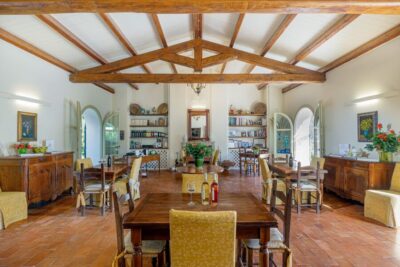
Browse the lists this tour appears in