
Review · LECCE
Lecce : Half day E-Bike tour to Old Olive Mill & Olive Oil Taste
Salento’s countryside rewards slow travel. This four-hour ride links Lecce’s narrow lanes with olive groves, farmhouses, and Sternatia, one of the towns of Grecia Salentina. I like the mix of active sightseeing and local food, and the old underground mill gives the outing a story far beyond a simple bike ride. The main consideration is the distance: you’ll cover about 36 kilometers, with roughly an hour of cycling each way.
The electric bike keeps the ride manageable, while guide Marco is praised for calm instruction, clear cycling cues, and a warm way of bringing local history to life. I also like that the olive oil tasting is tied to a working producer rather than treated as a quick souvenir stop. Still, this is an outdoor activity, so poor weather can cancel it, and food or drinks beyond the included water are your responsibility.
Key points to know before you ride
- About 36 kilometers by e-bike: The route includes an 18-kilometer ride to Sternatia and a different 18-kilometer route back.
- A 15th-century underground mill: The Frantoio Ipogeo was carved into soft limestone and once produced oil for lamps.
- A taste of Griko culture: Sternatia belongs to Grecia Salentina, where the Griko language is part of the area’s Greek heritage.
- Olive oil with local context: You visit a producer and taste extra virgin olive oil made in the region.
- Small-group format: The maximum is 10 people, with an English-speaking private guide.
- A proper Salento snack stop: The route includes time for Leccese coffee and pasticciotto, though food and drinks are not included.
From Lecce’s lanes to open olive country
The tour begins at 9:00 a.m. on Via de Jacobis, 27, in Lecce. Starting early makes sense. You get through the old town before the day’s heat builds, and the first section gives you a gentle introduction to the bike before the longer country ride.
The opening 15 minutes run through Lecce’s narrow alleys. This is not a major sightseeing circuit with long stops at every monument. Instead, you get a brief taste of the historic center before leaving the city behind. That is a good fit if you have already visited Lecce’s main churches and palaces, or if you want to see how quickly the city gives way to the countryside.
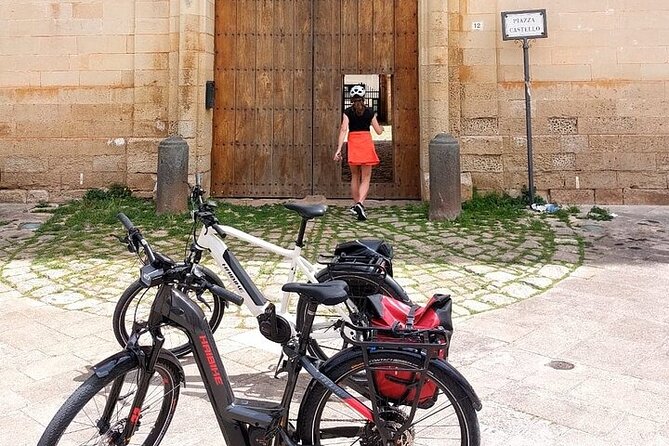
You receive an e-bike, helmet, pannier, phone holder, and water bottle. The phone holder is a small but useful touch, particularly if you use your phone for directions or photographs. The pannier means you do not have to carry every small item on your back.
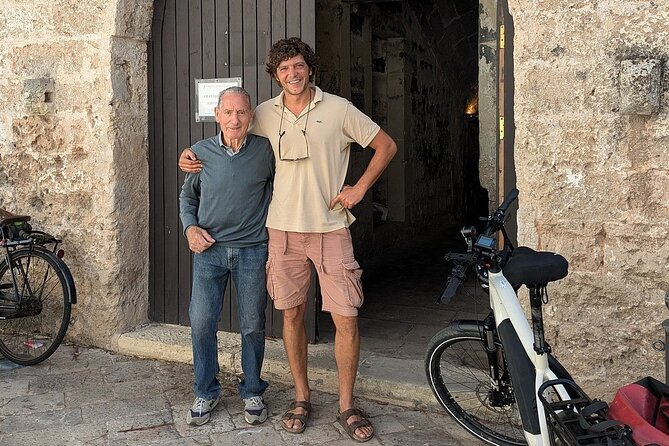
The guide matters here. Marco is specifically praised for helping people feel secure on the bikes, giving clear signals, and offering encouragement without making the outing feel like a race. Nicholas is also associated with the tour, and the guiding team is described as attentive and good at connecting local stories with the places you pass.
More Olive Mill and Factory Tours around Italy:
- Bardolino: Lake Garda Oil Mill Tour with Olive Oil Tasting
★ 4.9 · 205 reviews - Lecce to Galatina E-Bike: Olive Mill & Wine Tasting + Taxi back
★ 5.0 · 54 reviews - Olive Oil Tour Visit to the oil mill and olive oil tasting
★ 5.0 · 53 reviews
An 18-kilometer ride through Salento olive groves
After Lecce, you ride for about an hour toward Sternatia. The route passes ancient olive plantations and Masserias, the farmhouses that mark the agricultural character of Puglia. The supplied details do not promise a flat or effortless ride, so I would treat the e-bike as useful assistance rather than a substitute for basic cycling ability.
The electric motor should make the distance more approachable, but you still need to pedal for a substantial part of the morning. Most people can take part, yet this is better for someone comfortable spending several hours on a bicycle than for someone seeking a mostly seated sightseeing tour.
The reward is the change in pace. By bike, you move slowly enough to notice the old trees and farm buildings, but quickly enough to cover ground that would be tedious on foot. You also avoid turning the countryside into a blur seen through a car window.
A group limit of 10 helps. It is small enough for the guide to give cycling advice and answer questions, though the exact feel will depend on how many people book that day. The ride is offered in English, which makes the historical explanation accessible to English-speaking visitors.
Sternatia and the Greek thread of Salento
Sternatia belongs to Grecia Salentina, an area made up of 11 towns where the Griko people have maintained a Greek cultural and linguistic link in southern Italy. Greek settlements in southern Italy go back through several periods, including the Byzantine era. That background gives the stop more substance than a quick village visit.
One of the most memorable details connected with Sternatia is the Griko dialect. A local guide from the town leads the visit to the old mill, and a review of the experience describes hearing Griko spoken inside the underground space as a special moment. That is exactly the sort of detail that can make a small-town stop feel personal rather than merely scenic.
The schedule allows about an hour in Sternatia, with the mill visit, the palace, the church, an olive oil tasting, and a café break included within the broader stop. Do not expect a long, unhurried museum visit at every site. The strength of the tour is the combination of short visits tied together by a local guide.
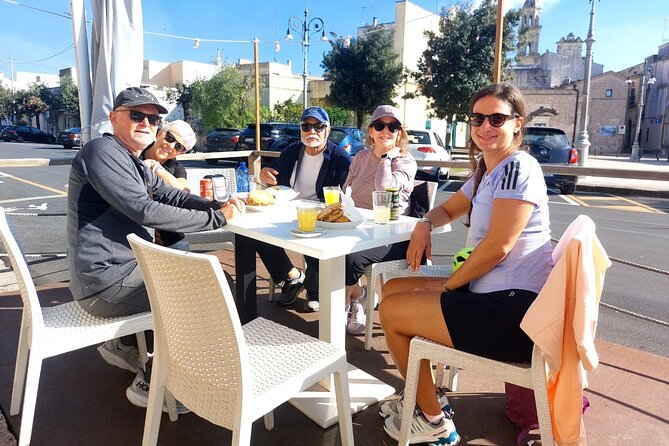
You also get time for Leccese coffee and pasticciotto, a local pastry. The stop is practical as well as enjoyable, but remember that food and drinks are not included in the price. Bring money for the café if you want the snack and coffee described in the route.
Inside Sternatia’s underground olive oil mill
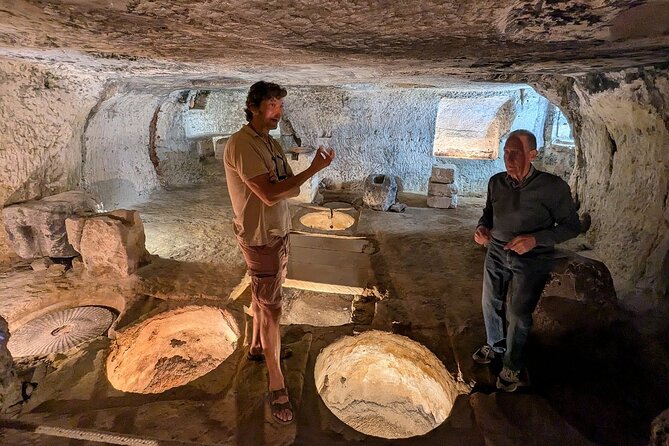
The Frantoio Ipogeo is the tour’s most distinctive stop. This 15th-century olive mill was carved directly into soft limestone, creating an underground workspace shaped by the geology of the area. You see the milling stones and learn how the production system worked.
The old mill was used to make lamp oil, not only the cooking oil most visitors associate with Puglia. That oil was exported around Europe and helped light major cities such as London and Amsterdam before gas lighting began to replace oil lamps in the 19th century.
This detail changes how you view the olive groves outside. The trees are not only part of a postcard scene. They were connected to trade, work, exports, and the everyday need for light. The underground setting also helps explain why the mill was built below ground, using the soft rock and the cooler protected space.
I would give this stop your full attention. The architecture is unusual, and the explanation of lamp oil is the kind of practical history that stays with you. The visit lasts about 45 minutes and admission is included.
The guide from Sternatia adds value because the place is not left to speak for itself. You get the setting, the equipment, and the local explanation together. If you are interested in traditional food production, rural economies, or unusual historic buildings, this will likely be the strongest part of the morning.
More E-Bike Olive Oil Tours around Italy:
- Tuscany Bike Tour with Wine, Oil and Food in the Florentine Hills
★ 5.0 · 209 reviews - Florence: Tuscany Bike Tour with Wine & Olive Oil
★ 4.9 · 174 reviews - Florence: E-Bike Tour with Olive Oil in the Tuscan Hills
★ 4.8 · 134 reviews - Fiesole E-Bike Tour with Olive Oil Tasting or Pool & Chill
★ 4.7 · 94 reviews
Tasting Salento extra virgin olive oil
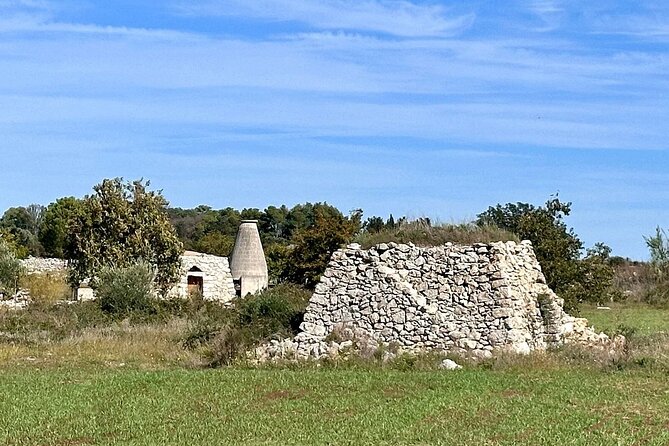
After the old mill, you visit a present-day olive oil producer. The producer offers a tasting of extra virgin olive oil made in the area. This creates a useful link between the old underground operation and current Salento agriculture.
The tasting is included, but it is not described as a full meal or a broad food tour. Think of it as a focused introduction to the region’s olive oil. If you enjoy the sample, you may want to ask the guide or producer questions about the oil, though the supplied details do not specify purchases or a formal retail arrangement.
This is also where the tour earns part of its $119.72 price. You are paying not just for bicycle use, but for a guide, access to the ancient mill, the tasting, equipment, and a route that connects Lecce with a less familiar part of the Salento area. The value is strongest if you care about local production and prefer a small, guided experience over simply renting a bike.
The value is weaker if your main goal is a long food tasting with many products. The experience centers on olive oil, with coffee and pasticciotto available separately during the café stop.
Sternatia’s Baroque church and village center
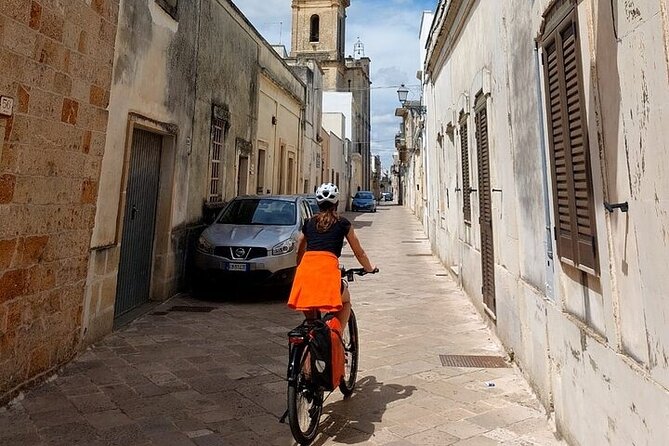
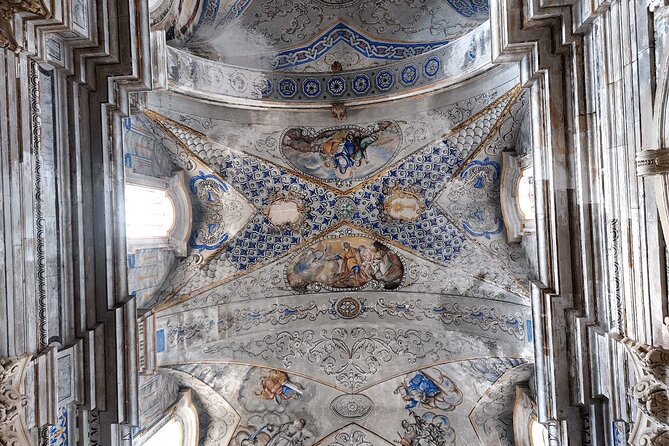
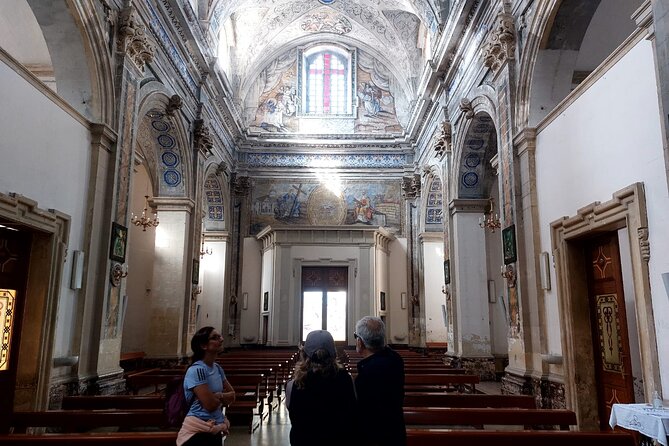
The Chiesa Parrocchiale di Maria Santissima Assunta provides a short architectural stop. Built in the 18th century, the church reflects the Baroque style associated with Lecce and the surrounding area. Inside, frescoes cover the walls and add a quieter, more devotional layer to the visit.
The church stop lasts about 15 minutes. That is enough for a look at the interior and a short explanation, but not enough for a detailed art-history lecture. I see that as a benefit for this itinerary. You have already spent time cycling and visiting the mill, so a brief pause keeps the morning moving.
The church also helps you understand Sternatia as more than a place passed through on the way to the tasting. The town combines Greek cultural traces, Baroque religious architecture, olive production, and everyday café life. Those pieces fit together better than a single grand sight would.
The return route keeps the ride fresh
You return to Lecce by a different 18-kilometer route, taking about an hour. That is a smart choice. Seeing the same road twice would make the final section feel like transport, while a second route gives the ride another set of views through farmland and olive country.
By this point, the e-bike becomes especially useful. You have already visited the mill, church, and producer, and fatigue may begin to matter more than it did at 9:00 a.m. The route returns to the original shop, so you do not need to arrange a separate pickup or find your way back across the area.
The tour ends at the meeting point. Since the experience lasts about four hours, you should have much of the afternoon free for Lecce. That makes it easy to combine with a later meal or additional sightseeing, though you may want a quiet break first if you are not used to longer rides.
Price, group size, and practical value
At $119.72 per person, this is not the cheapest way to see the countryside. A basic bicycle rental would cost less, but it would not include the guide, the underground mill admission, the tasting, the route planning, or the local context.
The price makes more sense for people who want the day organized. You do not need to plot a safe route from Lecce, locate Sternatia, arrange the mill visit, or work out how to connect the historic sights. The guide also helps with cycling confidence, which can be important if you are used to city bikes but uncertain about riding in rural areas.
The booking pattern, with reservations often made well in advance, suggests you should not leave this until the last minute during a busy period. Confirmation arrives within 48 hours, subject to availability. The experience is capped at 10 people and starts at 9:00 a.m.
You can cancel for a full refund up to 24 hours before the start time. Changes or cancellations inside that window are not refunded, and poor weather can lead to a new date or a full refund. The tour also requires a minimum number of participants, so a cancellation for that reason brings the same choice of another date, another experience, or a refund.
Who will enjoy this four-hour ride?
I would recommend it most strongly to:
- Active sightseers who want to combine exercise with culture.
- Couples and friends looking for a small-group outing outside Lecce.
- Food-focused visitors who want olive oil connected to its local setting.
- History fans interested in work, trade, and traditional production.
- People curious about Griko culture and the Greek roots of southern Italy.
- Cyclists who prefer support from an English-speaking guide.
It may not suit you if you dislike cycling, want a full day of major monuments, or need a weather-proof activity. The ride is a central part of the experience, not just a way to move between stops.
You should also expect a morning with several short visits rather than one long museum experience. The route gives you variety: Lecce, country roads, Sternatia, an underground mill, a church, a tasting, and a café break. That variety is the point, but it means no single stop receives a very long visit.
Should you book the Lecce e-bike tour?
Book it if you want to see how Lecce connects to the wider Salento countryside. The strongest reasons are the 15th-century underground mill, the lamp-oil story, the Griko connection, and the chance to taste present-day local olive oil with a guide who takes cycling confidence seriously.
I would skip it if you want a relaxed sightseeing morning with almost no physical effort. For everyone else, the combination of a manageable e-bike, a maximum group of 10, and a route beyond Lecce makes this a useful way to spend half a day. Bring water, allow extra money for coffee and pasticciotto, wear practical clothes, and keep the weather forecast in mind.
FAQ
Where does the e-bike tour start?
It starts at Via de Jacobis, 27, 73100 Lecce LE, Italy.
What time does the tour begin?
The scheduled start time is 9:00 a.m.
How long does the experience last?
The tour lasts approximately four hours.
Is the bicycle included?
Yes. The experience includes use of an e-bike, helmet, pannier, bike phone holder, and a water bottle.
How far do you cycle?
You cycle about 18 kilometers to Sternatia and about 18 kilometers back to Lecce by a different route.
Is the olive oil tasting included?
Yes. The tasting of local extra virgin olive oil is included.
Are food and drinks included?
No. Food and drinks are not included, although the route includes a stop for Leccese coffee and pasticciotto.
What happens if the weather is poor?
If the experience is canceled because of poor weather, you will be offered a different date or a full refund.
Just added around Italy
- Villa Castelli: Highlights Walking Tour w/ Olive Oil Tasting★ 4.8 · 12 reviews
- Vernazza (5 Terre): olive grove tour and oil and wine tasting★ 5.0 · 9 reviews
- Umbria: E-Bike Rental and Fresh EV Olive Oil Tasting★ 5.0 · 4 reviews
- Trieste’s Essence: Wine and Olive Oil Tasting★ 5.0 · 3 reviews
- Half-Day Chianti Wine and Olive Oil Tour from Viareggio★ 4.0 · 5 reviews
- From Venice: Olive Oil & Wine Tour in the Venetian Hills★ 5.0 · 9 reviews
- Valpolicella Wine and Olive Oil Tasting with Lunch from Verona★ 5.0 · 2 reviews
- Private Tuk Tuk Tour of the Millenary Olive Groves in Ostuni★ 5.0 · 4 reviews
Olive Mill and Factory Tours, compared.
Knossos-Zeus Cave -Old Traditional Villages-Olive Oil Factory
Read our review →
The Governor’s Olive Mill Tour with Olive Oil Tasting
Read our review →
Road-trip to Lasithi, Zeus Cave & Olive Mill Farm
Read our review →
Lassithi, Zeus Cave, Olive Mill Farm & Knossos Combo Tour
Read our review →
Zeus Cave, Lassithi Plateau, Olive Oil Factory, Kritza, Pottery
Read our review →
Zeus Cave, Lassithi Plateau, and Olive Factory Tour
Read our review →Browse the lists this tour appears in