
Review · PELOPONNESE
Olive oil Mill Visit & Olive oil tasting Experience
Olive oil tells Messinia’s story. This 90-minute experience links Androusa’s 13th-century castle, a traditional olive museum, a modern mill, and a guided tasting in one compact visit. I like the clear sense of place, especially the chance to connect ancient olive trees with the modern production of extra virgin olive oil. I also like the tasting table, where Kalamata olives, tapenades, bread, cheese, and vegetables make the lesson practical and delicious.
The main point to consider is timing. You may see the mill but not watch the machines running, depending on the season. The tour does not include transport or lunch, and the advertised food is a selection of small bites rather than a full meal. If you want to walk through the olive groves too, you should ask about the provider’s separate orchard-focused tour.
Key points at a glance
- Three olive stops in one village visit: See Androusa Castle, a traditional olive museum, and a modern olive oil mill.
- A real tasting lesson: An olive oil expert explains aroma, flavor, and the traits that define extra virgin olive oil.
- Local food makes the lesson useful: Try Kalamata olives, olive tapenades, bread, cheese, and vegetables with different oils.
- Easy access from major sights: Androusa is about 20 minutes from Kalamata and 10 minutes from Ancient Messene.
- Small-group format: The group is limited to 16 people, with a tour leader guiding the visit in English.
- A strong record of satisfaction: The experience has a 5 out of 5 rating from 77 reviews, with 100 percent recommending it.
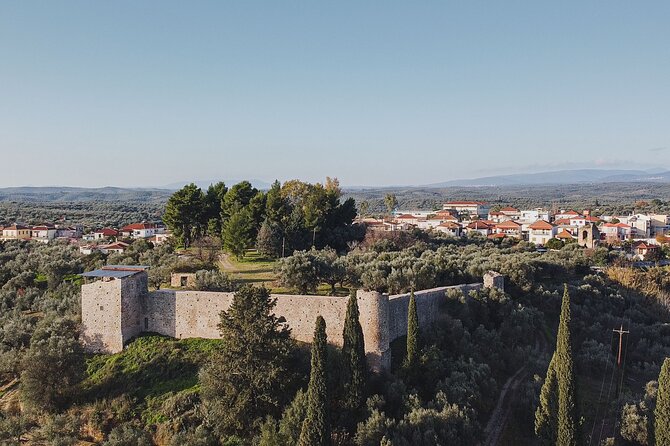
Starting at the 13th-century castle of Androusa
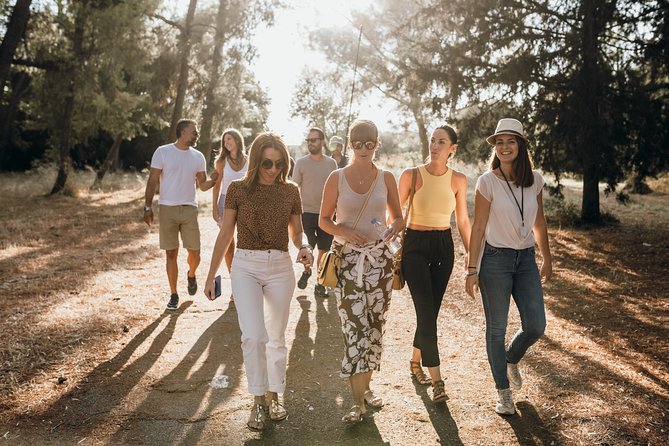
The meeting point is on Epar.Od. Ellinoklissias-Androusa 29 in Androusa village. This is a useful starting place because the tour does not treat olive oil as an isolated food product. It places the oil within the story of the village and the wider Messinia region.
You begin near the 13th-century castle of Androusa, a reminder that this quiet village has seen far more action than its present pace suggests. From here, the tour introduces local olive varieties and the old trees that have shaped daily life in the area.
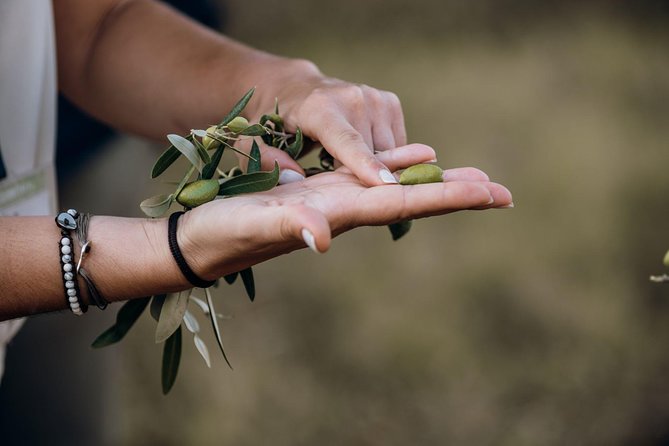
The focus is not just on naming trees. You learn how different olives can be used for oil or for eating, and why the local varieties matter. The old olive trees also carry family stories and local tradition, which helps explain why olive oil is treated as a basic part of Greek life rather than a luxury item.
A small treasure-hunt game has been used during the introduction, adding a playful touch for groups that like interaction. That can be especially useful if you are visiting with children or prefer a tour that does not rely on a long lecture.
The castle section is also a practical reminder about the tour’s scale. This is not a large museum program with a long formal route. It is a short, guided experience that moves between nearby places and keeps the subject focused.
More Olive Mill and Factory Tours around Greece:
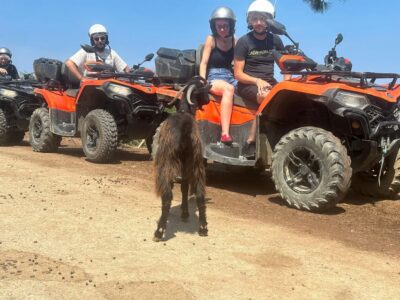
- Crete: Quad Safari, Olive Mill with Tasting & Ghost Village
★ 4.9 · 1,004 reviews - Knossos-Zeus Cave -Old Traditional Villages-Olive Oil Factory
★ 5.0 · 694 reviews - The Governor’s Olive Mill Tour with Olive Oil Tasting
★ 5.0 · 502 reviews
The traditional olive museum in the village
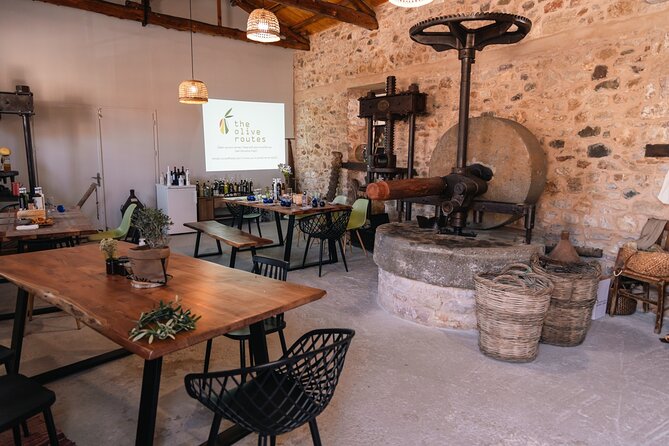
The next stop is a traditional olive museum housed in Androusa for more than 120 years. Its age gives the visit a human feel. You are not only looking at present-day food production. You are seeing how olive work was tied to village life before modern machinery changed the process.
The contrast between the traditional mill and the modern facility is one of the best reasons to book this experience. The old setting helps you understand the physical effort and slower rhythm of earlier olive production. The later factory visit shows how the same basic product is now handled with modern equipment.
The museum is especially useful if you have never thought about the difference between an olive that is eaten and an olive that is pressed for oil. The guides explain the local types and how the final use affects what you taste at the table.
Expect the presentation to be personal. Athanasia has been praised for her warm, engaging way of explaining the subject, while Dimitra, Stavroula, Kalliopi, Georgia, and other members of the team have also been involved in different parts of the experience. The strongest feature here is not a polished stage performance. It is the clear pride the team takes in the region and its food traditions.
Seeing how extra virgin olive oil is made
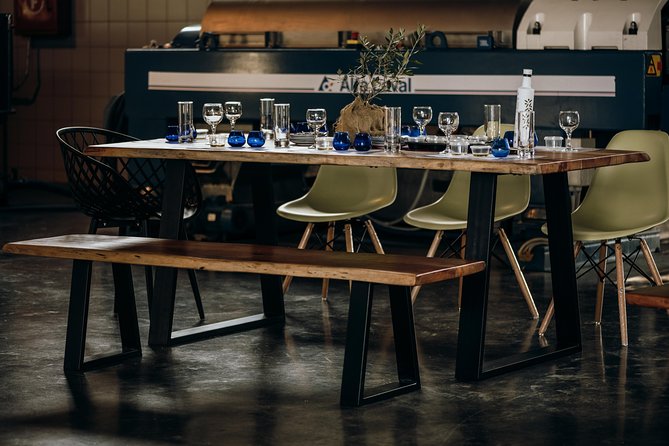
After the traditional stop, you visit a modern olive oil mill. This is where the tour moves from village customs to production.
You learn how olives become oil and what makes extra virgin olive oil different. The tasting later gives you a chance to apply those points, so the factory visit does not feel like a separate technical stop. The process, the product, and the tasting all support one another.
The tour is most useful for anyone who has bought olive oil but never understood the label. Extra virgin is not simply a way to say expensive or Greek. It relates to quality and the oil’s organoleptic traits, meaning the things you detect through smell and taste. Your guide explains those traits in plain terms, then gives you oils to compare.
There is one important seasonal limit. You may not see the machinery operating during your visit. Olive processing follows the harvest, so the facility may be quiet outside the production period. One visitor specifically wished the machines had been running, and that is a fair expectation to manage before booking.
If watching active production is your top priority, contact The Olive Routes before you reserve. If your main goal is understanding the oil and tasting it with local foods, the mill visit still has value even when the equipment is not in use.
The tasting workshop: learning to taste olive oil
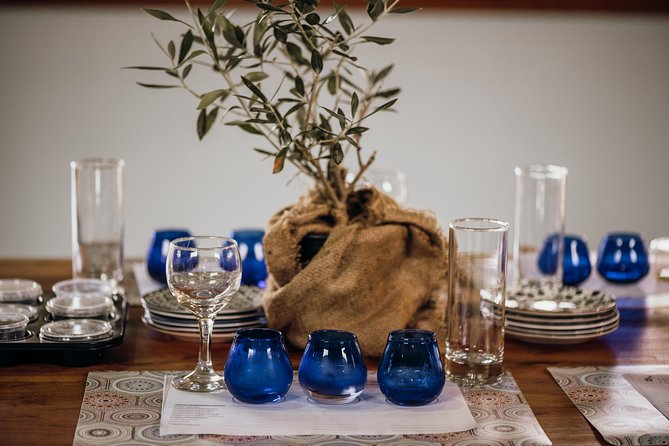
The tasting is the heart of the experience. An olive oil expert guides you through several varieties and explains what to notice in each glass or sample.
You are taught to pay attention to smell, flavor, bitterness, and the peppery sensation that can appear in good olive oil. The point is not to turn you into a professional taster in 90 minutes. It is to give you a useful set of reference points so you can identify freshness and quality with more confidence.
The workshop also makes clear that olive oil is not meant to be swallowed without thought. A small amount on its own may taste bold or even surprising. Once paired with bread, cheese, vegetables, Kalamata olives, and tapenades, the flavors become easier to understand.
I like this approach because the food is not just a reward at the end. It is part of the lesson. You taste how an oil changes a simple ingredient, and you can compare which oil suits which food.
The local products are described as small bites, so you should not arrive expecting a full lunch. Some versions of olive-focused visits may include a larger meal, and one account of a related experience included homemade lunch, but this specific tour lists tasting portions rather than lunch. Plan a proper meal separately if you will be hungry afterward.
More Olive Oil Tours around Greece:
- From Chania: Olive Oil, Wine, Cheese & Honey Tasting Tour
★ 4.6 · 490 reviews - Crete: Road-trip to Lasithi, Zeus Cave & Olive Mill Farm
★ 4.4 · 451 reviews - Heraklion: Olive Farm Tour with Tasting of Local Delicacies
★ 4.9 · 411 reviews - Lassithi, Zeus Cave, Olive Mill Farm & Knossos Combo Tour
★ 4.6 · 404 reviews
Kalamata olives and the food of Messinia
The tasting includes the products most visitors hope to find in this part of Greece: Kalamata olives and olive tapenades. Bread, cheese, and vegetables provide a simple base for comparing the oils.
This is where the tour feels most connected to daily life. You are not sampling abstract products in a shop. You are trying the oil in the way it is commonly enjoyed at home and around a regional table.
The food is also useful for making decisions about what to buy. A strong oil may be excellent with bread but overpower a delicate vegetable. A milder sample may work better for everyday cooking. Since products tasted during the visit can be bought directly, you can take home the oil or tapenade that you actually enjoyed instead of guessing from a label.
The shop opportunity is a practical bonus, but you should not feel pressured to purchase. The best reason to buy is that you now recognize a flavor you like and want to use it at home. Olive oil travels well when properly packed, and a bottle or tin can be a more useful souvenir than another decorative object.
How personal is the experience?

The maximum group size is 16 people. That is large enough to offer a lively discussion but small enough for questions and interaction. It also fits the tasting format better than a coach-sized group would.
The team’s style is a major part of the appeal. Athanasia has been singled out for her warmth and clear explanations, and the wider team has been praised for passion, humor, and hospitality. The tone is relaxed rather than formal, with enough information for serious food lovers without making the visit feel like a technical class.
You may also find that different members of the team handle different parts of the day. Some introduce the village and trees, while others lead the mill visit or tasting. That variety can make the experience feel more like a family welcome than a fixed script.
The tour is offered in English. Most people can take part, and service animals are allowed. Since the visit involves a castle setting, a museum, a mill, and a tasting table, ask the provider ahead of time if you have specific mobility needs that are not addressed in the basic details.
Location, timing, and the question of transport
The location works well as part of a Messinia sightseeing day. Androusa is about a 20-minute drive from Kalamata and roughly 10 minutes from Ancient Messene.
The experience begins and ends at the same meeting point. An air-conditioned vehicle is not included, so you need to arrange your own way there. This matters if you are staying in Kalamata without a car. The short drive from town makes the distance manageable, but the tour is not a pickup excursion.
At about 1 hour and 30 minutes, the visit is easy to fit around other plans. You can combine it with Ancient Messene, a Kalamata day, or a wider drive through Messinia. I would avoid squeezing it between two fixed appointments, though. The value comes from asking questions and taking time at the tasting table, not from racing through the stops.
The experience is often reserved about 33 days ahead. That suggests you should not leave it until the last moment if your dates are fixed, particularly during busy periods. Confirmation is normally provided at booking, unless you book within one day of the visit. In that case, confirmation depends on availability.
Is $54.31 a fair price?
At $54.31 per person, this is not the cheapest food tasting you will find in Greece. The price makes more sense when you consider what is bundled into the visit.
You are paying for a small-group tour leader, a traditional museum visit, a modern mill visit, an expert-led tasting, and local food pairings. You also get context about the trees, olive varieties, and the role of oil in Messinian life. A simple tasting at a shop might cost less, but it would not give you the same link between the village, the old production method, the modern mill, and the final food.
The value is strongest if you are curious about food production or want a regional experience beyond the usual ancient sites. It is less compelling if you only want a quick snack or a large meal.
You should also remember what the price does not cover. There is no air-conditioned vehicle and no lunch. Your transport and any later meal come out of your own budget.
Who will enjoy this olive oil visit?
I would recommend it to food-minded visitors, couples, small families, and anyone staying near Kalamata or Ancient Messene. It suits you especially well if you like learning how a local product is made and prefer a tasting with a story behind it.
It is also a good choice for visitors who want a gentle, social activity rather than a strenuous excursion. The short duration keeps the commitment manageable, and the food gives the experience broad appeal.
You may want a different option if you mainly want to walk through olive groves or watch the machinery during harvest. The groves are only a few minutes away, but the provider offers a separate tour that includes olive gardens, fruit, and herbs. Ask about that option if the trees themselves are your main interest.
The visit is probably best for adults and older children who can engage with a tasting lesson. The treasure-hunt activity can add fun for younger participants, but the tour still centers on explanation and food rather than a dedicated children’s program.
Booking, cancellation, and weather details
You can cancel up to 24 hours before the start time for a full refund. Changes or cancellations made less than 24 hours before the start are not accepted for a refund, and the cut-off follows local time.
The experience requires good weather. If poor weather causes a cancellation, you are offered another date or a full refund. That policy is worth noting because part of the visit connects to the outdoor setting around Androusa and the olive trees.
The tour has a maximum of 16 people, is offered in English, and ends back at the original meeting point. Those details make it easy to fit into a self-guided day, as long as you arrange transport in advance.
Should you book it?
Book this experience if you want to understand Greek olive oil rather than simply taste it. The combination of Androusa Castle, the old museum, modern production, and guided food pairing gives the visit real shape.
The strongest parts are the personal guides, the clear tasting instruction, and the chance to try Kalamata products with the oils. The main drawbacks are the lack of included transport, the absence of lunch, and the possibility that the machines will not be running outside harvest season.
For a short visit from Kalamata or Ancient Messene, I think the price is fair. If you want olive groves and active production, confirm the seasonal details or choose the provider’s longer orchard option. If you want a friendly introduction to the food culture of Messinia, this is an easy recommendation.
FAQ
Where does the olive oil experience begin?
It begins at Epar.Od. Ellinoklissias-Androusa 29 in Androusa, Greece.
Where does the experience end?
It ends back at the same meeting point in Androusa.
How long does the tour last?
The experience lasts approximately 1 hour and 30 minutes.
Is transportation included?
No. An air-conditioned vehicle is not included, so you must arrange your own transportation to and from Androusa.
Is lunch included?
No. Lunch is not included. The experience includes small bites such as bread, cheese, vegetables, Kalamata olives, and olive tapenades.
What language is the tour offered in?
The tour is offered in English.
How many people can join the tour?
The maximum group size is 16 people.
Can I cancel for a full refund?
Yes. You can cancel at least 24 hours before the start time for a full refund. If poor weather causes the provider to cancel the experience, you are offered another date or a full refund.
Just added around Greece
- Athens: Greek Wine & Olive Oil Tasting at Brettos Plaka★ 4.5 · 3 reviews
- Breakfast in the markets with olive oil and honey tasting★ 4.8 · 8 reviews
- PRIVATE RHODES TOUR + Lunch Stop & WINE/OLIVE OIL Tasting★ 5.0 · 2 reviews
- Olive Tour & Tasting★ 5.0 · 4 reviews
- Olive Facility Visit with Olive Oil Tasting Session★ 5.0 · 2 reviews
- SYSTASIS Olive Oil Tasting Experience in Ermioni Greece★ 5.0 · 4 reviews
- Olive Oil Tour close to Nafplio★ 4.5 · 3 reviews
- Olive Oil Tasting at the Mykonian Farm★ 4.5 · 3 reviews
Olive Mill and Factory Tours, compared.
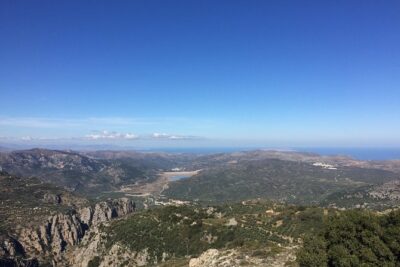
Knossos-Zeus Cave -Old Traditional Villages-Olive Oil Factory
Read our review →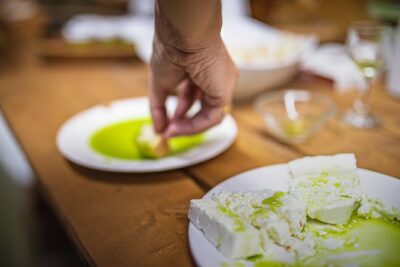
The Governor’s Olive Mill Tour with Olive Oil Tasting
Read our review →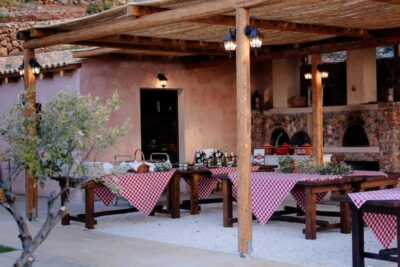
Road-trip to Lasithi, Zeus Cave & Olive Mill Farm
Read our review →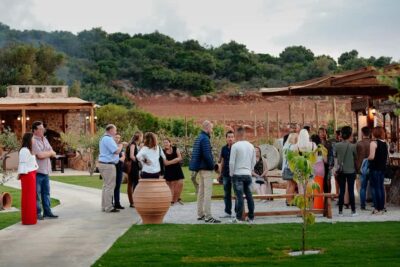
Lassithi, Zeus Cave, Olive Mill Farm & Knossos Combo Tour
Read our review →
Zeus Cave, Lassithi Plateau, Olive Oil Factory, Kritza, Pottery
Read our review →
Zeus Cave, Lassithi Plateau, and Olive Factory Tour
Read our review →Browse the lists this tour appears in