
Review · BARI
Olive Oil Private Tour and Extra Virgin Olive Oil Tasting in Altamura
Green gold has a story. This private visit to Frantoio Oleario Perniola gives you a close look at how olives become extra virgin olive oil, followed by a guided tasting and a small Apulian aperitif. I especially like the family-run setting, with 60 years of work across three generations, and the practical tasting session led by an oil sommelier.
The price is another strong point: about $24.03 per person for roughly 1 to 1.5 hours. The main consideration is timing. If you visit outside the olive processing season, some machinery or production stages may not be operating, though the process is explained with videos and clear demonstrations.
Key points to know before you book
- A 60-year family business: Perniola traces its work across three generations, linking traditional olive-making methods with modern production.
- A private visit: Only your group takes part, so the pace can be relaxed and questions are easier to ask.
- A proper oil tasting: You learn about aroma, flavor, texture, tasting technique, and food pairings rather than simply sampling oil with bread.
- A 100 ml bottle included: You take home a small bottle of extra virgin olive oil as a useful souvenir.
- A local aperitif finishes the visit: Expect Apulian specialties such as focaccia and other regional snacks alongside the oils.
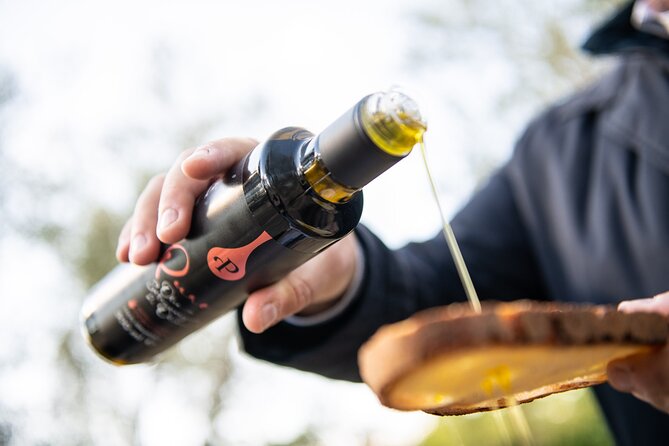
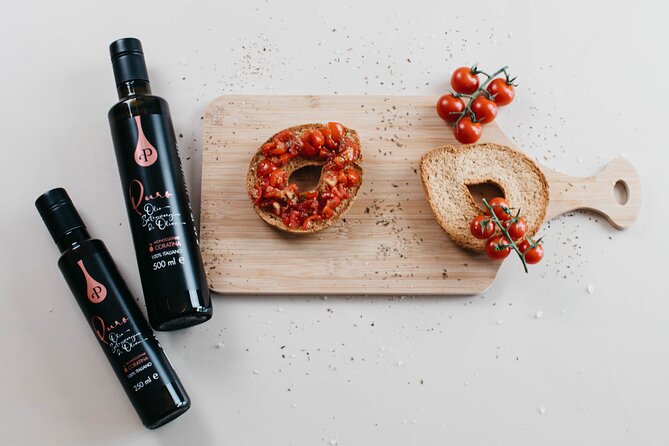
- Infused oils add variety: Perniola also produces oils flavored with real lemon, orange, rosemary, garlic, and chili.
Why this Altamura olive mill is worth your time
Altamura is best known for its bread, ancient streets, and location in the Murge area of Puglia. An olive mill visit adds another layer to your understanding of the region. Olive oil is not just a condiment here. It is part of daily cooking, family agriculture, and local identity.
At Frantoio Oleario Perniola, you are not simply shown a bottle and invited to buy it. The visit explains the path from olive to oil, including the stages that affect quality. That matters because supermarket labels can make extra virgin olive oil sound simple, while the actual result depends on harvesting, handling, extraction, storage, and sensory quality.
I like that the experience stays focused. You are not signing up for a full-day farm outing or a long food tour. In about an hour to an hour and a half, you get the mill visit, the tasting, the food pairing, and a take-home bottle. For a compact stop in Altamura, that is a sensible use of time.
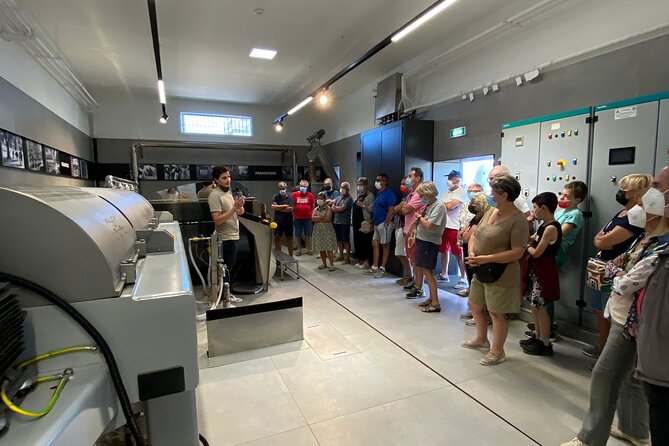
The private format also helps. You are with only your own group, not a large crowd moving from room to room. That gives you a better chance to ask why one oil tastes grassy, why another feels more peppery, or how an infused oil is made.
More Olive Oil Tours around Italy:
- Sorrento Farm and Food Experience including Olive Oil, Limoncello, Wine tasting
★ 5.0 · 2,524 reviews - Olive oil tasting in Sorrento
★ 5.0 · 434 reviews - Sorrento: Lemon, Olive Oil and Wine Tasting Tour with Lunch
★ 5.0 · 300 reviews
Arriving at Frantoio Oleario Perniola
The meeting point is Via Santeramo in Colle 191, Altamura, in the province of Bari. The activity begins and ends at the same location, so you do not need to arrange a separate drop-off point at the end.
The tour is offered in English, and confirmation is provided when you book. The mill is near public transportation, which is useful if you are visiting Altamura without a car. The available details do not specify the exact transport connection or walking time, so you should check your route before setting out.
Because the visit is private, it can work well for couples, families, and small groups with different levels of interest. An olive oil enthusiast can ask detailed questions, while someone less familiar with the subject can follow the basic explanation without feeling lost.
I would allow a little extra time around the scheduled start. Food visits are more enjoyable when you are not rushing in from another part of town, and the tasting is meant to be taken slowly.
The Perniola family story and the olive mill
The first part of the visit introduces the Perniola business and its three-generation connection to extra virgin olive oil. Sixty years is long enough to show genuine continuity, but the mill is not presented as a place frozen in the past. The focus is on tradition and innovation working together.
That balance is useful. Traditional olive growing and oil making are deeply tied to local practice, but modern equipment and careful processing help protect the quality of the finished oil. The tour explains how those two sides meet at the mill.
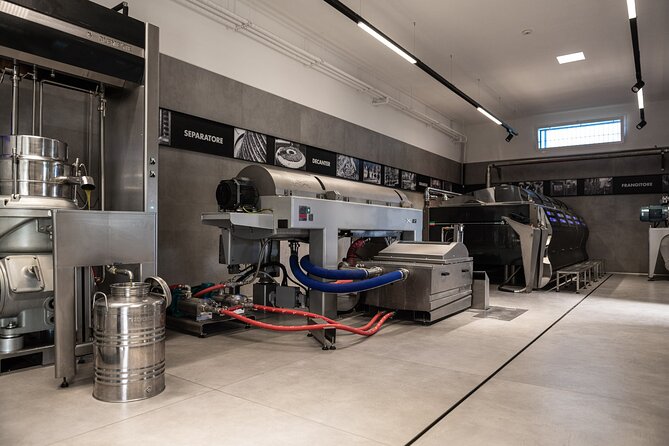
You will learn about the production process that turns a simple olive into what locals often call green gold. The precise sights available can vary with the season. During active production, you may see more of the machinery in operation. At other times, the guide explains stages that cannot be shown directly.
This seasonal point is worth keeping in mind. The experience is still useful outside harvest and processing periods, but it may feel more like an educational visit than a working production tour. Videos can help fill that gap, and one guide used them to show parts of the process that were not visible during the visit.
The explanations are a major part of the value. Angelica has been praised for making the subject clear, friendly, and fun, while Giuseppe has been singled out for his well-informed presentation of the mill and its methods. The guide you meet may depend on the day, but both names are associated with a warm and capable welcome.
What you learn about making extra virgin olive oil
The tour follows the general journey of the olive through the mill. You are introduced to the stages involved in producing quality extra virgin olive oil and shown why careful handling matters.
This is where the visit becomes more than a tasting with a few facts added on. You start to understand that oil can differ because of the olives used, the way they are processed, and the care taken at each stage. A bottle labeled extra virgin is not automatically identical to every other bottle with the same wording.
The tour also helps you connect production with taste. An oil can have a fresh green character, a bitter edge, or a peppery finish. Those qualities are not necessarily flaws. In a well-made oil, bitterness and a gentle throat tingle can be signs of the olives and their natural compounds.
The supplied material does not provide a technical breakdown of every machine or extraction temperature, so you should not expect an industrial engineering lecture. Instead, the strength is the clear explanation of the overall process and the chance to see how one family business handles its product.
If you visit during a quieter season, the guide may rely more on explanation and visual material. That is a limitation, but it also means the visit does not depend entirely on machinery running that day.
Same groves, a different afternoon:
- Alghero: Wine and Olive Oil Tasting at a Local Farm
★ 4.8 · 294 reviews - Ostuni: Masseria tour among thousand-year-old olive trees with oil tasting
★ 4.8 · 261 reviews - Balestrate: Olive Grove Tour with Wines & Olive Oil Tasting
★ 5.0 · 241 reviews - Bardolino: Vineyard Tour with Wine, Olive Oil & Food Tasting
★ 4.6 · 221 reviews
The tasting: learning to notice different oils
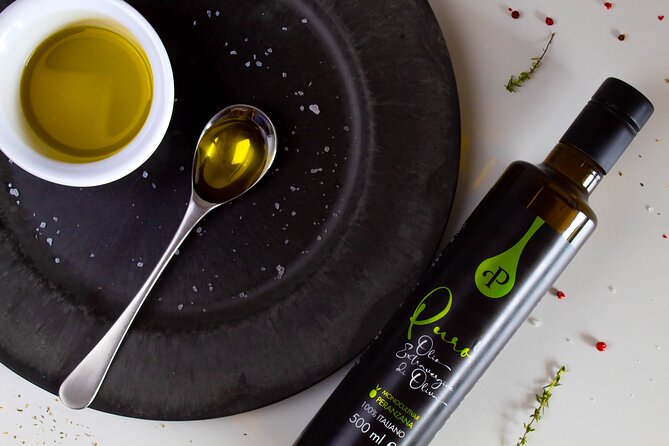
The tasting is led by a sommelier of olive oil, which gives the second half of the visit a clear purpose. You learn tasting techniques and the organoleptic properties of the oils, meaning the qualities you can detect through smell, taste, and mouthfeel.
You may already use olive oil every day, but tasting it on its own changes your attention. Instead of treating it as a background ingredient, you begin to notice its aroma, weight, bitterness, freshness, and finish.
The oils are presented as distinct from one another rather than as interchangeable samples. That is important for beginners. A good tasting should help you identify differences, not simply confirm that all the oils taste like oil.
The experience also includes food pairing advice. This is practical information you can use at home. A robust oil may suit one type of dish, while a gentler or flavored oil may work better with another. The point is not to memorize rigid rules. It is to learn how the character of the oil can support the food.
Perniola’s infused oils add another element. Flavors include real lemon, orange, rosemary, garlic, and chili. These are especially appealing if you want an easy way to add a finishing touch to bread, vegetables, or other simple dishes. I would treat the infused varieties as a bonus rather than the main reason to book, since the core experience is centered on extra virgin olive oil itself.
The Apulian aperitif and local flavors
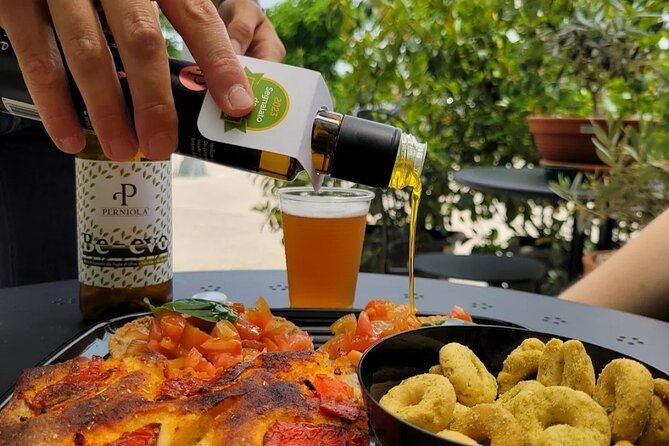
After the tasting, the visit ends with a 100 percent Apulian aperitif. This is a small but important part of the experience. You are able to try the oil with food instead of tasting it only on its own.
Focaccia has received particular praise, and it sounds like the sort of pairing that makes immediate sense in Puglia. Bread and olive oil are simple, but they also reveal a great deal. A good oil can change the flavor of a plain piece of bread without needing a complicated recipe.
The aperitif includes regional delicacies and snacks selected to work with the oils. One unusual item mentioned is an olive bear, which adds a bit of playful local character to the food spread. The exact selection may vary, so think of this as a tasting plate rather than a full meal.
If you are planning this around lunch or dinner, do not assume the aperitif will replace a substantial meal. It is designed as a finishing snack and pairing course. For many people, that is enough after an hour of tasting, but a hungry visitor should plan another meal in Altamura.
The 100 ml bottle makes the price feel fair
At approximately $24.03 per person, this is a strong-value experience. You receive a private visit, an explanation of the production process, a guided tasting, an Apulian aperitif, and a 100 ml bottle of extra virgin olive oil to take home.
The bottle is not large, but that is part of its practicality. It fits easily into luggage and gives you a way to remember the tasting once you return home. You can also use it to compare what you learned at the mill with the oils you already keep in your kitchen.
You may have the chance to purchase additional bottles or infused oils after the visit. That is useful if you find a style you particularly like, but you should not feel that shopping is the main purpose. The tasting helps you make a more informed choice instead of buying an oil based only on packaging.
For the money, I see this as better value than a short sample session with little explanation. The private format and food pairing make the price especially reasonable for couples or small groups who want a focused local activity.
Who will enjoy this experience most
I would recommend the tour to anyone curious about Italian food, even if you are not already an olive oil expert. The explanations are designed to make the subject approachable, and the tasting gives you something concrete to focus on.
It is particularly well suited to:
- Couples looking for a short food experience in Altamura
- Families with adults interested in cooking and regional products
- Visitors who want a local activity beyond sightseeing in the historic center
- People who regularly cook with olive oil and want to understand flavor differences
- Small private groups that prefer questions and conversation over a large scheduled tour
The experience may be less suitable if you want a long farm visit, extensive time among olive trees, or a full meal. The provided details focus on the mill, production process, tasting, and aperitif. You should also expect a different feel depending on the season, since some stages may be shown through video rather than live machinery.
Alcohol is not central to the experience, but anyone under 18 will not be served alcoholic drinks under Italian law. Service animals are allowed, and most people can participate. The activity is near public transportation, though the exact route is not provided.
Practical booking advice for Altamura
The activity is offered in English and accepts mobile tickets, so you can keep the confirmation on your phone. It is often booked around two weeks ahead, which suggests you should reserve in advance if your Altamura schedule is fixed.
The duration is listed as about one to one and a half hours. The mill visit itself is described as lasting roughly 1 hour and 30 minutes, so I would plan for the longer end rather than trying to fit it into a very tight gap.
Free cancellation is available if you cancel at least 24 hours before the local start time. Cancellations or changes made inside that window are not refunded or accepted, so check your day plans before confirming.
The experience currently carries a 4.9 rating from 17 ratings, with all recommending it. That high score fits the main strengths: clear explanations, warm staff, a tasty aperitif, and a useful tasting rather than a rushed sample stop.
Should you book the Perniola olive oil tour?
Yes, if you want a short, personal, food-focused experience in Altamura. I would book it for the combination of family-run history, clear production explanations, proper oil tasting, and the local aperitif. Angelica and Giuseppe are both associated with presentations that are friendly and easy to follow, which matters when the subject could otherwise become technical.
The biggest caveat is seasonal. If you want to watch every stage of active oil production, ask about the timing before you book. If you are happy to learn through explanations and videos, the visit remains worthwhile outside the main processing period.
For about $24.03, you get more than a quick taste and a sales pitch. You get a useful introduction to one of Puglia’s key foods, several oils to compare, regional snacks, and a small bottle to take home. That makes this a smart choice for food lovers, curious first-time tasters, and anyone with an open hour in Altamura.
FAQ
Where does the olive oil tour begin?
The tour begins at Frantoio Oleario Perniola, Via Santeramo in Colle 191, 70022 Altamura BA, Italy.
Where does the experience end?
The activity ends back at the same meeting point.
How long does the tour last?
The experience lasts approximately 1 hour to 1 hour 30 minutes. The mill visit is described as lasting about 1 hour 30 minutes.
How much does the experience cost?
The listed price is approximately $24.03 per person.
Is the tour private?
Yes. Only your group participates in the private activity.
Is the tour offered in English?
Yes. English is one of the offered languages.
What is included in the experience?
The visit includes an explanation of the Perniola mill and olive oil production process, an extra virgin olive oil tasting, food pairing suggestions, a 100 ml bottle of extra virgin olive oil, and a 100 percent Apulian aperitif.
Can children under 18 taste alcoholic drinks?
No. Anyone who has not reached the legal drinking age in Italy, 18, will not be served alcoholic beverages.
Can I cancel for a full refund?
Yes. You can cancel at least 24 hours before the experience start time for a full refund. Cancellations or changes made less than 24 hours before the start time are not accepted and are not refunded.
Just added around Italy
- Villa Castelli: Highlights Walking Tour w/ Olive Oil Tasting★ 4.8 · 12 reviews
- Umbria: E-Bike Rental and Fresh EV Olive Oil Tasting★ 5.0 · 4 reviews
- Vernazza (5 Terre): olive grove tour and oil and wine tasting★ 5.0 · 9 reviews
- Trieste’s Essence: Wine and Olive Oil Tasting★ 5.0 · 3 reviews
- Half-Day Chianti Wine and Olive Oil Tour from Viareggio★ 4.0 · 5 reviews
- From Venice: Olive Oil & Wine Tour in the Venetian Hills★ 5.0 · 9 reviews
- Valpolicella Wine and Olive Oil Tasting with Lunch from Verona★ 5.0 · 2 reviews
- Private Tuk Tuk Tour of the Millenary Olive Groves in Ostuni★ 5.0 · 4 reviews
Bari Olive Oil Tours, compared.
Olive Oil Mill Tour with Tasting near Molfetta & Bari
Read our review →
San Vito dei Normani: Organic Picnic in Olive Grove
Read our review →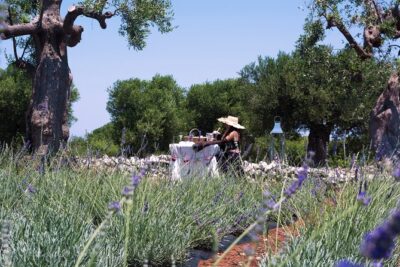
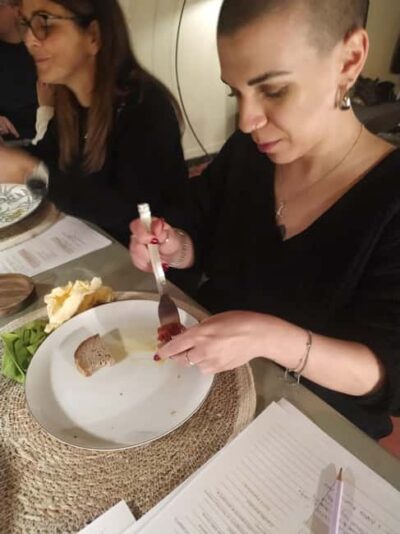
narrated extra virgin olive oil tasting with aperitif
Read our review →Browse the lists this tour appears in