
Review · ZAGREB COUNTY
Zadar, Šibenik: olive oil, wine & food tasting, Self Drive
Start with olive oil, end with a full glass. This family-run tasting near Benkovac combines a grove walk, mill visit, five Croatian olive oils, regional wines, and generous local bites. I like the relaxed welcome and the useful tasting lessons, especially learning why bitterness and a peppery finish can signal good oil. The main catch is the setting: this is a self-drive experience, and the meeting point is in Donji Lepuri, not central Zadar.
You can expect a warm, informal afternoon rather than a polished wine-school lecture. Hosts including Branimir, Neil, and Elizabeth bring plenty of personal enthusiasm, and past groups have praised the friendly style, plentiful food, and relaxed pacing. If you want a formal vineyard tour or a full hot meal included in the $29 price, you may find the arrangement less suitable.
Five things to know before you go
- Five olive oils are tasted: The lineup includes award-winning oils and an early harvest oil with a stated polyphenol level of 1,200 mg/kg.
- The mill visit explains the process: You see how olives move from grove to bottle while learning how modern equipment protects flavor and nutrition.
- Croatian wines take center stage: Taste a welcome glass, one red, and two white wines made from native varieties.
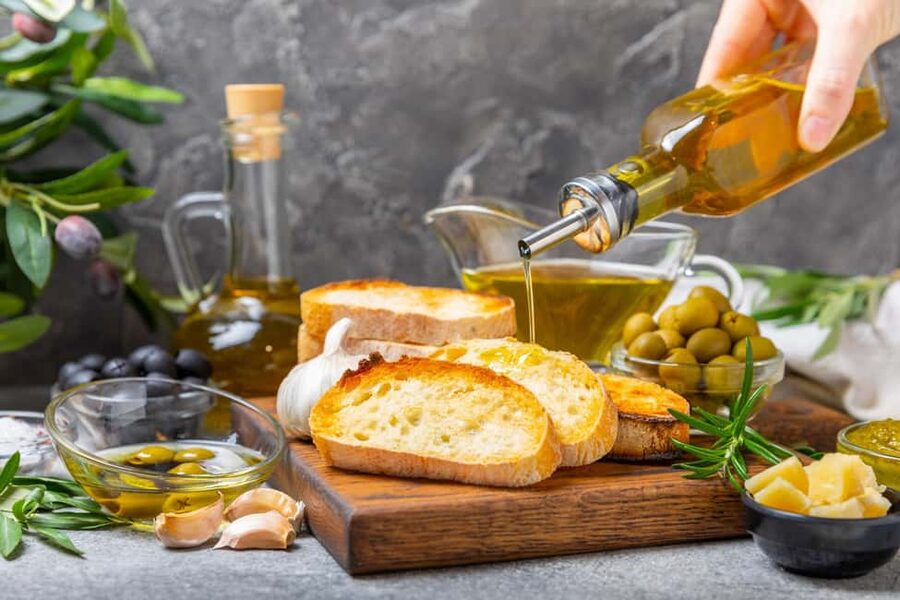
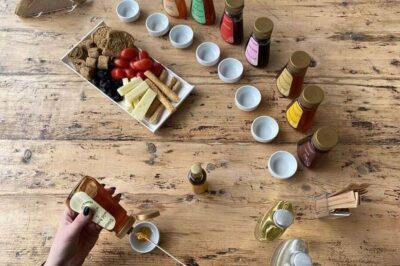
- Food is part of the lesson: Bread, olives, peppers, fruit, cheese, and other local bites are matched with the oils and wines.
- You drive yourself to Donji Lepuri: Call the host for exact directions because the meeting point can vary by booking option.
- Lunch costs extra: A cold Dalmatian buffet is available for €20, with seafood, cured meats, cheeses, produce, and dessert.
Why this tasting works near Benkovac
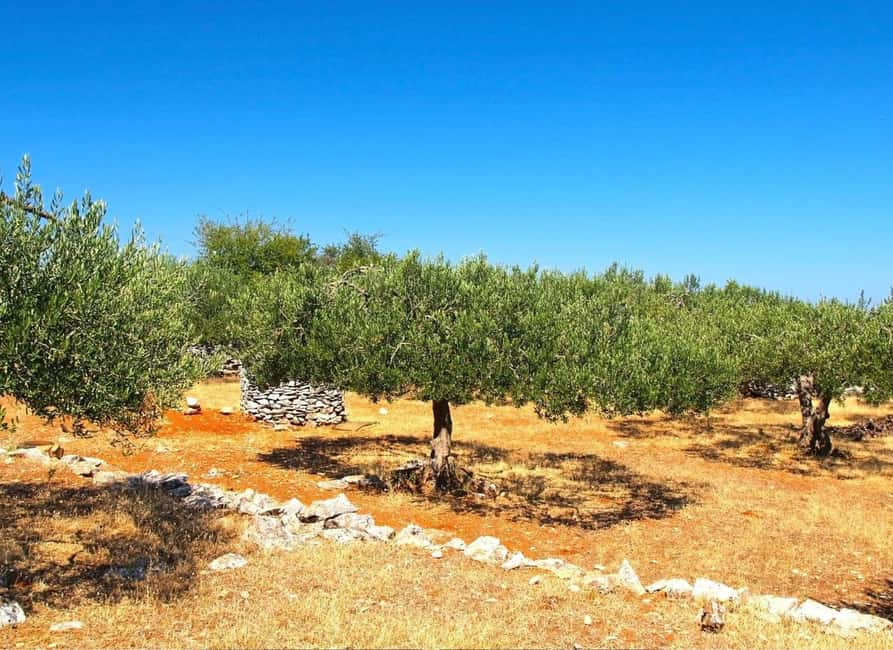
The setting gives you a useful change of pace from the coastal towns. Donji Lepuri sits in the Dalmatian hinterland near Benkovac, where ancient olive trees, stony soil, rosemary, and wild herbs provide the backdrop for the afternoon.
The activity is listed under Zadar and Šibenik, but the supplied location information also says Zagreb County, which is confusing. The detailed directions point instead to OPG Lepur in Donji Lepuri, close to Benkovac. Treat the location as a countryside outing near Benkovac and confirm the route with the host before setting off.
That self-drive format has one clear advantage: you are not tied to a large coach schedule. You can arrive at the family grove, spend time talking with the hosts, and leave when the scheduled tasting ends. The drawback is just as clear: you need your own transport, and anyone planning to taste several wines should arrange a sober driver.
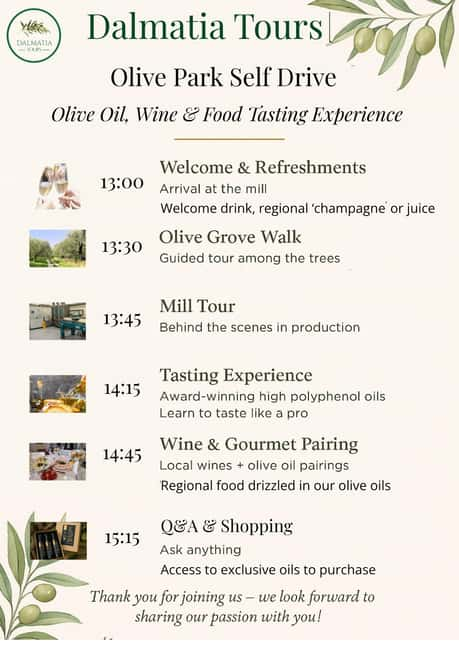
The experience lasts about two and a half hours, from 13:00 to 15:30. That gives you enough time for the grove, mill, oil lesson, wine tasting, food, and conversation without turning the afternoon into a marathon.
More Olive Oil and Food Pairings around Croatia:
- Bardolino: Vineyard Tour with Wine, Olive Oil & Food Tasting
★ 4.6 · 221 reviews - Symphony of Flavors – Olive Oil & Food Pairing at Corfu Town
★ 4.9 · 66 reviews - Rethymno: Olive Oil Tasting with Cretan Food Pairing
★ 4.8 · 52 reviews
Walking among ancient olive trees
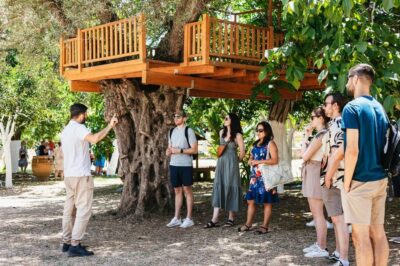
Your visit begins with a welcome and a stroll through the olive grove. This is not simply a photo stop. You learn how Dalmatia’s dry climate, rocky soil, and long farming tradition shape the oil in your glass.
The family explains how the grove is harvested and how older methods are retained alongside newer mill technology. That balance is valuable because olive oil production is both agricultural and technical. The tree, the timing of harvest, the handling of the fruit, and the extraction process all affect the final taste.
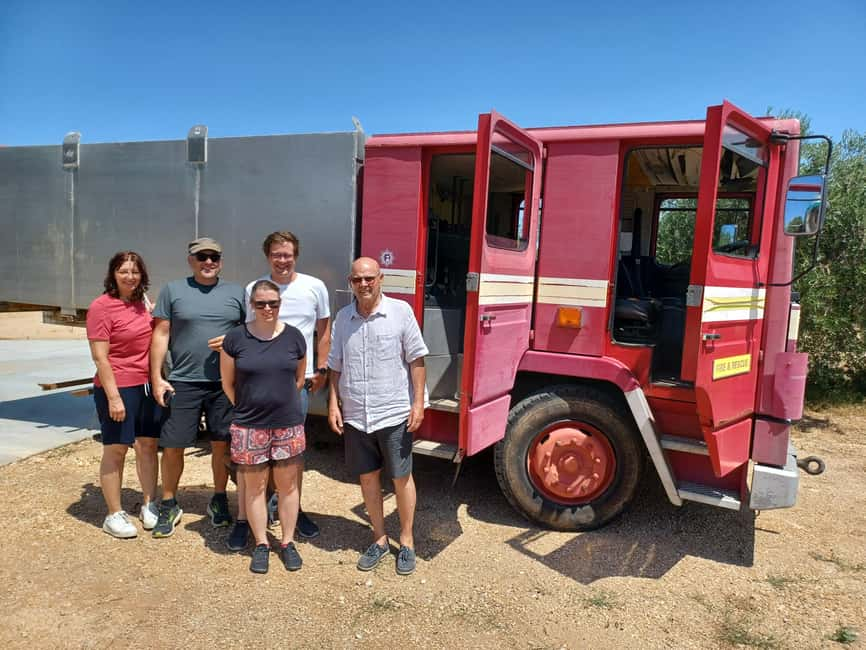
You may also ride through the old groves in a vintage fire engine, one of the more unusual details of the visit. It adds a playful touch without changing the main focus, which remains the family’s land and production.
The grove walk should suit you if you enjoy hearing the story behind food. It may feel less exciting if you want a fast succession of famous sights. The appeal is quiet and local: trees, herbs, soil, family knowledge, and the chance to ask questions.
Inside the mill, from olive to bottle
At the mill, Branimir explains how the oil is made. You get to see the process from freshly harvested olive to bottled extra virgin olive oil, with attention to methods that protect flavor and nutritional value.
The strongest part of this section is that it prepares you for the tasting. Instead of treating olive oil as a simple dip for bread, the host shows you what to notice and why it matters. You learn about aroma, bitterness, and the peppery sensation that develops at the back of the throat.
That peppery finish can surprise you if you are used to mild supermarket oil. Here, it is presented as one possible sign of a fresh, high-quality oil, not as a flaw. The lesson also covers polyphenols, natural compounds associated with the health benefits of extra virgin olive oil.
The family’s early harvest oil from 2024 is described as having 1,200 mg/kg of polyphenols and winning a gold medal at international competitions. That is a striking figure, but you should still judge the oil by its smell and taste during the session. Numbers and awards give context. Your palate tells you what you actually enjoy.
Learning to taste five Croatian olive oils
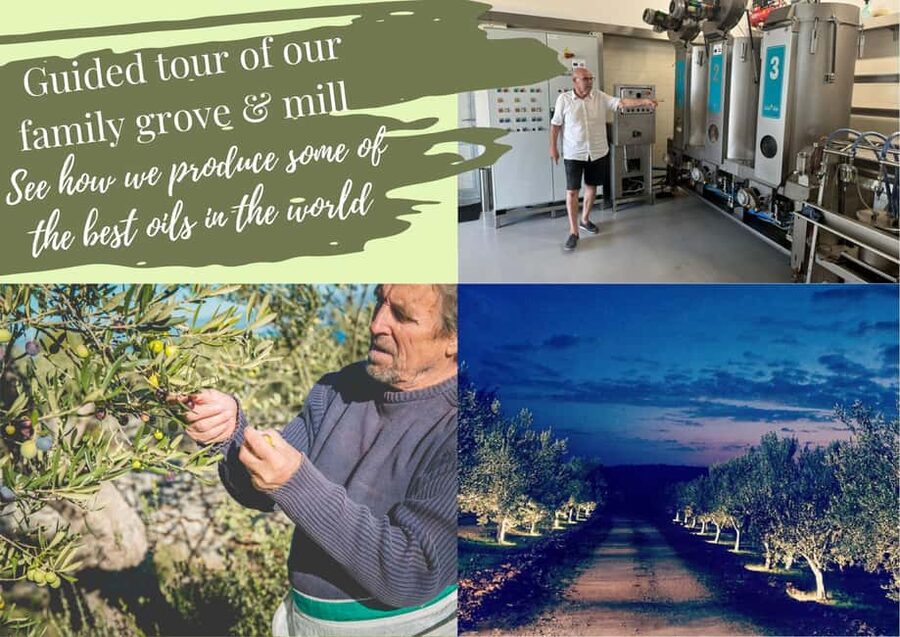
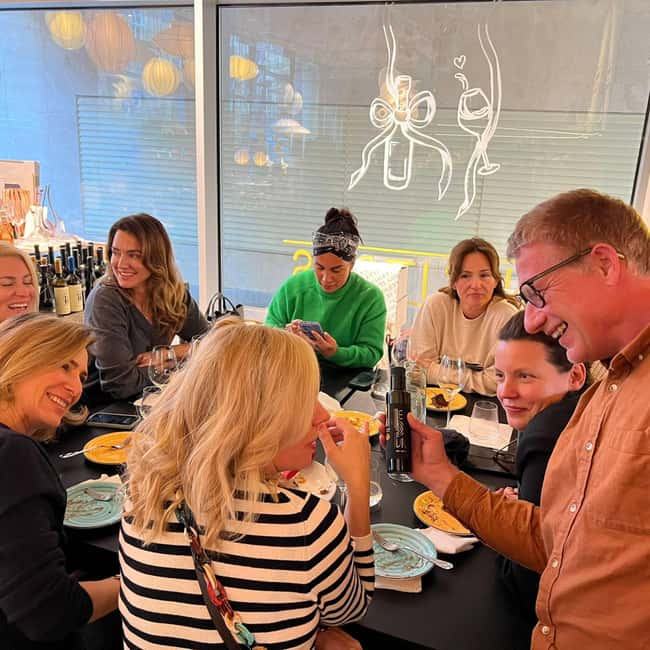
The guided oil tasting is the heart of the experience. You taste five oils, including award-winning varieties, using professional tasting cups. The usual method involves warming the cup in your hand, swirling the oil, smelling it, and then tasting it slowly.
You are encouraged to look for different qualities in each sample. One oil may feel grassy and sharp, another fruity, and another more rounded. Bitterness and heat are explained as part of the oil’s character, rather than something to hide with bread or salad.
This is a practical lesson you can use after the tour. At home, you will have a better sense of why a fresh oil should smell lively and why a flat or stale aroma is a warning sign. You may also stop treating all extra virgin olive oils as interchangeable.
The lesson is detailed but not described as formal or stiff. A birthday group of ten found the approach friendly and tailored to them, with enough historical background to keep things interesting without becoming a lecture. That sounds like the right tone for most people: serious about the product, but easy to follow.
You can buy the family’s gold-award oils at the end. The chance to taste before buying is useful, particularly if you want to take home something suited to your own cooking. Prices for bottles are not provided, so ask before committing to a purchase.
More Olive Oil and Wine Tastings around Croatia:
- Split: Krka Waterfalls With Boat Cruise, Wine and Olive Oil
★ 4.3 · 1,507 reviews - Wine, food and olive oil by PhD student
★ 5.0 · 111 reviews - Hvar: Island tour with Wine and Olive Oil Tasting
★ 4.9 · 77 reviews - Krka Waterfalls Tour with Wine and Olive Oil Tasting
★ 4.5 · 48 reviews
Croatian wines from four wine regions
After the oils, the tasting shifts to Croatian wine. You receive a welcome glass of local sparkling wine, described in the program as Croatian champagne, followed by one red and two white wines. The selection comes from native grape varieties associated with Croatia’s four main wine regions.
This is a good chance to try wines that may not appear often on international restaurant lists. The guide walks you through five basic steps: look, smell, swirl, sip, and savour. The wording is simple, and the method helps you pay attention instead of swallowing each sample without thought.
The pairing with olive oil gives the wine lesson extra purpose. A robust oil can compete with a delicate wine, while a fresh, fruity oil may work better with a lighter style. You are shown how the wines respond to grassy, fruity, and peppery oil profiles.
A word of caution: the exact wines can change. The experience promises a regional selection, not a fixed bottle list. If you have a strong interest in a particular Croatian grape, ask the host what will be poured on your date.
The welcome glass and four additional wine styles create good value for the price, but pacing matters. The experience is designed for tasting, food, and conversation, not heavy drinking. Plan your drive accordingly.
Local bites, with a €20 lunch option
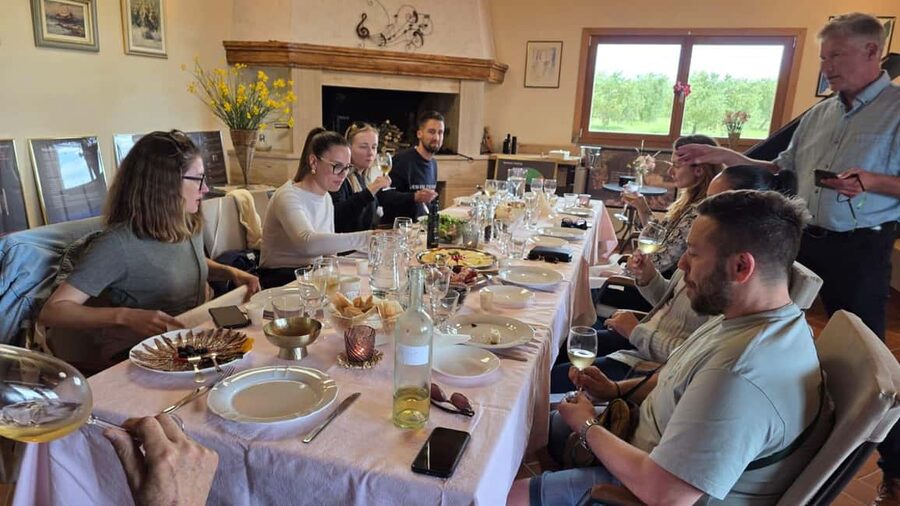
Small food pairings are included. You can expect locally baked sourdough bread, olives, peppers, fruit, cheese, and other seasonal bites drizzled with the family’s oil. The food is not just decoration. It lets you test the oils in a familiar setting and compare how they behave with salty, sweet, creamy, and fresh ingredients.
For a fuller meal, you can add a €20 cold buffet. The menu may include Croatian salad with tomatoes, cucumber, potatoes, red onion, parsley, capers, olive oil, and vinegar. There may also be locally produced Dalmatian prosciutto with homemade cheese, a wider cheese platter, and stuffed cherry tomatoes filled with tuna, olives, capers, and oil.
Seafood can include marinated anchovies and prawns with lemon, garlic, parsley, and olive oil. Homemade apple strudel provides a sweet finish. The dishes vary from day to day, so you should see the buffet as a seasonal selection rather than a fixed restaurant menu.
The extra lunch has real value if you want to turn the tasting into a relaxed meal. It is also the sensible choice if you will be driving a distance to reach the grove and do not want to search for food afterward. If you only want a short tasting, the included bites may be enough.
The portions have been described as more generous than expected, which matters at a $29 starting price. Still, check whether the €20 lunch is already selected in your booking option. The base price does not include it.
Family stories, Roman roots, and Dalmatian tradition
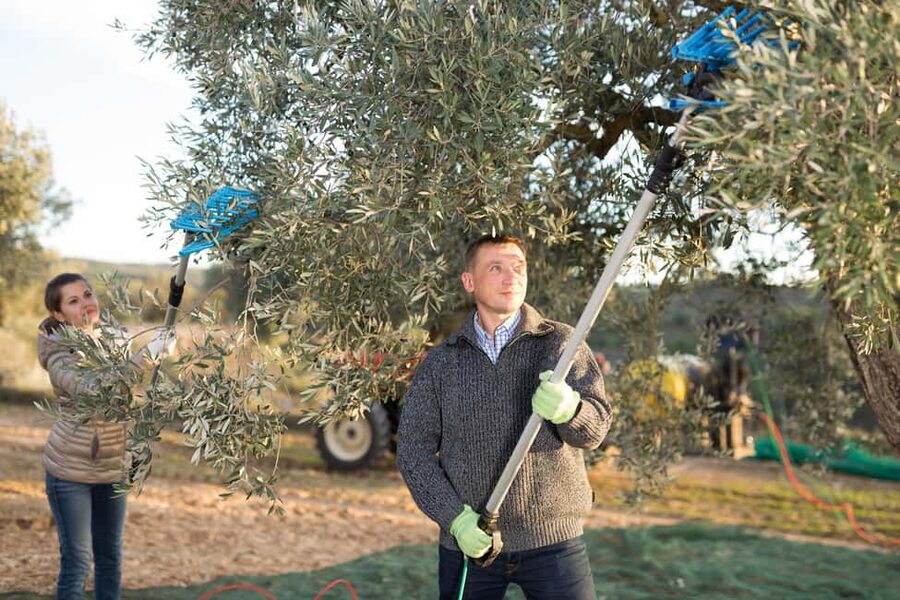
The cultural side of the experience covers roughly 2,000 years of olive growing in the area. You hear about Roman settlers, Venetian traders, and later generations who carried farming methods through war and social change.
That background gives the grove more meaning. You are not just sampling a modern food product. You are hearing how olives have been tied to work, trade, family identity, and survival across different periods of Croatian history.
The hosts also explain how they preserve traditional methods while using current mill technology. I like that this avoids the usual false choice between old and new. A family can respect inherited knowledge and still use equipment that improves freshness and consistency.
The conversation seems to be one of the best parts of the afternoon. You can ask questions, sit in the shade of the olive trees, and talk with the family about food, wine, and production. The tone is especially suited to couples, families, and small groups who prefer personal contact to a large scheduled presentation.
English and Croatian are available. The hosts named in the experience include Branimir, Neil, and Elizabeth, although the exact person leading your visit may depend on the date.
Is $29 good value?
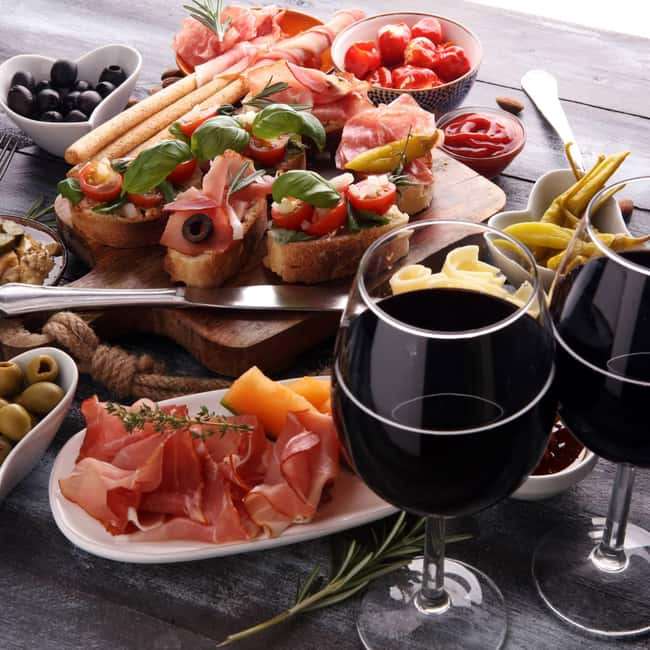
At $29 per person, the basic experience offers a lot for two and a half hours. You receive a grove and mill visit, five olive oils, a guided sensory lesson, Croatian wine, a welcome sparkling glass, and food pairings.
The value improves if you are curious about buying olive oil. You can compare several products before choosing a bottle, rather than relying on a label or a souvenir-shop display. The educational side also gives you a skill you can use when shopping elsewhere.
The price does not include the optional €20 buffet. That is not a problem if the included bites meet your needs, but it is important to budget correctly if you expect a full meal. The experience is also self-drive, so fuel and transport are extra.
The strongest value comes from the combination of access and explanation. You are meeting a producing family at its grove and mill, tasting the actual products, and eating food designed around them. It is more personal than a basic restaurant tasting, but less extensive than a full-day wine-and-food tour.
Who should book this experience?
I would choose this for anyone staying in or around Zadar who wants a countryside activity with a clear local connection. It works especially well for food lovers, wine drinkers, couples, families, and groups celebrating a birthday or special occasion.
It is also a good pick if you want to understand olive oil rather than simply sample it. The five-oil comparison, the discussion of polyphenols, and the sensory method give the visit useful substance.
You may want to skip it if you do not have a car, need a central-city meeting point, or want a guaranteed hot lunch. It is not a sightseeing tour of Zadar or Šibenik, and the countryside location requires careful planning.
Book if you can self-drive to Donji Lepuri, enjoy a relaxed pace, and see value in meeting the people behind the food. Before you leave, confirm the exact meeting point, ask about the optional buffet, and arrange a non-drinking driver. Those three checks will make the afternoon much easier.
FAQ
Where does the olive oil and wine tasting take place?
The experience takes place at OPG Lepur in Donji Lepuri, near Benkovac. The exact meeting point can vary by booking option, so call the host for specific directions to the family mill.
How long does the experience last?
The activity lasts about two and a half hours, with the scheduled time listed as 13:00 to 15:30.
Is transportation provided?
No. This is a self-drive experience, so you need to arrange your own transportation to the family grove and mill.
How many olive oils will I taste?
You will taste five olive oils, including award-winning oils and a 2024 early harvest oil described as having 1,200 mg/kg of polyphenols.
Which wines are included?
The tasting includes a welcome glass of Croatian sparkling wine, one red wine, and two white wines. The wines are selected from native grape varieties connected to Croatia’s four main wine regions.
Is lunch included in the $29 price?
A selection of local bites is included, but the full cold buffet lunch costs an additional €20. The buffet may include meats, seafood, cheeses, salads, fruit, vegetables, and apple strudel.
Can I buy olive oil after the tasting?
Yes. You have the opportunity to buy the family’s selection of gold-award-winning oils after tasting them.
Is the experience offered in English?
Yes. The live tour is available in English and Croatian. The activity is also listed as wheelchair accessible.
More Food Tours around Croatia
- Sorrento Farm and Food Experience including Olive Oil, Limoncello, Wine tasting
★ 5.0 · 2,524 reviews - Crete: Full-Day Cretan Wines, Olive Oil, Raki and Food Tour
★ 5.0 · 264 reviews - Tuscany Bike Tour with Wine, Oil and Food in the Florentine Hills
★ 5.0 · 209 reviews - Florence Food Tour: Home-Made Pasta, Truffle, Cantucci, Olive Oil, Gelato
★ 4.5 · 187 reviews
Just added around Croatia
- Wine, Honey & Olive Oil of Solta Island – Tasting Tour★ 5.0 · 4 reviews
- Private tour of Brač island with olive oil tasting★ 5.0 · 2 reviews
- Olive Oil Tour of Solta Island with Lunch★ 5.0 · 4 reviews
- Private Split & Klis Fortress Tour, Olive Museum & Port Pickup★ 4.5 · 13 reviews
- Istrian tapestry – gourmet tour combining wine, truffles and olive oil★ 5.0 · 12 reviews
- Makarska Tuk Tuk Tour Olive Grove, Scenic Views and Tastings★ 5.0 · 3 reviews
- Small-Group Olive Oil Tour in Cres with Tasting★ 5.0 · 2 reviews
- Private Hvar Island Tour and Olive Oil Tasting★ 4.5 · 10 reviews
Olive Oil and Wine Tastings, compared.
Sorrento Farm and Food Experience including Olive Oil, Limoncello, Wine tasting
Read our review →
Krka Waterfalls With Boat Cruise, Wine and Olive Oil
Read our review →
Lemon, Olive Oil and Wine Tasting Tour with Lunch
Read our review →
Browse the lists this tour appears in