
Review · CRETE
Traditional Olive Grove and Dragon Fruit Farm Tour
Small farms can tell big stories. This 90-minute Crete farm tour brings you among old olive trees, introduces an unusual new crop, and ends with a generous tasting of local food. I like the family-run setting and the chance to see how olive oil is made beyond the bottle on a shop shelf.
I also like that the tour includes dragon fruit, a crop still fairly new to Crete. Guide Alex Alexakis is praised for his clear English, warm welcome, humor, and enthusiasm. The main point to consider is timing: although the experience is advertised at 90 minutes, some visits finish in about an hour once the walk and tasting are complete.
Key points to know before you go
- Five generations of farm life: The family has cultivated olive trees for more than five decades, with about 2,500 trees on the property.
- Two crops in one visit: You learn about traditional olive farming and see how dragon fruit is being grown as a newer Cretan crop.
- A tasting is part of the admission: Expect olive oil with local bread, olives, and a drink such as espresso, Greek coffee, or dragon fruit and Cretan herb tea.
- Alex is the main strength: His English, good humor, and easy manner make the explanations accessible for adults and children.
- Private and low-key: The activity is offered as a private group tour, not a large coach outing.
- Good value at about $9: The price is modest for a guided farm visit with food and drink included, though purchases cost extra.
Why this farm visit feels different from a standard Crete outing
Crete is famous for olive oil, but it is easy to enjoy the product without understanding the work behind it. This visit gives you a closer look at the trees, the tools, the harvest, and the process that turns fruit into what Cretans often call liquid gold.
The setting is a working family farm with more than five generations behind it. That matters because the experience is not built around a polished museum display. You are shown the trees and equipment used in cultivation and harvesting, and you can touch the tools and try some of the work yourself.
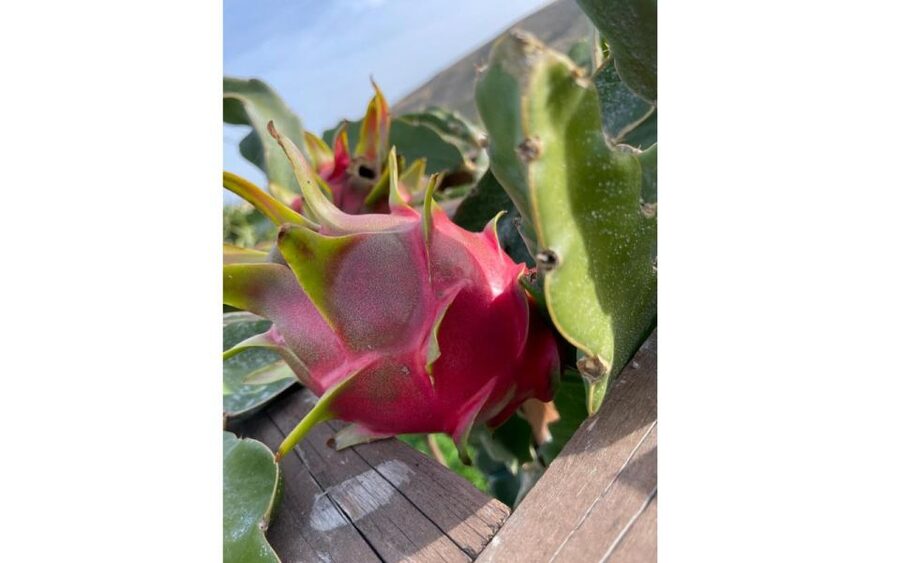
The dragon fruit adds an unexpected twist. This is not simply an olive oil stop with a few extra samples on the table. You also learn how an oriental fruit has taken hold in Crete and why it is becoming an important crop on the island.
I would choose this tour if you want local food, a rural setting, and a personal conversation with the person who runs the farm. It is less suitable if you want a long agricultural program with extensive walking or a full meal.
More Olive Grove Walks around Heraklion:
- Private Traditional Olive Grove and Dragon Fruit Farm Tour
★ 5.0 · 29 reviews - Heraklion: Cretan Farmers Brunch and Olive Grove Tour
★ 4.8 · 7 reviews - Knossos, Olive Grove, Winery – Distillery with Tastings & Lunch
★ 5.0 · 4 reviews
Arriving at the sign beside the road
The meeting point is the farm’s sign on the right side of the road as you drive up. Free parking is next to the sign, which makes the visit simple if you have a rental car.
You receive further directions after booking, a useful detail because a farm entrance can be easy to miss from the road. Look for the sign rather than relying only on a broad map location.
There is a shaded waiting area ahead of the meeting point. That is welcome in Crete’s strong summer sun, especially if you arrive a little early. The property also has a patio where you can sit during the break and tasting.
The tour is offered in English and Greek. Alex has been praised for speaking very clear English, so you should be able to follow the explanations even if farming terms are new to you.
Walking among the olive trees
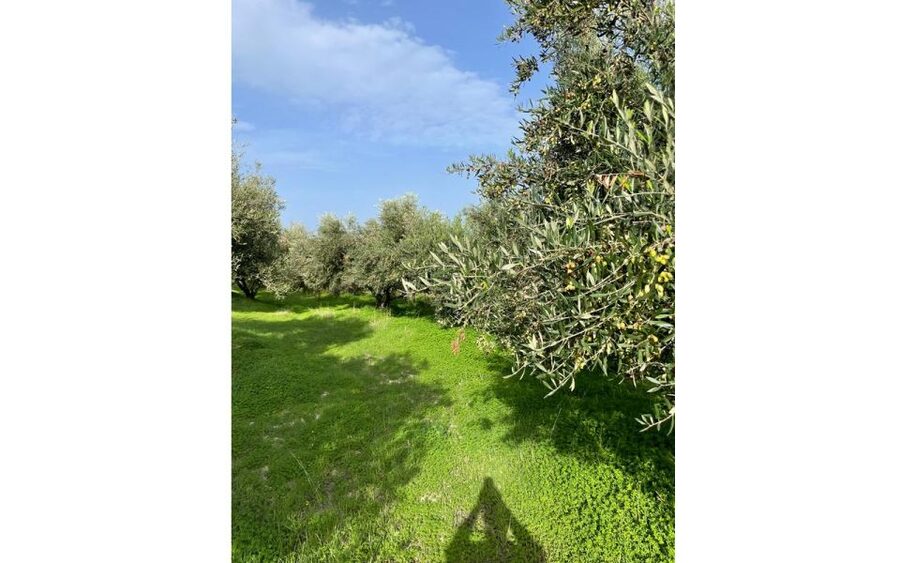
The first part of the visit takes you through the olive grove. You learn how the trees are cultivated, what happens during harvesting, and how olives move from the branches toward the mill and final oil.
The farm has around 2,500 olive trees, giving the talk a real sense of scale. You are not hearing only general information about olives in Greece. The trees around you provide the examples.
Alex also shows the tools used in the work. You can handle them and try them yourself, which makes the explanation more practical. For families, this hands-on part may hold attention better than a long talk. Children and teenagers can see that olive farming involves more than simply picking fruit from a tree.
The tour also offers a window into the island’s farming traditions. Olive cultivation is tied closely to daily life in Crete, and the farm’s family background helps explain why the crop remains so important.
Expect the walk to be relaxed rather than strenuous. The supplied information does not describe a demanding route, but you will be outside among trees, so sensible footwear is a good idea. Bare feet are not allowed, and the farm is still an active agricultural property rather than a formal indoor attraction.
Learning how olive oil reaches your table
The olive section is strongest when it links each stage of the work. You hear about cultivation, harvesting, and olive oil extraction, then get to taste the finished product.
That order gives the tasting more meaning. Instead of dipping bread into an anonymous oil, you have just seen the trees and heard about the labor behind them. The flavor becomes part of the story.
The tasting is done in a local style, with olive oil and bread. Depending on what is available, the spread may also include olives, tomatoes, yogurt, honey, marmalade, or other homemade items. These extra foods are not listed as guaranteed inclusions, so think of them as possible additions rather than a promise.
Several past visits included a generous presentation of bread, oils, olives, yogurt, tomatoes, honey, and marmalade. The food seems to be one of the most praised parts of the experience, but the exact selection can change.
You may buy olive oil or olives packed for the journey after the tour. Purchases are not included in the admission, and you are not required to buy anything. That is helpful if you want to compare the taste first and decide later.
More Olive Farm Visits around Heraklion:
- Lassithi, Zeus Cave, Olive Mill Farm & Knossos Combo Tour
★ 4.6 · 404 reviews - Road-trip to Lasithi, Zeus Cave, Vidiani, Krasi & Olive Mill Farm
★ 4.0 · 79 reviews - Crete: Olive Oil Festival, Farm Dinner, Live Show & Pickup
★ 4.1 · 55 reviews - Knossos, Lasithi, Zeus Cave & Olive Mill Farm Combo Tour
★ 4.5 · 46 reviews
The dragon fruit section adds a real surprise
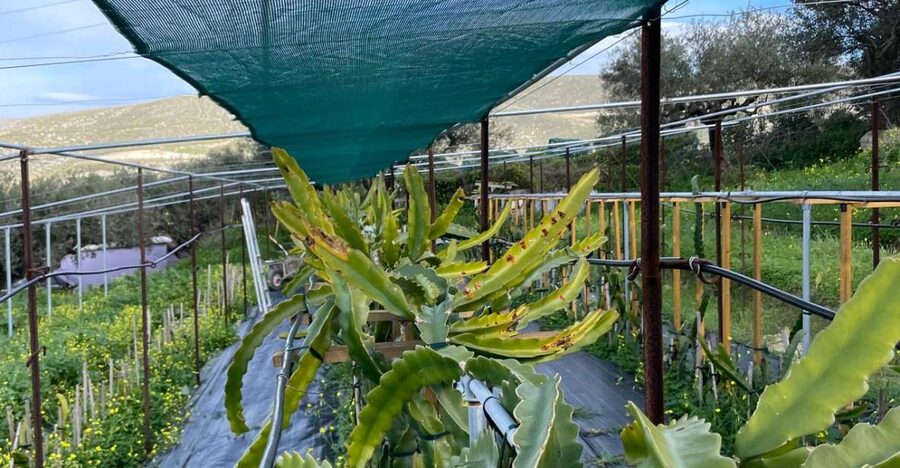
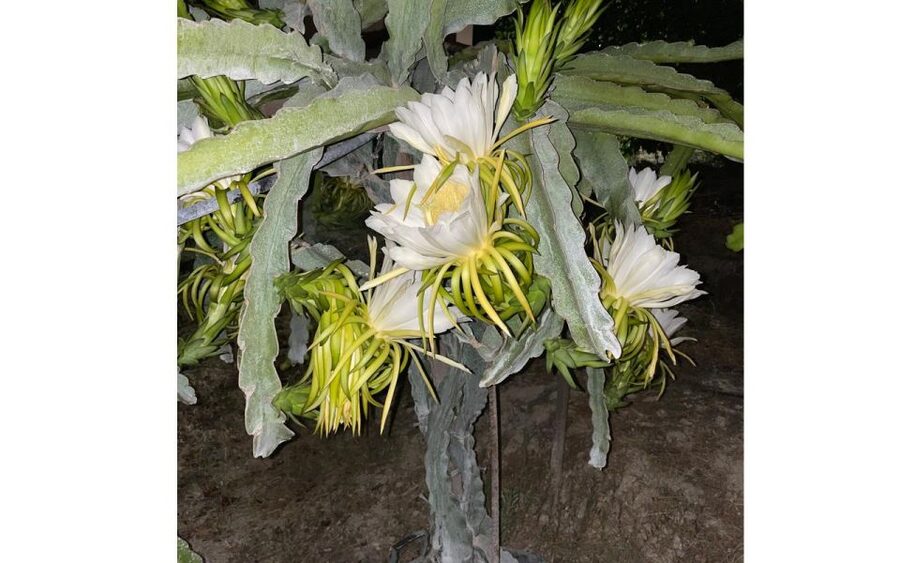
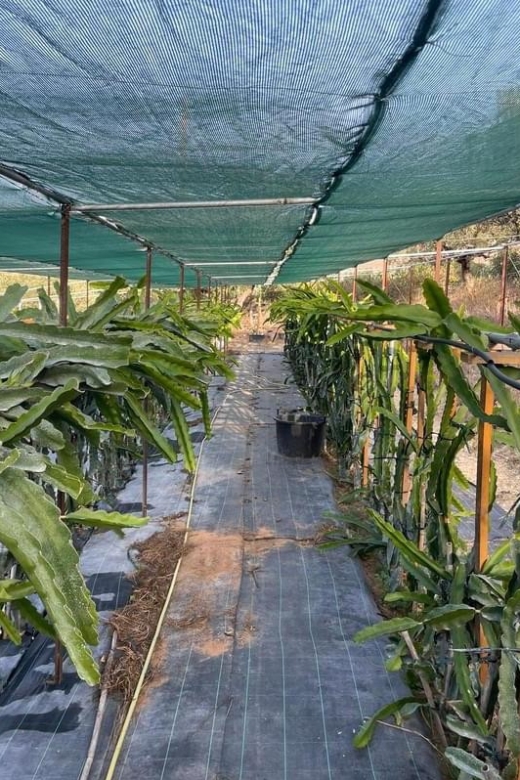
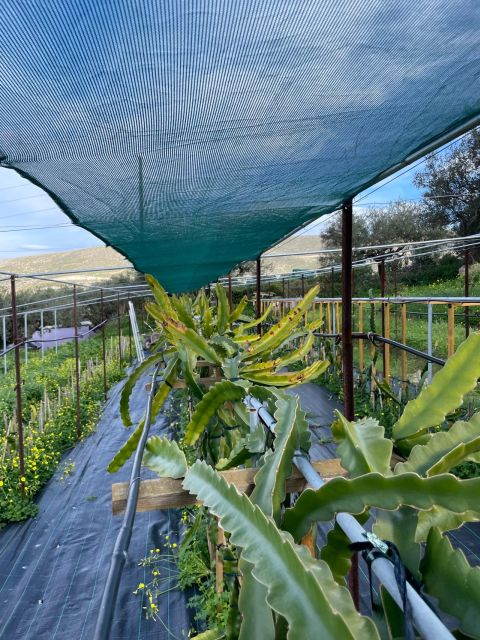
Dragon fruit may not be the first crop you associate with Crete. The farm uses this newer cultivation to show how local agriculture is changing while the olive grove carries older traditions.
You learn about the fruit, its place in Greek farming, and how it grows on the property. The tour can include a look at the plantings, and you may be able to harvest your own fruit if the crop is available at the time of your visit.
Availability is the key word. Do not book this expecting a guaranteed pick-your-own session or a fixed number of fruits. The option depends on what is ready to harvest.
The fruit itself becomes part of the tasting. Some visits include a large platter of dragon fruit, while dragon fruit tea is another regular feature. You can choose a dragon fruit and local Cretan herb infused tea, or select espresso or Greek coffee instead.
I like this pairing of old and new. The olive grove connects you to Crete’s long farming tradition, while dragon fruit shows that the island’s agricultural story is still developing.
A patio break with coffee, tea, and local flavors
After the guided portion, you have about 30 minutes for a break. This is not dead time. It is when the farm visit slows down and becomes more social.
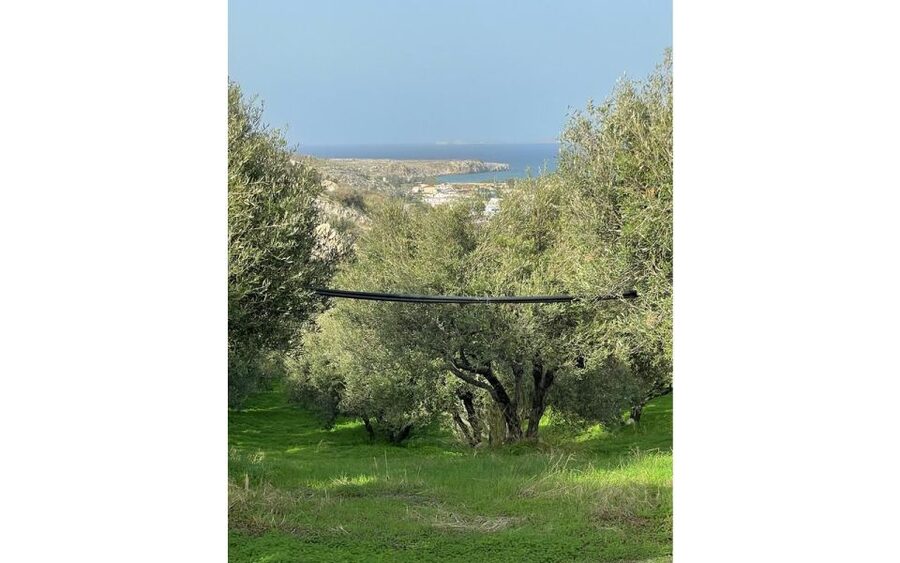
You sit on the patio, enjoy your included drink, and taste the olive oil with bread. The setting overlooks the orchard, according to the details shared about the visit, so the break gives you time to enjoy the surroundings rather than rush straight back to the car.
You can choose from espresso, Greek coffee, or dragon fruit and Cretan herb tea. If you are curious about the farm’s newer crop, the infused tea is the most distinctive choice. Coffee is the safer pick if you want a familiar finish.
The food tasting has been described as plentiful, with bread, homemade preserves, honey, yogurt, olives, tomatoes, olive oil, and dragon fruit appearing at different visits. Again, the exact spread may vary, but you should expect more than a token sample.
This is also the best time to ask questions. Alex is known for answering them patiently and for talking openly about his family business. The tone is informal, so you can get more from the visit by joining the conversation instead of treating it as a quick photo stop.
How long the tour really takes
The advertised duration is 90 minutes. The guided farm portion is described as about one to two hours in the general information, while the itinerary breaks the experience into roughly one hour of touring and 30 minutes of rest and tasting.
In practice, some visits have lasted closer to one hour. That is not necessarily a problem. The farm is compact enough that you can see the main areas without spending half a day walking between fields.
I would plan on 60 to 90 minutes, with a little flexibility. If you have a tight schedule, use the shorter figure when planning your day. If you enjoy questions, tasting, and browsing the products for sale, the visit may take longer.
The compact format makes this a good add-on to a day of sightseeing. You get an authentic rural activity without giving up an entire morning or afternoon.
Price, group size, and overall value
At about $9 per person, this is inexpensive for a private farm visit that includes a guide, a drink, and olive oil tasting with bread. The admission does not include products you may want to buy, but that keeps the entry cost low.
The value improves if you care about food and agriculture. You are paying for access to a family farm, explanations about two crops, a chance to handle tools, and a tasting with more substance than a single sip.
The private group format is another plus. You avoid the feel of a large bus excursion, and the visit can remain conversational. The available information does not give a maximum group size, so I would not assume that every booking is a one-family experience, but it is described as a private group activity.
The main limitation is that this is not a major attraction with many rooms, exhibits, or a long route. If you want a full agricultural museum, you may find the tour short. If you want a friendly introduction to Cretan food production at a low price, it is a strong buy.
Who should book this experience
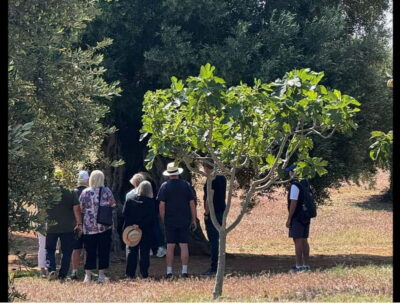
I would recommend it to families, couples, and small groups who want something personal and local. The age range that has worked well includes school-age children, teenagers, adults, and older visitors, with one group spanning ages 14 to 79.
Food lovers will get the most from it, especially if you enjoy comparing olive oils or trying products you may not find at home. It is also a good choice if you want to buy olive oil or olives directly from the farm after tasting them.
The tour suits people who prefer a gentle pace. You can wander through the trees, listen to the explanations, sit with a drink, and ask questions. It is not designed as an adrenaline activity or a long hike.
Babies under one year old are not considered suitable for the activity, and people over 95 are also excluded in the stated conditions. Alcohol and drugs, littering, explosives, and bare feet are not allowed.
Useful booking and visit tips
Reserve ahead if your schedule matters. You can cancel up to 24 hours before the activity for a full refund, and the reserve now, pay later option gives you some flexibility.
Wear comfortable shoes and keep your feet covered. Bring enough interest for an informal conversation, because the experience works best when you ask about cultivation, harvesting, and the family farm.
If you want the dragon fruit tasting or the chance to harvest fruit, remember that availability affects what can be offered. The same applies to the wider food spread. The olive oil and bread tasting is the core food experience, while additional products can vary.
English and Greek are available. Free parking sits beside the farm sign, and the shaded waiting area is useful if you arrive before your start time.
Should you book the olive grove and dragon fruit farm tour?
Book it if you want good food, a friendly guide, and a genuine family-farm setting without spending much money. Alex’s clear English and warm manner are a major part of the appeal, and the combination of olive cultivation with dragon fruit makes the visit more unusual than a standard tasting.
Skip it if you need a long, highly structured tour or a guaranteed pick-your-own harvest. The visit may finish in about an hour, and the products available for tasting can change.
For most visitors with a free 90-minute slot, I think the price is easy to justify. You leave with a better sense of how Crete’s olive oil is produced, a taste of the island’s everyday food culture, and an introduction to a crop that is still finding its place there.
FAQ
Where does the tour begin?
It begins at the Traditional Olive Grove and Dragon Fruit Farm. Look for the farm sign on the right side of the road as you drive up.
Is parking available?
Yes. Free parking is available next to the farm sign.
How long does the tour last?
The stated duration is 90 minutes. The guided portion and break are described as about one hour plus 30 minutes, although some visits finish closer to one hour.
What languages are available?
The tour is available in English and Greek.
Is the tour private?
Yes. The activity is offered for a private group.
What drinks are included?
You can choose espresso, Greek coffee, or dragon fruit and local Cretan herb infused tea, depending on your preference.
Is olive oil tasting included?
Yes. Olive oil is tasted with local bread as part of the admission.
Can I harvest dragon fruit?
You may be able to harvest your own dragon fruit if fruit is available at the time of your visit.
Can I buy products at the farm?
Yes. You can purchase olive oil, specially packed olives, harvested dragon fruit when available, dragon fruit tea, and other products. Purchases are not included in the admission price.
Can I cancel the booking?
Yes. You can cancel up to 24 hours in advance for a full refund. The reserve now, pay later option is also available.
Just added around Heraklion
- Knossos Palace Lasithi Plateau Villages & Olive Oil Mill★ 5.0 · 9 reviews
- Cretan Flavors – Cooking Lessons and Wine Olive Oil Tasting★ 5.0 · 9 reviews
- Wine Raki Olive Oil Tasting and Pottery – Private Tour★ 5.0 · 13 reviews
- Private Tour-Knossos Palace Zeus Cave&Olive Oil Mill from Elounda★ 5.0 · 14 reviews
- Myths, Villages, & Olive Oil: Exploring Lassithi Plateau Secrets★ 5.0 · 2 reviews
- Spinalonga,Elounda,Ag.Nikolaos, Olive Factory Tour From Heraklion★ 4.0 · 2 reviews
- Small Group Tour to Knossos Palace Lasithi Plateau & Olive Mill★ 5.0 · 3 reviews
- Afternoon Tour: Soap, Olive Oil & Wine Stories of Peza Village★ 5.0 · 4 reviews
Olive Grove Walks, compared.
Masseria tour among thousand-year-old olive trees with oil tasting
Read our review →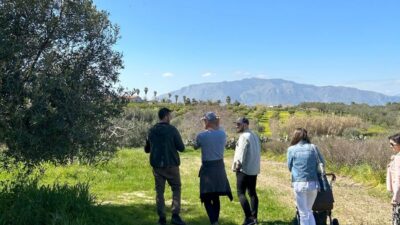
Olive Grove Tour with Wines & Olive Oil Tasting
Read our review →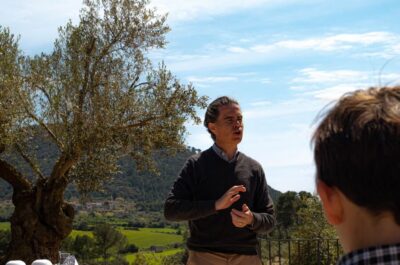
Visit of the olive grove, olive oil tasting and snack
Read our review →
Bologna: Olive Grove and Vineyard Tour with Product Tastings
Read our review →
Balestrate Olive Grove Tour: Wine and Olive Oil Tasting
Read our review →
Guided tours of the olive grove with oil tasting.
Read our review →
Organic Olive Grove tour & Olive oil tasting & lunch in Kalamata!
Read our review →
Jaen: Olive oil tour with the 5 senses, grove and tasing
Read our review →Browse the lists this tour appears in