
Review · SARDINIA
Cagliari Olive Oil Farm & Tasting (Since 1600, 20 Min Away)
Food can tell Sardinia’s story fast. This 90-minute visit near Cagliari combines a working olive oil mill, a 17th-century stone press, and a family museum filled with old tools and oil lamps. I especially like the rare underground cistern experience and the chance to taste three very different products, not just one standard extra virgin olive oil.
The friendly, personal approach is another strong point. Francesco Locci explains the process clearly, and the tasting includes carasau bread, Sardinian sausage, olives, cheese, wine, and other local bites. The main consideration is timing: the activity is described as one hour in some booking details, but the full program is listed as 90 minutes, so allow the longer amount of time.
Key points at a glance
- 400 years of family olive oil making: Sa Mola de Su Notariu traces its story to 1600 and displays historic tools, presses, and storage vessels.
- A rare underground cistern visit: Old oil lamps and amphorae help show how olive oil was stored before modern bottling.
- Three contrasting tastings: Try classic Olio del Tempio EVO, lemon-infused Limolio, and the spicy Rogo del Tempio blend.
- A practical stop from Cagliari: The mill is about 20 minutes away by car, with free parking in Dolianova.
- A generous Sardinian snack spread: Expect carasau bread, cured sausage, olives, wine, and other regional food pairings.
- Useful for food lovers and cruise schedules: The visit lasts about 90 minutes and can fit into a short outing from the city.
Why this olive oil visit is worth your time
Cagliari has plenty of good food, but it is easy to eat Sardinian dishes without understanding the ingredients behind them. This visit fixes that. You get to see where the oil is made, learn what makes extra virgin olive oil different, and taste it beside foods that Sardinians actually eat.
I like the balance between old and new. The family still produces oil from about 6,000 olive trees across 20 hectares, while the tour also shows modern production methods and bottling. Then the setting shifts to historic equipment, including a 17th-century stone mill and an underground cistern.
That mix gives the experience more weight than a simple shop tasting. You are not just sampling a flavored oil at a counter. You are looking at the tools and storage methods that shaped local food for centuries, then seeing how the business works today.
The experience also has a clear local character. The food is not presented as a formal restaurant meal. It is a family-style tasting built around bread, sausage, olives, wine, cheese, and oils. That makes it relaxed and useful, especially if you want to learn how Sardinian ingredients fit together.
More Olive Farm Visits around Italy:
- Sorrento Farm and Food Experience including Olive Oil, Limoncello, Wine tasting
★ 5.0 · 2,524 reviews - Alghero: Wine and Olive Oil Tasting at a Local Farm
★ 4.8 · 294 reviews - Organic cooking class with a sommelier in an Olive and wine farm
★ 5.0 · 69 reviews
Reaching Sa Mola de Su Notariu from Cagliari
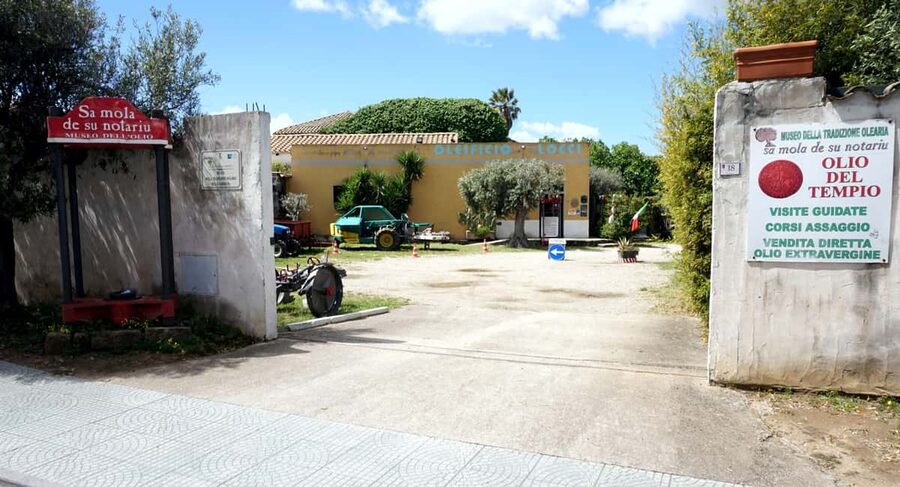
The olive oil museum and mill are in Dolianova, about 20 minutes from central Cagliari by car. You can park in the museum’s own lot, which is a real help if you are driving a rental car and do not want to hunt for a space in town.
The bus is possible, but slower. Bus line 108 from central Cagliari takes about 54 minutes. That means the visit is still reachable without a car, but you should check the departure and return times carefully around your booking.
For a cruise passenger or anyone with a spare part of the day, the location is practical. The tour itself is short enough to pair with other plans, although you should allow time for transport, parking, and shopping at the mill. Optional private transfers are available from Cagliari and southern Sardinia, but they cost extra.
The activity requires at least two people. Private tours are also available, which may suit couples or small groups wanting a more personal visit.
The working mill and the olive oil lesson
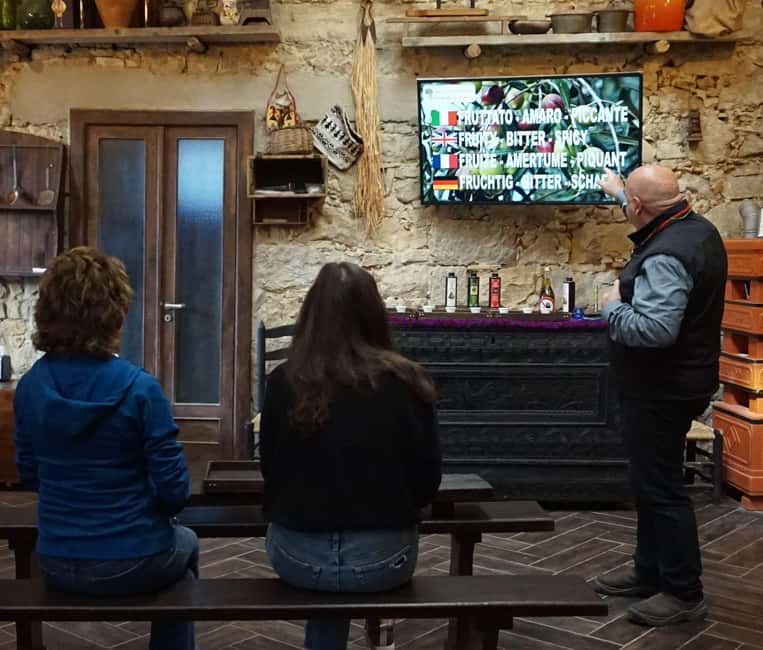
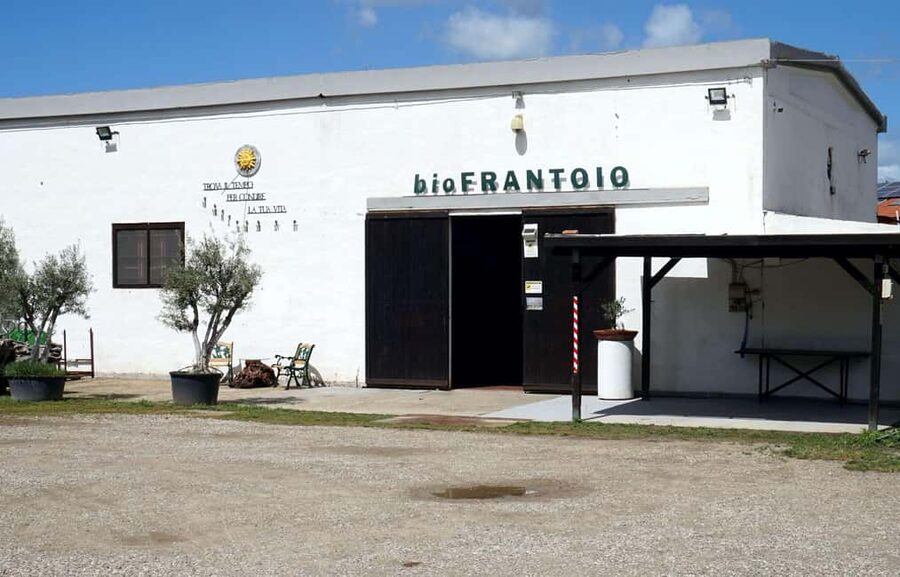
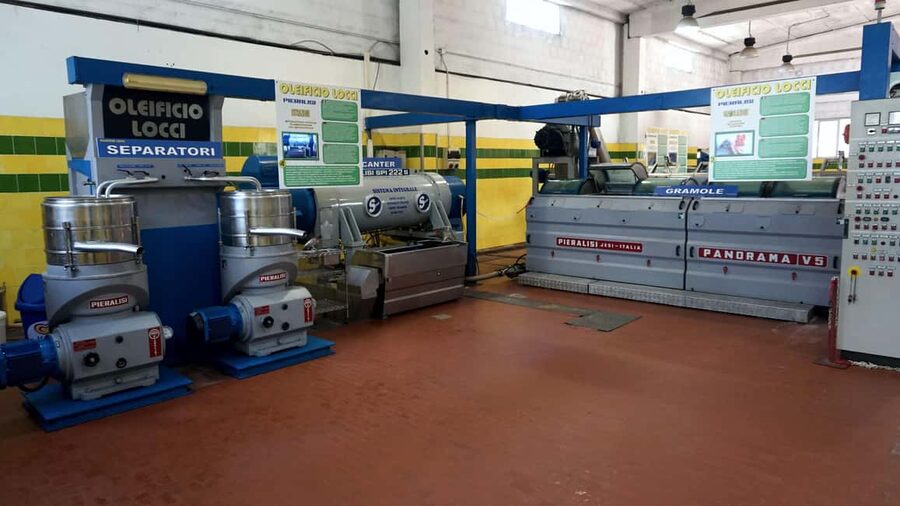
The visit begins with the production side of the business. You see how olives from the family’s estate become extra virgin olive oil, from harvesting through bottling. Video presentations help explain the full process, while the guide fills in the practical details.
This part matters because olive oil labels can be confusing. The tasting lesson explains how to identify a good extra virgin oil by looking at its fruitiness, bitterness, and peppery finish. You also learn why a fresh oil should have character rather than tasting flat or greasy.
The lesson is aimed at ordinary cooks, not food professionals. That is its strength. You can use the information later in a grocery store or restaurant. The point is not to memorize technical terms. It is to notice whether an oil smells fresh, tastes lively, and has the bitter or spicy notes expected from a quality product.
The explanation could include more about the olive tree itself. That was the one clear suggestion in the supplied feedback. If you are interested in farming, ask about the trees, the growing cycle, and the harvest when you arrive. The main emphasis is on oil production and tasting rather than botany.
Sa Mola de Su Notariu and its old stone mill
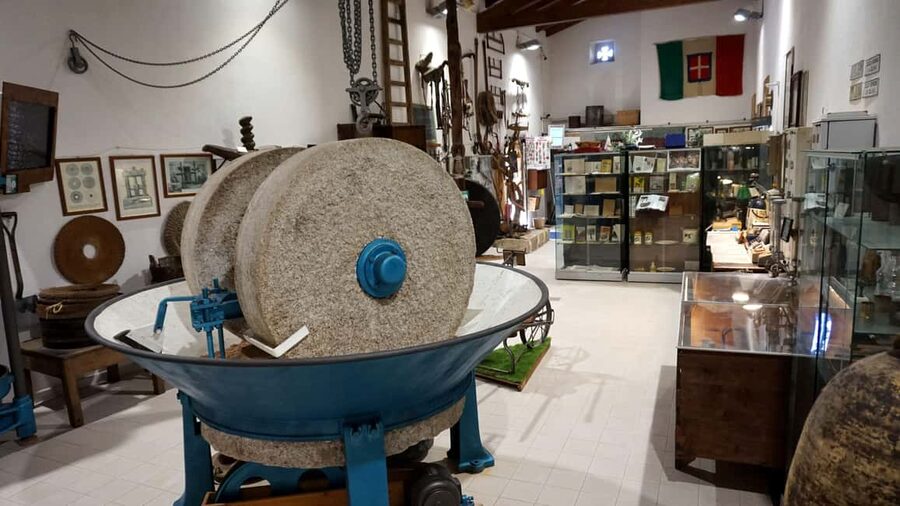
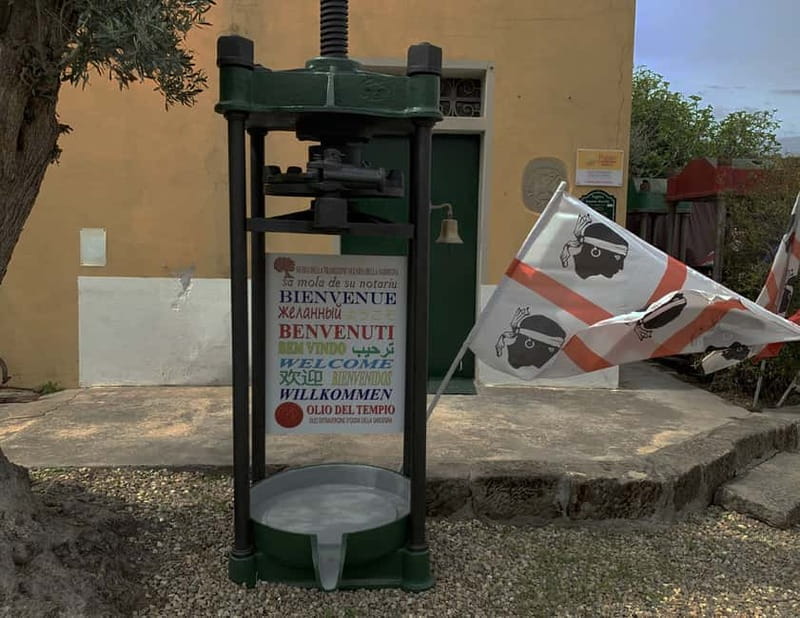
The private museum, called Sa Mola de Su Notariu, gives the visit its sense of place. It presents 400 years of family history through the original stone mill, ancient presses, and tools used to make and store oil.
The 17th-century mill is especially useful because it makes the old process easier to picture. Before modern machinery, producing olive oil demanded heavy equipment and considerable labor. The stone mill and old presses show the physical work behind a bottle that now sits neatly on a supermarket shelf.
This is also described as Sardinia’s only olive oil museum. That makes it a distinctive stop for anyone interested in food traditions, rural life, or old trades. It is not a huge museum with dozens of rooms, so do not expect a full day of exhibits. Its appeal comes from the focused collection and the fact that it belongs to a working family business.
The family setting is part of the charm. Several people describe the welcome as warm and informal, and Francesco Locci is praised for his humor, clear explanations, and passion for the subject. That personal style matters here because olive oil can become dry and technical in the wrong hands.
More Olive Oil Tours around Italy:
- Olive oil tasting in Sorrento
★ 5.0 · 434 reviews - Sorrento: Lemon, Olive Oil and Wine Tasting Tour with Lunch
★ 5.0 · 300 reviews - Ostuni: Masseria tour among thousand-year-old olive trees with oil tasting
★ 4.8 · 261 reviews - Balestrate: Olive Grove Tour with Wines & Olive Oil Tasting
★ 5.0 · 241 reviews
The underground cistern and its oil lamps
The underground section is one of the most unusual parts of the visit. You descend into an old storage cistern containing oil lamps, amphorae, and other objects connected with traditional olive oil storage.
This space helps explain how valuable oil was protected in earlier centuries. The lamps are not just decorative pieces. They show the many uses of oil in Sardinian life, while the storage vessels give you a better sense of how families kept their supply before modern containers and temperature control.
It is a short part of the experience, but it adds atmosphere and historical context. I would especially value it after seeing the working mill, since the contrast between old storage and modern production is easy to understand.
The underground area may not suit everyone, so ask the guide if you need more information about access. The activity is listed as wheelchair accessible, but the supplied details do not explain every feature of the underground section itself.
Three oils, three very different uses
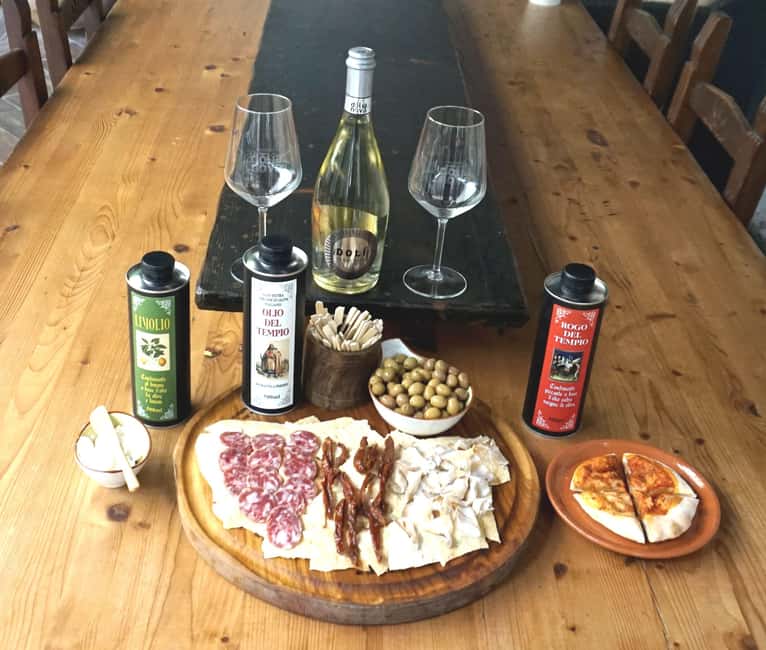
The tasting is the heart of the visit. You sample three products, each designed for a different kind of cooking.
Olio del Tempio EVO
This is the classic extra virgin olive oil. It is described as balanced, with fruitiness, bitterness, and spice. That makes it the all-purpose bottle in the group.
Use it for dipping with bread, drizzling over vegetables, or cooking. The tasting lesson gives you a chance to notice how the oil changes when you try it plain, then with bread and food.
Limolio
Limolio combines olives with lemon zest. It has brighter citrus notes and is aimed at seafood carpaccio, raw fish, salads, caprese, and grilled vegetables.
This is probably the most immediately memorable tasting for many people because the lemon changes the oil’s role. It is not simply a stronger olive oil. It is a ready-made finishing ingredient for dishes where you want freshness without reaching for a separate lemon.
If you cook fish at home, this is the bottle to consider taking with you. One visitor specifically said Limolio changed the way they cook fish, which makes sense given its suggested uses.
Rogo del Tempio
The third product is a spicy blend made with nine Sardinian herbs. It brings controlled heat and a more complex herbal flavor.
Try it with grilled meat, pizza, pecorino, or roasted potatoes. It is less of an everyday cooking oil and more of a finishing condiment. A little can change a plain dish, so you do not need a large amount to make it useful at home.
The three-product format is smart because it lets you compare a traditional EVO with two flavored options. You leave with a clearer idea of which oils belong in a pantry and which are best used for particular dishes.
The Sardinian platter and wine pairing
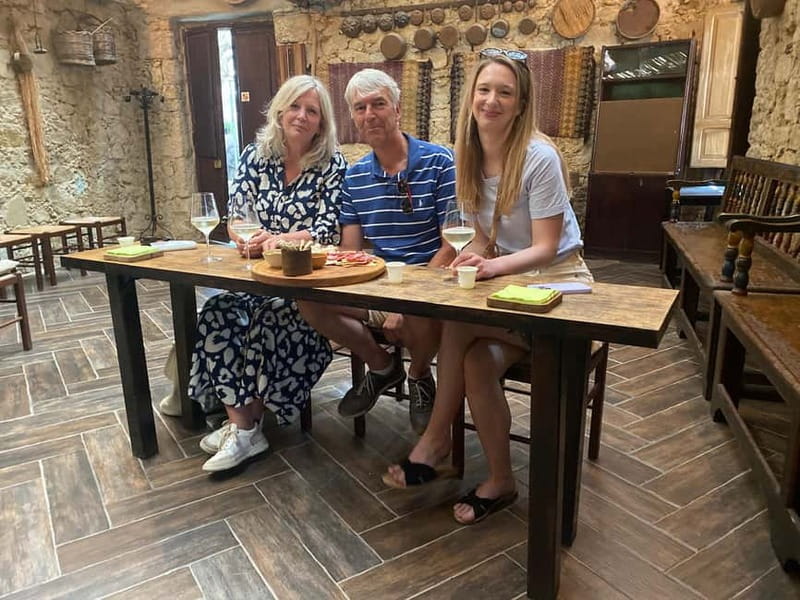
The food portion turns the lesson into a proper snack break. The platter includes cured salsiccia sarda, natural olives from the estate, and crisp carasau bread. Local cheese and small extra bites may also appear, including pizza according to one tasting experience.
A glass of sparkling wine is served as part of the pairing. It gives the tasting a festive feel and helps clear your palate between oils and foods. This is not a substitute for lunch, but it is more substantial than a token cracker and teaspoon of oil.
The family-style presentation also encourages you to compare the products in a natural way. Try the plain EVO with carasau, then the lemon oil with a seafood-style pairing if offered. Use the spicy blend with cheese, sausage, or bread. You learn more by eating than by simply listening to a list of recommended uses.
If you have dietary restrictions, ask in advance. The supplied information confirms the listed foods but does not give a full allergy or vegetarian menu.
Shopping at the mill and value at $64
The price is $64 per person. I see fair value here if you want more than a tasting. The fee includes the mill visit, museum, olive oil lesson, three products, food pairings, sparkling wine, parking, and a guide in English, French, or Italian.
The strongest value comes from the combination of education and food. A short tasting alone might feel expensive, while a museum visit alone could feel limited. Together, the working production tour, historic collection, underground cistern, and platter create a complete outing.
You can also buy the oils directly at the mill with a stated 20 percent discount compared with online prices. That makes the shopping stop more useful than a standard souvenir purchase. You can taste first, decide which product suits your cooking, and avoid buying a bottle blindly.
Allow about 20 minutes for shopping in the planned schedule. This is enough time for a considered purchase, but not necessarily for a long browse if the group is moving on. Bottles may be awkward to pack, so plan how you will carry them home.
Who will enjoy this experience most
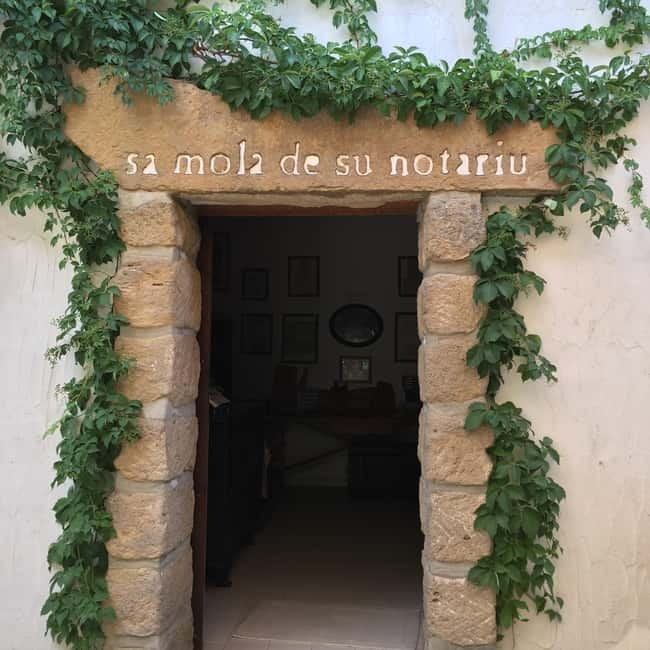
I would recommend this visit to food lovers, couples, families, and anyone curious about Sardinian traditions. It works particularly well for people who enjoy learning through tasting rather than sitting through a long museum lecture.
It also suits visitors staying in Cagliari who want a short outing beyond the city. The 20-minute drive makes it an easy half-day plan, and the 90-minute activity leaves room for other sightseeing in southern Sardinia.
The experience is also pet-friendly, with water bowls available for dogs. Free Wi-Fi is provided, although that is a minor benefit compared with the food and museum.
You might prefer a different activity if you want a full agricultural farm visit with extensive time among the trees. The program focuses on production, history, tasting, and shopping. It does not promise a long walk through the 20-hectare estate or a detailed lesson on olive growing.
Practical details before you book
Book for the full 90 minutes, even though some details list the duration as one hour. The longer figure matches the planned tour, tasting, food, shopping, and return to the museum entrance.
The activity is wheelchair accessible, and guides speak English, French, and Italian. Dogs are welcome. Free cancellation is available up to 24 hours before the start time, and you can reserve while paying later, which helps if your Cagliari schedule is still changing.
The experience has a 5 out of 5 rating from 43 listed ratings, with repeated praise for the warm welcome, useful explanations, food, wine, and fair prices for the products. The most common strength is the human touch, especially Francesco’s enthusiastic storytelling and ability to make olive oil understandable.
Should you book the Cagliari olive oil tasting?
Book it if you want a focused, food-centered outing that combines Sardinian history with something you can use at home. The best parts are the old mill, the underground cistern, and the comparison of three oils with local food.
At $64, it offers good value for a guided 90-minute visit with wine, snacks, museum access, and a direct purchase discount. I would skip it only if your schedule cannot spare the travel time, you need a full meal rather than a tasting platter, or your main interest is olive farming rather than oil production.
For most food-minded visitors based in Cagliari, this is an easy way to get beyond the restaurant table and understand one of Sardinia’s essential ingredients.
FAQ
How long does the olive oil experience last?
The full program is described as 90 minutes. Some activity details list one hour, so allow 90 minutes for the tour, tasting, food, and shopping.
How far is the mill from Cagliari?
The mill is about 20 minutes from Cagliari by car. Bus line 108 from central Cagliari takes about 54 minutes.
Where can I park?
You can park for free in the museum’s parking lot in Dolianova.
What oils will I taste?
You will taste Olio del Tempio EVO, Limolio with olive and lemon zest, and Rogo del Tempio, a spicy blend made with nine Sardinian herbs.
Is food included?
Yes. The tasting includes Sardinian cured sausage, olives, carasau bread, sparkling wine, and regional food pairings. Cheese and other small bites may also be served.
What languages are available?
The live guide is available in English, French, and Italian.
Can I bring my dog?
Yes. Dogs are welcome, and water bowls are provided.
Just added around Italy
- Villa Castelli: Highlights Walking Tour w/ Olive Oil Tasting★ 4.8 · 12 reviews
- Umbria: E-Bike Rental and Fresh EV Olive Oil Tasting★ 5.0 · 4 reviews
- Vernazza (5 Terre): olive grove tour and oil and wine tasting★ 5.0 · 9 reviews
- Trieste’s Essence: Wine and Olive Oil Tasting★ 5.0 · 3 reviews
- Half-Day Chianti Wine and Olive Oil Tour from Viareggio★ 4.0 · 5 reviews
- From Venice: Olive Oil & Wine Tour in the Venetian Hills★ 5.0 · 9 reviews
- Valpolicella Wine and Olive Oil Tasting with Lunch from Verona★ 5.0 · 2 reviews
- Private Tuk Tuk Tour of the Millenary Olive Groves in Ostuni★ 5.0 · 4 reviews
Olive Farm Visits, compared.
Sorrento Farm and Food Experience including Olive Oil, Limoncello, Wine tasting
Read our review →
Road-trip to Lasithi, Zeus Cave & Olive Mill Farm
Read our review →
Olive Farm Tour with Tasting of Local Delicacies
Read our review →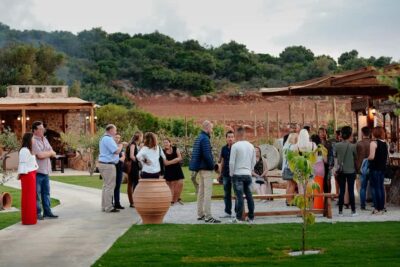
Lassithi, Zeus Cave, Olive Mill Farm & Knossos Combo Tour
Read our review →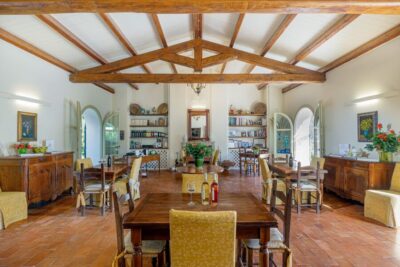
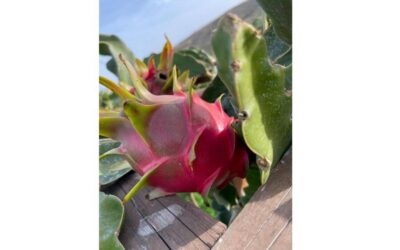
Traditional Olive Grove and Dragon Fruit Farm Tour
Read our review →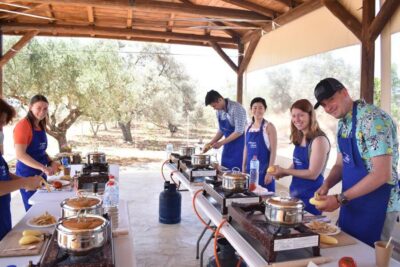
Cooking Class and Olive Oil Tasting at a Family Farm
Read our review →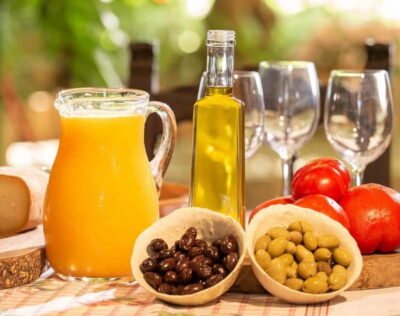
Sóller: Olive Oil Guided Tour and Tasting at Can Det Estate
Read our review →Browse the lists this tour appears in