
Review · DALMATIA
Šibenik: Croatia in a Day, Vistas, History, Olive Oil, Wine
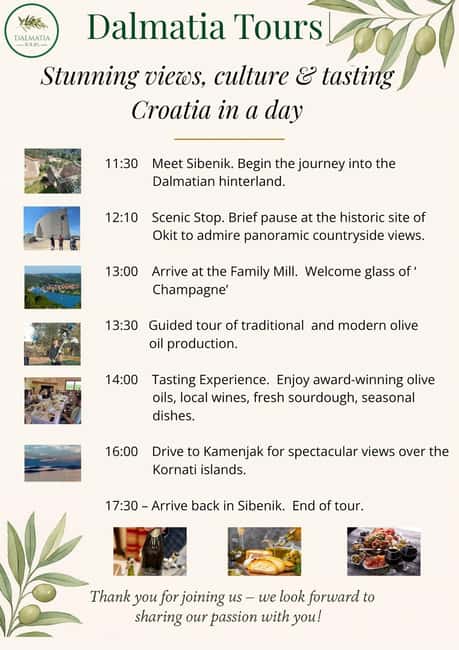
Olive oil tells Dalmatia’s story unusually well. This six-hour outing pairs spectacular views from Okit and Kamenjak with a warm visit to Uljara Lepur, a family-run olive mill. I like the mix of history, food, and countryside, and I especially like the chance to taste five award-winning oils instead of simply hearing a sales pitch. The main drawback is timing: the day can feel full, and the optional lunch costs an extra €20.
Guide Dr Neil is a major part of the appeal. He explains Croatia’s wars, political changes, olive growing, and local life in an easy, conversational way. I also like the small group limit of eight, though the tour is not designed for children under 12, and the scenery stops offer little shelter in strong summer heat.
Why this Šibenik countryside trip is worth your time
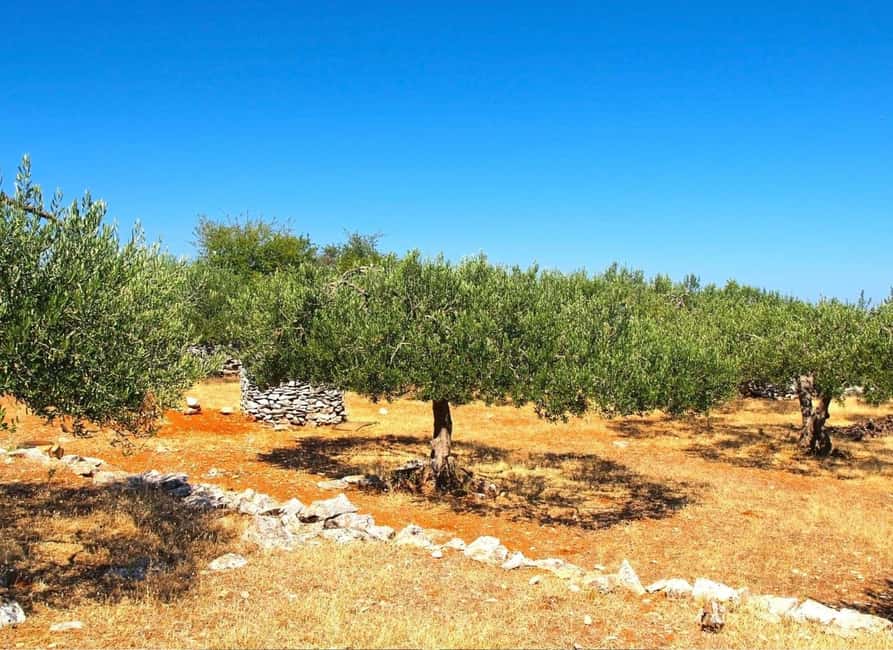
- Okit Hill views: Look across olive groves, vineyards, the Dalmatian hinterland, and the distant Kornati Archipelago.
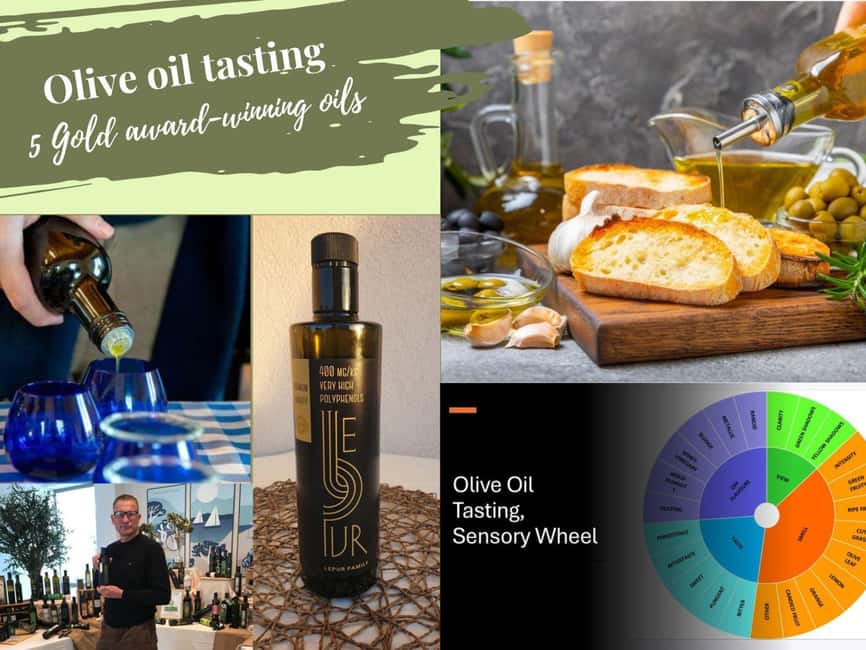
- Five olive oils: Learn how aroma, balance, and quality change from one oil to another.
- Uljara Lepur family welcome: Visit the grove and modern mill, with local hospitality from the Lepur family.
- Croatian wine and local bites: Taste sparkling wine, one red, and two white wines alongside Dalmatian foods.
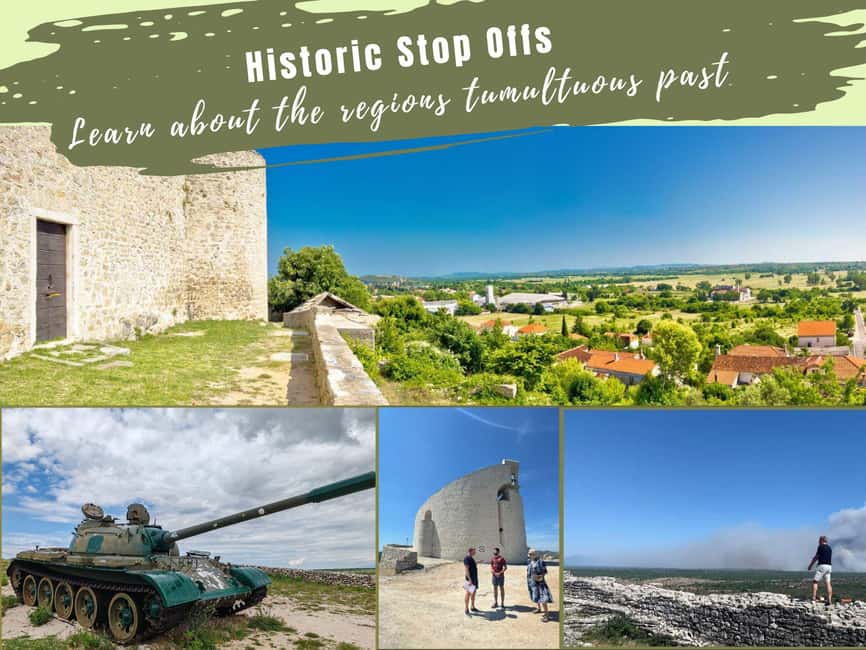
- History beyond Šibenik: Visit Okit and Kaštel Benković while learning about centuries of conflict in this strategic region.
- Kamenjak finale: Finish above Lake Vrana with one of the finest wide views on this route.
From Šibenik into Dalmatia’s back country
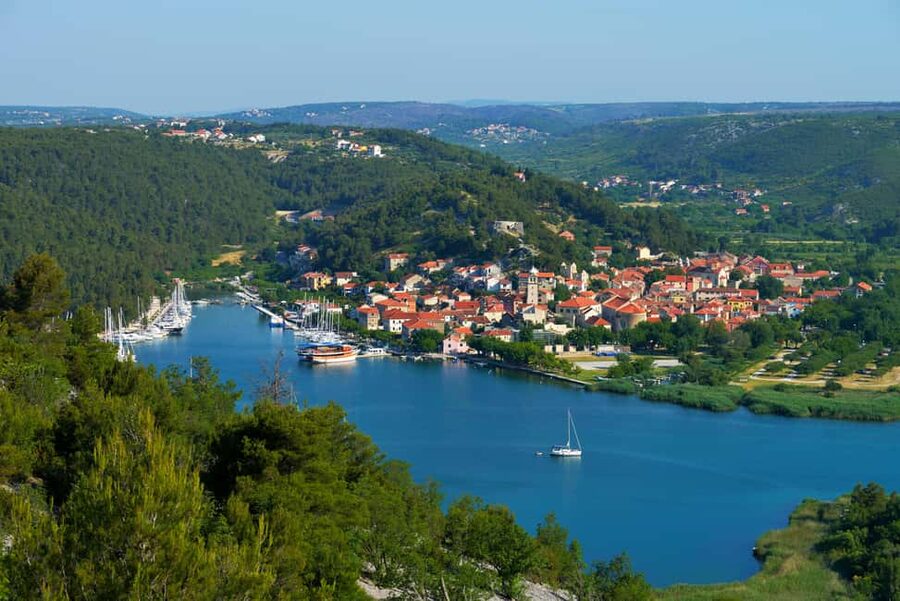
The outing begins around 11:30 at Šibenik’s central bus station, unless you arrange pickup from your accommodation. Look for the silver Opel minibus. Pickup is available for your group in an air-conditioned vehicle, which saves you a walk and makes the start easier if you are staying outside the center.
The group is capped at eight people. That matters here. The mill visit works best when you can ask questions, hear the guide without strain, and talk with the family producing the oil. A larger coach would make the olive grove feel more like a scheduled stop than a personal visit.
The provider describes the outing as five to six hours, while the published schedule runs from 11:30 to 17:30. I would allow the full six hours, especially if you add lunch. Expect a relaxed pace, but not a lazy one: you move between several sites, with short walks and photo stops.
Before setting off, there is a short safety briefing. The first transfer takes about 15 minutes, enough time for Dr Neil to set the scene. His storytelling is one of the strongest parts of the day. He has a gift for explaining complex Croatian history without turning the ride into a lecture.
More Olive Oil and Wine Tastings around Croatia:
- Split: Krka Waterfalls With Boat Cruise, Wine and Olive Oil
★ 4.3 · 1,507 reviews - Wine, food and olive oil by PhD student
★ 5.0 · 111 reviews - Hvar: Island tour with Wine and Olive Oil Tasting
★ 4.9 · 77 reviews
Okit Hill and the wide Dalmatian view
The first major stop is Svetište Gospe od Karmela at Okit Hill. You spend about 15 minutes here, so this is a viewpoint and history stop rather than a long visit.
From the hill, you can see the countryside spreading inland, with olive groves and vineyards below. On clear days, the view reaches toward the Kornati Archipelago. The point is not just taking a photograph. Okit helps you understand the physical setting of Dalmatia, where the coast, islands, fertile pockets, and rougher inland country sit close together.
This is also where the historical thread begins. Dr Neil uses the view to explain more than 2,000 years of shifting rule, conflict, and trade. Dalmatia has been shaped by its position between the Adriatic coast and the interior, and Okit gives that story a useful visual frame.
The stop is short, which keeps the afternoon moving. Still, you should wear shoes suitable for uneven ground and bring water. In July, the heat can be intense, as one couple discovered during a 34-degree day. The views are excellent, but this is an exposed hill, not a cool indoor museum.
Kaštel Benković and the region’s unsettled past

After roughly 30 minutes on the road, you reach Kaštel Benković for a guided visit of about 35 minutes. This historic site adds substance to the tour. You are not simply driving from one tasting room to another. You are shown how power, defense, and local survival shaped the towns and villages between the coast and hinterland.
The exact emphasis will depend on the questions in your group, but the central theme is clear: this has long been a strategic crossroads. Dr Neil connects local sites with the broader story of political changes, wars, communism, and Croatia’s later fight for independence.
That context makes the food and olive oil visit more meaningful. The groves are not an isolated lifestyle attraction. Families have worked this land through difficult periods, and the mill visit gives you a closer look at how local traditions continued through major change.
If you prefer long stays at each monument, the schedule may feel brisk. If you want a taste of regional history without spending a whole day in museums, the balance works well.
Uljara Lepur, where the afternoon really comes alive
The transfer from Kaštel Benković to Uljara Lepur takes about 10 minutes. You are welcomed with a glass of local sparkling wine, described as Dalmatia’s answer to champagne. The welcome sets a friendly tone, but the best part is that the visit quickly moves beyond a standard tasting.
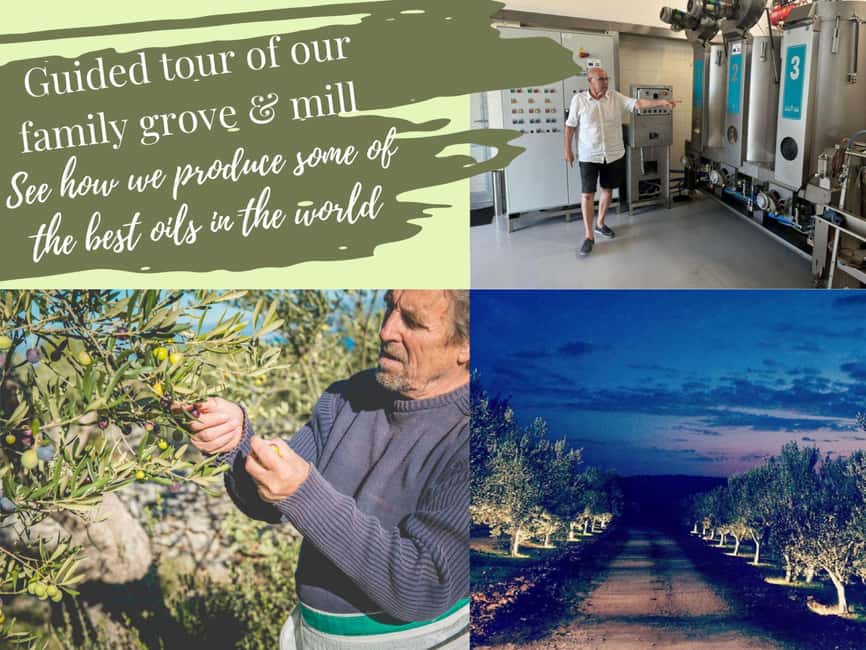
Uljara Lepur is a family-owned olive grove and mill in a historic village. The visit includes time among the olive trees, an explanation of the land and climate, and a look inside the mill. Depending on the arrangements and conditions, the grove can be explored on foot or by vehicle. One particularly memorable visit included a tour in a 40-year-old British fire engine, an unusual touch that added plenty of character.
The family’s welcome has been praised for its warmth and informality. Brane Lepur has hosted visitors personally, and his wife and daughter have also joined the gathering. That family presence helps the visit feel rooted in daily life rather than polished for mass tourism.
You learn how olives become oil through modern cold-press methods. The process is explained in practical terms, from the fruit on the tree to the finished bottle. You also hear about the health properties associated with extra virgin olive oil, including its place in a diet linked with heart and brain health.
The point is not to memorize production terms. It is to learn what to notice when you taste. A good olive oil can have fruitiness, bitterness, peppery heat, and balance. You may begin the tasting thinking all olive oil tastes much the same. By the end, the differences between the samples should be easier to spot.
More History and Heritage Tours around Croatia:
- Olive Oil Guided Tasting and History in Pula
★ 4.5 · 34 reviews - Zadar Olive Oil & Wine with Dalmatian Views & History
★ 5.0 · 34 reviews - Heraklion: Zeus Cave & Knossos History, Villages & Olive Oil
★ 4.9 · 89 reviews - Richtis Waterfall, History, Azoria, OliveTasting, NorthCoast
★ 5.0 · 83 reviews
Five oils, four wines, and plenty of local food
The oil tasting includes five oils, with a combination of award-winning products. The guide gives you tasting instruction and helps you compare aroma, flavor, texture, and finish.
This is one of the best-value elements of the outing. You are not handed a single sample and encouraged to buy it. You get a small lesson in how to taste, followed by a range of oils. If you cook with olive oil, this part can change how you shop once you get home.
Wine is served alongside the oil tasting and local food. The published selection includes Croatian sparkling wine, one red, and two white wines made from native grape varieties. The wines are chosen to show how local grapes reflect the soil and climate of the area.
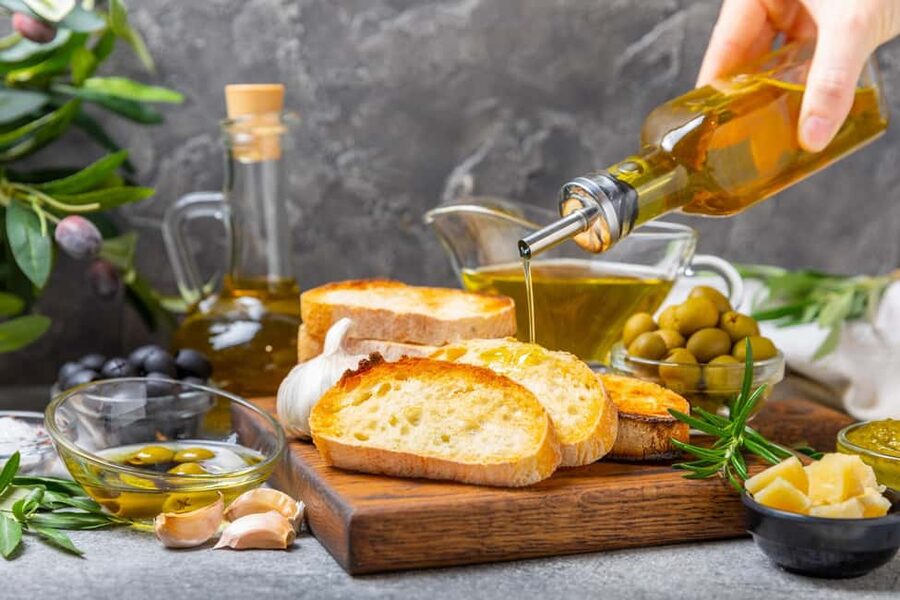
Tasty Dalmatian bites accompany the tasting. The food varies, but the optional full lunch is a cold buffet of local meats, seafood, cheeses, fruit, and vegetable dishes. It costs €20 and includes Croatian wine matched to the food and your preferences.
The lunch is not essential if you have a late breakfast or want to keep the afternoon light. It is worth adding if you want a proper meal and more time with the family. Several people have described the serving as generous enough to remove any need for dinner soon afterward, so plan accordingly.
The meal is also where the tour’s social side comes through. Local ingredients, oil from the mill, wine from the region, and a family table tell you more about Dalmatian food culture than a quick restaurant stop would.
You can buy oil to take home. That is optional, of course, but the tasting gives you a better basis for choosing. Check your luggage and airline rules before buying larger bottles.
Kamenjak above Lake Vrana
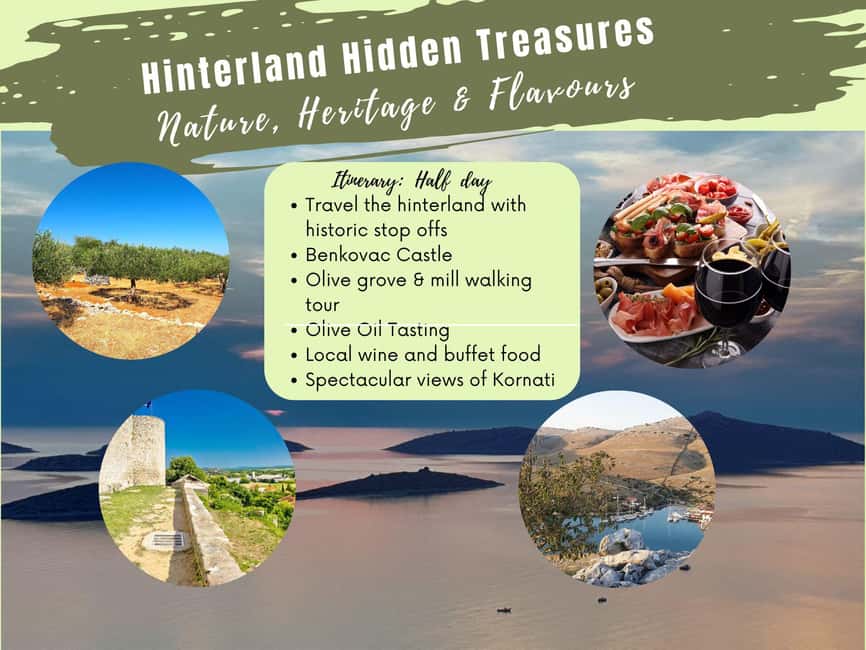
After the mill, the minibus travels for about 30 minutes to the Lake Vrana area. The final viewpoint is Kamenjak Nature Park, high above the lake, with a 10-minute photo and sightseeing stop.
This is the grand closing view. From Kamenjak, the panorama reaches across Lake Vrana toward the Kornati Archipelago. After the close-up experience of trees, bottles, food, and machinery, the wide horizon gives you a quiet moment to take stock.
The stop is brief, so do not expect a long nature walk. It is mainly a viewpoint and photo break. Still, the location earns its place on the route. The view links the day’s themes: water, farmland, islands, trade routes, and the physical distance between coast and interior.
The return includes drop-off options in Šibenik, Zadar, Šibenik-Knin County, Biograd na Moru, and the listed address at Draga 14. Confirm your exact return point when booking, especially if you are using the tour as transport between towns.
What the $64 price really includes
At $64 per person, this is a strong value if you want more than a basic sightseeing drive. The price includes transport, an English-speaking guide, the historical stops, access to the olive grove and mill, five oil tastings, four wines including sparkling wine, and food bites.
The fee also covers the hard-to-arrange parts of the day. You do not need to find a family olive mill, organize a tasting, or connect several rural viewpoints by rental car. The small group makes the cost feel more reasonable because the visit has a personal scale.
The optional €20 lunch is the main extra cost. I would treat it as a choice rather than a hidden charge. If you want the full food experience, add it. If you mainly want the history, scenery, and oil tasting, you can skip it.
Free cancellation up to 24 hours before departure and reserve-now, pay-later booking add useful flexibility. The operator contacts you by WhatsApp or message before the trip, so respond promptly and confirm the pickup details.
Who will enjoy this outing most
I would recommend this to adults who like food, local producers, and history in equal measure. It suits couples, small groups, and anyone staying several days in Šibenik who wants to see the countryside without renting a car.
It is especially good for you if:
- You want a small group instead of a coach tour.
- You enjoy tasting olive oil and wine with guidance.
- You want Croatian history explained during the drive.
- You prefer family-run places to polished tourist attractions.
- You like viewpoints and short sightseeing stops more than long hikes.
- You are happy with a late start and a six-hour afternoon.
It is less suitable if you are traveling with children under 12, need a highly accessible route, or want a full day of swimming and beach time. The schedule includes transfers, exposed viewpoints, and short visits rather than one long activity. People over 95 are also excluded by the stated tour conditions.
Dr Neil receives the strongest praise. His relaxed storytelling makes the long historical thread easier to follow, and he combines facts with personal conversation. Fiona handles organization, while Brane and the Lepur family add the local welcome at the mill.
Should you book the Šibenik olive oil and wine tour?
Book it if you want to connect Dalmatian food with Dalmatian history. The most memorable part is not one isolated sight. It is the way Okit’s view, Kaštel Benković, the olive grove, the oil tasting, and Kamenjak build a picture of the region.
Add the €20 lunch if you want a full meal and more time at Uljara Lepur. Skip it if you prefer a shorter food stop or already have dinner plans. Bring water, sun protection, comfortable shoes, and room in your bag for olive oil.
For $64, the mix is hard to beat: a small group, a strong guide, several regional tastings, rural transport, and access to a working family mill. It is a particularly good choice for your final or next-to-last day in the Šibenik area, when you want to leave the coast for a few hours and see how the wider region lives.
FAQ
Where does the tour start?
The standard meeting point is the central bus station in Šibenik. The vehicle is a silver Opel minibus.
Is pickup available from my accommodation?
Yes. Optional pickup is available for your group at your place of stay in an air-conditioned minibus. Confirm the exact pickup details before departure.
How long does the tour last?
The published schedule runs from 11:30 to 17:30, or about six hours. Other information describes the duration as five hours, so you should allow the full six-hour window.
What language is the tour conducted in?
The tour is conducted in English with a live guide.
How many people can join the tour?
The group is limited to eight participants.
What olive oil tasting is included?
You taste five olive oils, including award-winning oils, with instruction on aroma, balance, flavor, and health-related properties.
Which wines are included?
The tasting includes local sparkling wine, one red wine, and two white wines made from Croatian grape varieties.
Is lunch included?
Tasty local bites are included with the tasting. A fuller cold buffet lunch is optional and costs €20. It includes local meats, seafood, cheeses, fruit, vegetables, and Croatian wine.
Can I buy olive oil during the visit?
Yes. You can buy oil from the mill to take home, although purchases are not included in the tour price.
Is the tour suitable for children?
The tour is not suitable for children under 12. The stated conditions also exclude people over 95.
Just added around Croatia
- Zadar, Šibenik: olive oil, wine & food tasting, Self Drive★ 4.7 · 9 reviews
- Wine, Honey & Olive Oil of Solta Island – Tasting Tour★ 5.0 · 4 reviews
- Private tour of Brač island with olive oil tasting★ 5.0 · 2 reviews
- Olive Oil Tour of Solta Island with Lunch★ 5.0 · 4 reviews
- Private Split & Klis Fortress Tour, Olive Museum & Port Pickup★ 4.5 · 13 reviews
- Istrian tapestry – gourmet tour combining wine, truffles and olive oil★ 5.0 · 12 reviews
- Makarska Tuk Tuk Tour Olive Grove, Scenic Views and Tastings★ 5.0 · 3 reviews
- Small-Group Olive Oil Tour in Cres with Tasting★ 5.0 · 2 reviews
Olive Oil and Wine Tastings, compared.
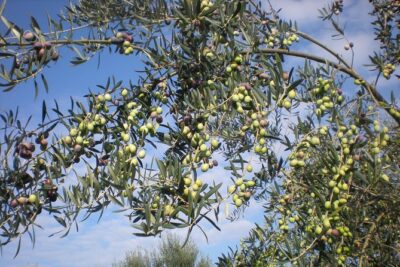
Sorrento Farm and Food Experience including Olive Oil, Limoncello, Wine tasting
Read our review →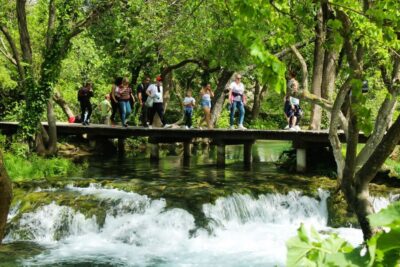
Krka Waterfalls With Boat Cruise, Wine and Olive Oil
Read our review →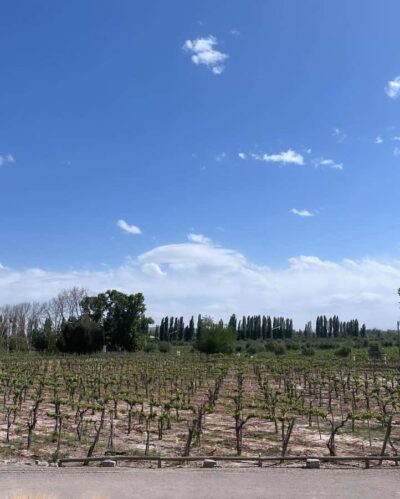

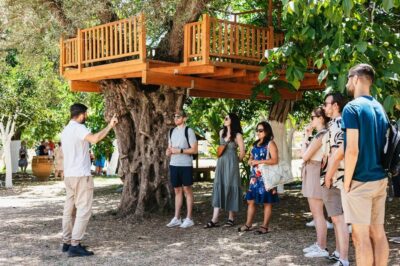
Lemon, Olive Oil and Wine Tasting Tour with Lunch
Read our review →
Browse the lists this tour appears in