
Review · PULA
Olive Oil Guided Tasting and History in Pula
Taste Istria one small pour at a time. The Olive Oil Guided Tasting and History in Pula offers a compact look at one of Croatia’s most important foods, pairing a museum visit with hands-on sensory tasting. I like the clear contrast between high-quality Istrian oils and a supermarket oil, and I like the unusual finish: extra virgin olive oil paired with a surprise dessert. The guide-led format also makes the session useful for anyone who wants more than a quick sample at a market stall.
The main consideration is the museum itself. It is smaller than some people may expect, and its layout is not especially interactive. The real strength comes later, in the tasting room, where the staff explain how to identify positive and negative qualities in olive oil. At about $36.04 per person, this is good value if you care about food culture, though less so if you only want a quick taste.
Key points to know before you go
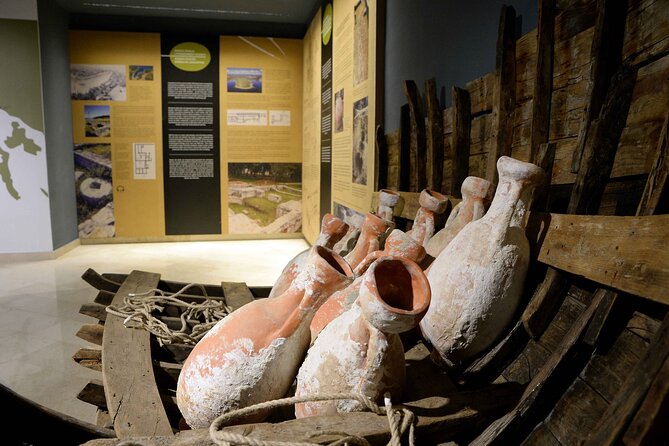
- Roman-era oil history: See how olive oil was made in Istria during Roman times and learn how it was exported.
- A practical tasting lesson: Compare quality Istrian oils with an oil commonly bought in a supermarket.
- A sweet surprise: The session ends with dessert paired with extra virgin olive oil.
- Small-group setting: Up to 20 people can take part, keeping the presentation reasonably focused.
- Central Pula meeting point: The experience starts and ends at Istarska ul. 30, close to public transportation.
- Flexible length: Plan on about 1 to 1.5 hours, depending on questions and interest.
Why Pula’s olive oil deserves your attention
Istria is known for olive oil, and this experience gives you a way to understand why the bottle on your table can vary so much in quality. Olive oil often looks simple from the outside. It is just a golden or green liquid poured over bread, salad, fish, or vegetables. The tasting shows you that it has its own set of smells, flavors, and faults.
That matters because labels can be confusing. The phrase extra virgin does not automatically tell you how fresh an oil is, how it was handled, or how it tastes. During the guided tasting, you learn to look for good qualities and unpleasant ones, rather than accepting every bottle as equal.
I especially like the comparison with a supermarket oil. It gives you a reference point that makes the lesson practical. Instead of tasting several expensive oils in isolation, you can think about the oil you already use at home and notice how aroma, bitterness, freshness, and texture differ.
The session also explains polyphenols and why they matter for health. You will not leave as an olive farmer or professional taster, but you should leave with better questions to ask when buying oil in Croatia or elsewhere.
More History and Heritage Tours around Croatia:
- Zadar Olive Oil & Wine with Dalmatian Views & History
★ 5.0 · 34 reviews - Šibenik: Croatia in a Day, Vistas, History, Olive Oil, Wine
★ 5.0 · 30 reviews - Heraklion: Zeus Cave & Knossos History, Villages & Olive Oil
★ 4.9 · 89 reviews
Entering the House of Istrian Olive Oil
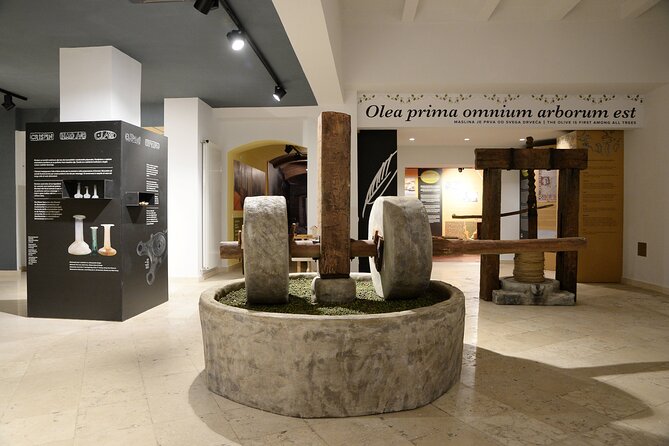
The experience begins at the House of Istrian Olive Oil, at Istarska ul. 30 in Pula. You meet there and return to the same location at the end, so you do not need to arrange a second pickup point or find your way across town after the tasting.
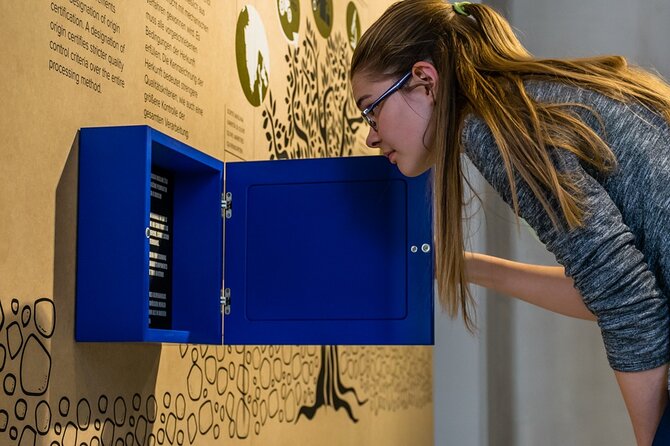
The opening section is an exhibition about olive oil in Istria. It covers Roman production methods, including where and how oil was made. You also learn how it was exported, which gives the product a wider place in the region’s past. Olive oil was not simply a kitchen item. It was an important trade good, and the exhibition helps connect today’s bottles with that older economy.
You will also watch two short films. One explains traditional processing, while the other shows how olive oil is made today. This contrast is useful because it lets you see what has changed and what has remained familiar.
The museum portion is informative, but keep your expectations in check. The space is described as small, and the layout may feel a little odd. It is not designed as a large, interactive museum with many hands-on displays. If you enjoy reading displays and watching short films, you will find enough to hold your interest. If you need a highly active presentation, the exhibition may feel quiet.
For me, the best way to treat this part is as background for the tasting. It gives you the basic story before you begin comparing oils. The tasting is the main event.
Roman methods, modern production, and two short films
The history section earns its place because olive oil is easier to understand when you know how much work sits behind it. The exhibition shows how Romans in Istria produced oil and how it moved beyond the local area through trade.
You should pay attention to the shift from traditional methods to current production. The point is not only to admire old tools or old techniques. It is to understand that the final flavor depends on growing, harvesting, processing, and storage.
The two films keep this section from becoming a wall of text. They are short, which is helpful during a 90-minute experience. You get enough context without spending the whole visit in a museum before reaching the tasting table.
One limitation is that the available information does not list the exact length of the films or describe every exhibit. Expect a compact introduction rather than a full technical course in olive growing. The staff guidance is what turns the material into something useful.
The tasting room is where the lesson clicks
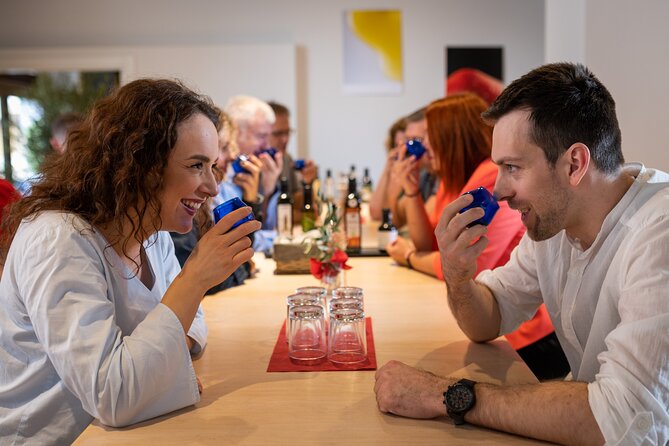
After the exhibition, you move to the tasting room for sensory analysis. This is the strongest part of the experience, especially if you have never tasted olive oil in a structured way.
You will sample high-quality Istrian olive oils and compare them with an oil typically bought in a supermarket. That side-by-side approach is more helpful than simply being told that Istrian oil is good. You can notice the difference yourself.
The guide explains how to recognize good oil and how to spot bad oil. You learn to look for positive and negative attributes, which makes the tasting more than a pleasant snack. It becomes a short class in food quality.
Expect the guide to answer questions during this section. The staff have received particular praise for clear explanations, friendly service, and a strong command of the subject. One particularly useful result of the session is that it may make you question what extra virgin really means when you see it on a label.
Olive oil tasting can sound formal, but the setting is not presented as intimidating. You do not need prior experience. Most people can take part, and the small-group limit of 20 helps keep the discussion manageable.
Still, a group of 20 is not the same as a private tasting. If the session fills, you may have less time for individual questions. The experience remains small compared with a large sightseeing tour, but it is worth knowing that the group can reach that size.
More Guided Tours around Croatia:
- Buje: Authentic Istrian family farm, guided walk, foods & wine
★ 5.0 · 37 reviews - Pula: House of Istrian Olive Oil Museum and Guided Tasting
★ 4.9 · 35 reviews - Guided tour and olive oil tasting in Alhaurin el Grande (Málaga)
★ 5.0 · 200 reviews - Guided Tasting Tour in 16th century House and Olive Oil Factory
★ 5.0 · 169 reviews
What you learn about good and bad olive oil
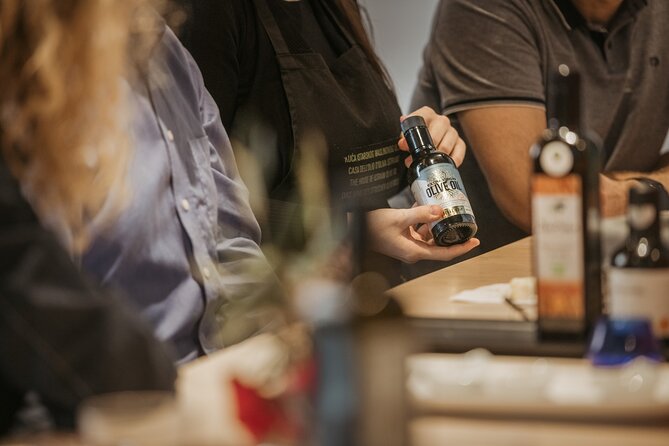
The most useful takeaway is not a single favorite flavor. It is the ability to notice quality.
The tasting introduces you to positive attributes in olive oil, along with faults that can affect aroma and flavor. You also learn about polyphenols, natural compounds associated with olive oil and its health value. The explanation gives context to the bitterness and peppery sensations that can appear in a good oil.
That is important because many people assume that a smooth, mild oil is always better. The session gives you a more careful way to judge. A strong taste is not automatically a defect, and a bland taste is not automatically a sign of quality.
The supermarket comparison adds a useful everyday angle. You can connect the tasting to your own shopping habits instead of treating it as a one-off food performance. Afterward, you may read labels more carefully and think about how the oil will be used.
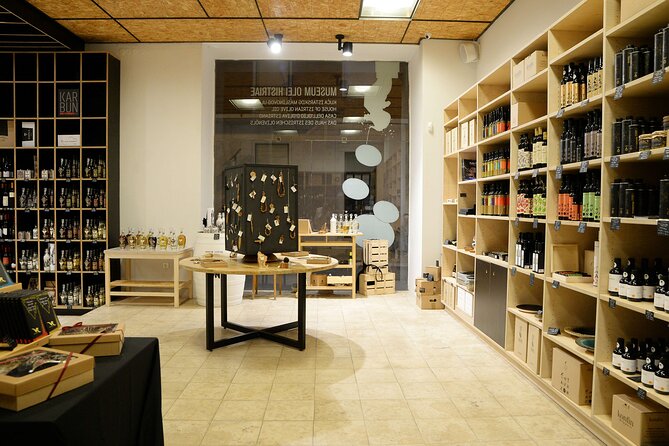
This is also a good experience for anyone planning to buy olive oil in Istria. You will have a better idea of what questions to ask and what characteristics you prefer. The tour does not appear to promise a farm visit or a large retail shopping component, so the value is mainly in the education and tasting rather than a broader countryside outing.
The surprise dessert and olive oil pairing

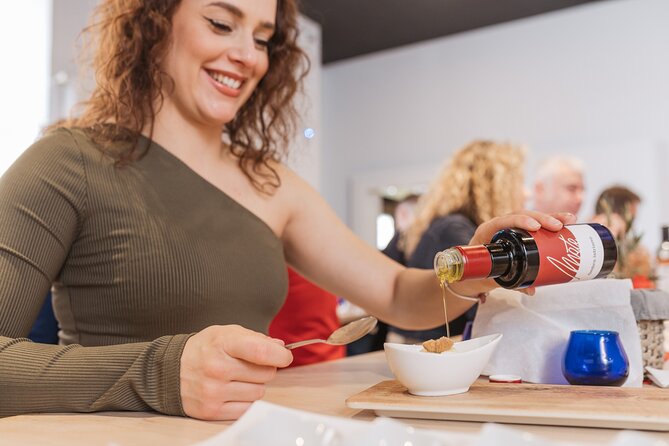
The final tasting is the most playful part. You receive a surprise dessert paired with high-quality extra virgin olive oil.
For some people, this may sound strange. Olive oil is usually linked with bread, tomatoes, vegetables, or seafood. Pairing it with something sweet shows how flexible a good oil can be, and it gives the session a memorable finish.
Because the dessert is described only as a surprise, you should not arrive expecting a particular dish. The point is the pairing itself. You taste the sweet item with the oil and consider how the flavors work together.
This closing sample also reinforces the wider lesson: olive oil is not only a cooking ingredient. It can be used as a finishing touch, and its flavor can change how another food tastes.
The dessert is a small detail, but it helps keep the experience from feeling like a technical lecture. You get history, food science, comparison, and a little fun in one sitting.
How long the visit takes in practical terms
The experience lasts about 1 to 1.5 hours. The stated timing depends partly on your interests and the questions asked, so allow a little flexibility rather than scheduling a major attraction immediately afterward.
A 90-minute visit fits neatly into a morning or afternoon in Pula. It is long enough to make the history and tasting worthwhile, but short enough to combine with other sightseeing in the city.
The opening hours listed for this experience are Monday through Saturday, from 10:00 a.m. to 6:00 p.m. It is not listed as operating on Sunday, so check the available time when you book.
The experience is offered in English and includes a mobile ticket. Confirmation is provided when you book. Since it is booked an average of 23 days ahead, I would not leave it until the last moment during a busy visit to Pula, especially if you have a fixed schedule.
Is $36.04 a fair price?
At about $36.04 per person, the price is reasonable for a 1 to 1.5-hour guided experience that includes the exhibition, films, several oil samples, snacks, and dessert.
The value depends on what you want from your food activity. If you are looking for a full-day farm visit, a meal, or a trip through the countryside, this is not that. It is a city-based introduction with a museum component and a structured tasting.
For a foodie, the price makes sense because you gain a skill you can use beyond the visit. You are not simply consuming a few samples. You learn how to compare them and how to think about quality.
The cost is also easier to justify because the tasting includes both high-quality Istrian oils and a supermarket comparison. That gives the session a practical edge. You get a point of reference rather than a sales pitch based only on premium products.
The experience may feel less worthwhile if you are not interested in olive oil or food production. The museum is small, and the exhibition may seem limited if you expected a major cultural attraction. In that case, the price is paying mainly for the guided tasting, not a large museum visit.
Who will enjoy this Pula experience most?
I would recommend it first to food-focused visitors who want to understand Croatian and Istrian food culture. It is also a good choice if you enjoy guided tastings but do not want to commit half a day to one activity.
You will likely enjoy it if:
- You want a clear introduction to olive oil rather than an advanced professional course.
- You like learning through comparison and sensory analysis.
- You are curious about Roman-era production in Istria.
- You want an indoor activity in Pula lasting about 90 minutes.
- You plan to buy olive oil and want to judge it with more confidence.
- You enjoy unusual food combinations, including olive oil with dessert.
It may be less suitable if you want a large museum, a farm setting, or extensive outdoor sightseeing. The activity stays at the House of Istrian Olive Oil and ends where it begins.
The venue is near public transportation, and service animals are allowed. Most people can participate, though the supplied information does not give detailed accessibility measurements or seating arrangements. If you have specific mobility needs, ask the provider before booking.
Booking, cancellation, and timing advice
You can cancel free of charge up to 24 hours before the start time for a full refund. Changes or cancellations made less than 24 hours ahead are not accepted for a refund, with cut-off times based on local time.
I would book after you know your Pula schedule, especially since the experience is often reserved in advance. Choose a time that leaves room for the tasting to run toward the longer 1.5-hour estimate.
The starting point is Istarska ul. 30, 52100 Pula, Croatia. The activity ends back there, which makes planning simple. You do not need to arrange a separate return trip.
Should you book the olive oil tasting in Pula?
Book it if you want a focused, useful food experience that explains what you are tasting. The best parts are the comparison between Istrian and supermarket oils, the clear explanation of good and bad qualities, and the unusual dessert pairing.
Go in expecting a small museum and a strong tasting, not a grand exhibition. The museum section may feel limited, but the guided session makes the visit worthwhile for anyone interested in Croatian food culture.
At $36.04, I see this as a fair buy for food lovers, first-time olive oil tasters, and anyone planning to take a bottle of Istrian oil home. If olive oil is not high on your list, spend your time elsewhere in Pula. If it is, this compact lesson should make every future drizzle a little more informed.
FAQ
Where does the olive oil experience begin?
It begins at Istarska ul. 30, 52100, Pula, Croatia.
Where does the activity end?
The activity ends back at the meeting point at Istarska ul. 30.
How long does the experience last?
It lasts about 1 to 1.5 hours, depending on your interests and questions.
Is the tour offered in English?
Yes. The experience is offered in English.
How many people can join the group?
The maximum group size is 20 participants.
What food is included?
Olive oil tasting and snacks are included, along with a surprise dessert paired with high-quality extra virgin olive oil.
Can I cancel for a full refund?
Yes. You can cancel at least 24 hours before the start time for a full refund. Cancellations or changes made less than 24 hours before the start time are not refunded.
Just added around Croatia
- Zadar, Šibenik: olive oil, wine & food tasting, Self Drive★ 4.7 · 9 reviews
- Wine, Honey & Olive Oil of Solta Island – Tasting Tour★ 5.0 · 4 reviews
- Private tour of Brač island with olive oil tasting★ 5.0 · 2 reviews
- Olive Oil Tour of Solta Island with Lunch★ 5.0 · 4 reviews
- Private Split & Klis Fortress Tour, Olive Museum & Port Pickup★ 4.5 · 13 reviews
- Istrian tapestry – gourmet tour combining wine, truffles and olive oil★ 5.0 · 12 reviews
- Makarska Tuk Tuk Tour Olive Grove, Scenic Views and Tastings★ 5.0 · 3 reviews
- Small-Group Olive Oil Tour in Cres with Tasting★ 5.0 · 2 reviews
Historical Tours, compared.

Zeus Cave & Knossos History, Villages & Olive Oil
Read our review →
Richtis Waterfall, History, Azoria, OliveTasting, NorthCoast
Read our review →
Zadar Olive Oil & Wine with Dalmatian Views & History
Read our review →
Šibenik: Croatia in a Day, Vistas, History, Olive Oil, Wine
Read our review →
Classical guitar concert in a historic olive press
Read our review →
Douro Valley: A Sensory Experience in the Douro: Wines, Olive Oil, and History
Read our review →
Olive Oil Tasting & Historic Olive Mill Tour in Ragusa area
Read our review →
Private Tour in Historic Estate in Monemvasia with wine-olive oil tasting & meal
Read our review →Browse the lists this tour appears in