
Review · CENTRAL MACEDONIA
Olive oil tasting & food pairing in Thessaloniki
Olive oil can change a meal. This 1.5-hour tasting in Thessaloniki gives you a focused introduction to four Greek extra virgin olive oils, then pairs them with vegetables, fruit, yogurt, and chocolate. I like the clear link to everyday Greek food, and I especially like that you learn how to shop for olive oil instead of simply sampling it.
The small group is limited to 10 people, which should make it easier to ask questions and compare impressions. Irini Kokolaki is praised for her qualifications and passion, another strong point. The main consideration is price: at $73 per person, this is not a casual snack, so it makes the most sense if you want useful tasting skills rather than a quick bite.
Key points before you book
- Four oils from across Greece: You compare different extra virgin olive oils rather than tasting only one local label.
- Unexpected food pairings: Greek olive oil is matched with seasonal vegetables, fruit, yogurt, and chocolate.
- Practical shopping advice: The session explains how to choose extra virgin olive oil in a shop.
- A small, multilingual group: Up to 10 people can attend, with instruction offered in English, French, Greek, Italian, and Spanish.
- A central Thessaloniki setting: The experience begins and ends at the Creativity Platform team’s space.
- A sensory preparation tip: Finish coffee and tea at least 30 minutes before the tasting, and avoid perfume.
Why this Thessaloniki tasting is worth your time
Greek olive oil is not just a condiment placed on the table after cooking. It is a basic part of the Greek Mediterranean diet, and Greece consumes more olive oil per person than any other country according to the information provided for this experience. Greece is also the world’s third-largest olive oil producer.
That context gives the tasting a useful purpose. You are not simply learning to say that one oil tastes good. You are learning why oils differ, how those differences affect food, and what to look for when you stand in front of a crowded supermarket shelf.
I like experiences that give you something to use after the holiday. Once you understand the difference between a sweeter, gentler oil and a more peppery one, you can make a better choice for salads, vegetables, yogurt, or dipping bread. You may also become less likely to judge an oil by its bottle design alone.
The format is compact. In 90 minutes, you taste four oils and try them with simple Greek ingredients. That makes this a good addition to a Thessaloniki itinerary when you want a break from monuments, museums, and long restaurant meals.
More Olive Oil and Food Pairings around Greece:
- Symphony of Flavors – Olive Oil & Food Pairing at Corfu Town
★ 4.9 · 66 reviews - Rethymno: Olive Oil Tasting with Cretan Food Pairing
★ 4.8 · 52 reviews - Street food tasting in the locals favorite hidden places
★ 5.0 · 15 reviews
Meeting the group at the Creativity Platform
The starting point is the space used by the Creativity Platform team, a nonprofit collective in Thessaloniki. Its work centers on exchanging ideas, research, projects, and practical activity linked to the city’s creative economy.
You will return to this same meeting point at the end. That keeps the experience simple, with no transport between several tasting locations and no need to plan a route through the city during the session.
The exact starting time depends on availability, so check the schedule before booking. Since the activity lasts 1.5 hours, you can fit it into a morning or afternoon plan, but leave enough time to arrive without rushing. A tasting works better when your senses are calm and your attention is free.
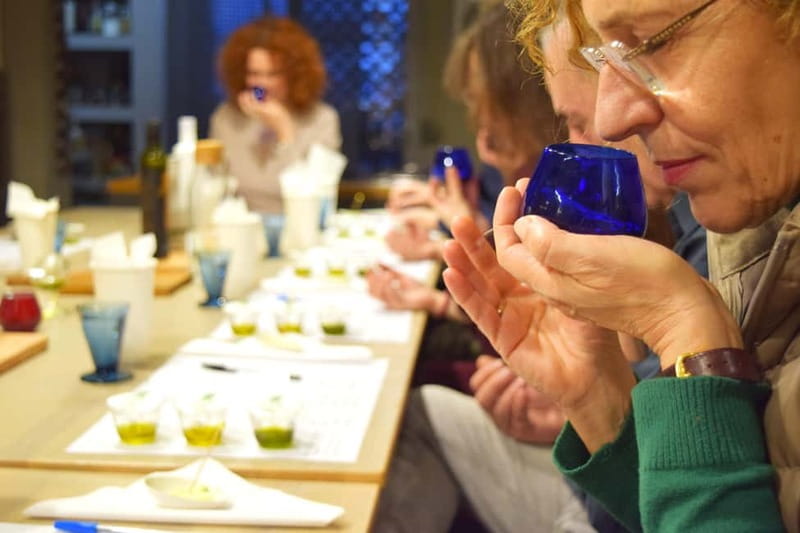
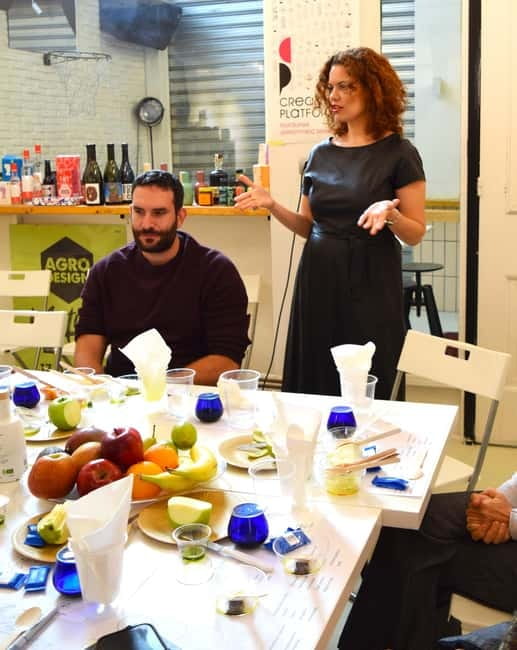
The group is limited to 10 participants. That number matters here. A large food tour can turn into a series of demonstrations where you listen from the back. A small group gives you a better chance to ask Irini Kokolaki why one oil feels sweeter, hotter, or more bitter than another.
The activity is wheelchair accessible. Instruction is available in English, French, Greek, Italian, and Spanish, so check that your preferred language is offered at your chosen time.
Preparing your palate before the first oil
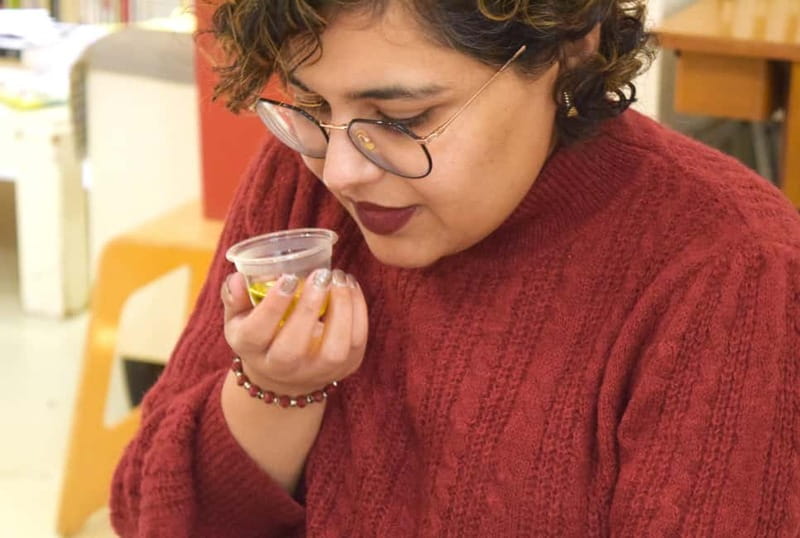
The preparation advice is practical and easy to follow. Finish coffee and tea at least 30 minutes before the tasting, and avoid wearing perfume.
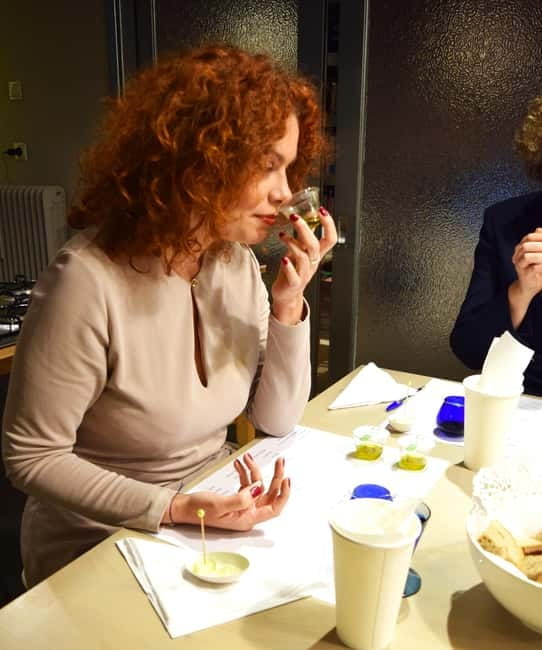
Coffee and tea can affect your sense of flavor, while perfume can interfere with the aroma of the oil and food. This may sound fussy if you have never taken part in a formal tasting, but smell is a major part of how you judge olive oil. Arriving with a clean palate lets you notice more of the differences between the samples.
You do not need special equipment or prior knowledge. The point is to develop your own senses, not to pass an exam. If you usually pour oil over food without thinking about its flavor, this preparation helps you pay attention from the first sample.
I would also arrive ready to taste slowly. The session is short, but four oils plus several food pairings require concentration. The most useful question is not which oil is best in an absolute sense. It is which oil you prefer, and which foods bring out its best qualities.
Comparing four extra virgin olive oils
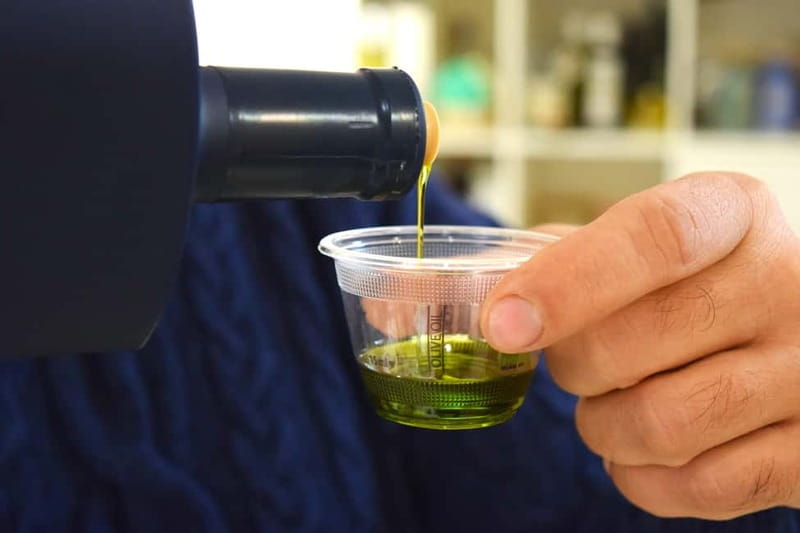
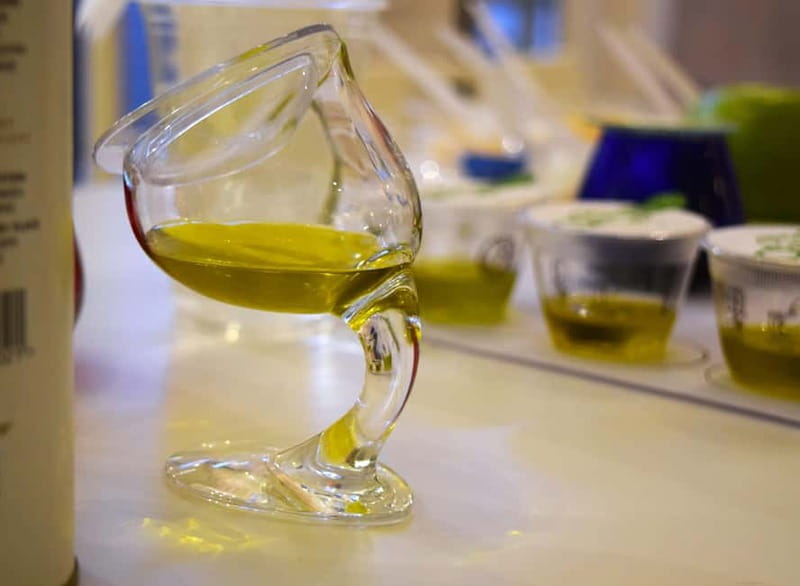
The central part of the experience is a tasting of four extra virgin olive oils from different parts of Greece. The supplied details do not name the specific regions or producers, so you should not expect a fixed list of brands. The value comes from comparing the oils side by side.
That comparison helps you notice the range within Greek olive oil. One sample may suit you because it tastes softer or sweeter. Another may appeal because it has a stronger, more peppery character. The point is not to force you toward one style. It is to help you recognize what you personally enjoy.
A tasting also gives you a better sense of how quality and flavor relate. You learn to pay attention to aroma, taste, and the sensation left in your mouth. The experience is designed to help you distinguish superior oil from inferior oil, while still accepting that personal preference matters.
That last point is important. A strongly flavored oil is not automatically better for every dish or every palate. You might prefer a milder oil on yogurt and a more forceful one with vegetables. You may also discover that your favorite style is not the one you expected.
Irini’s role is central. She is described as highly qualified and passionate about olive oil, and the strongest praise focuses on her ability to explain what separates better oil from poorer oil. That matters because oil tasting can become confusing when the instructor simply lists technical terms. You need someone who can connect those terms to food you actually eat.
More Food Tours around Greece:
- Crete: Full-Day Cretan Wines, Olive Oil, Raki and Food Tour
★ 5.0 · 264 reviews - Traditional Food tour, Olive oil Tasting with Lunch in Kalamata, Messinia!
★ 5.0 · 30 reviews - Premium Cretan Olive Oil Tasting, Wine, Raki and Local Food Tour
★ 5.0 · 17 reviews - Premium Crete Olive oil tasting, Wine, Raki and Cretan food!
★ 5.0 · 17 reviews
Pairing olive oil with Greek ingredients
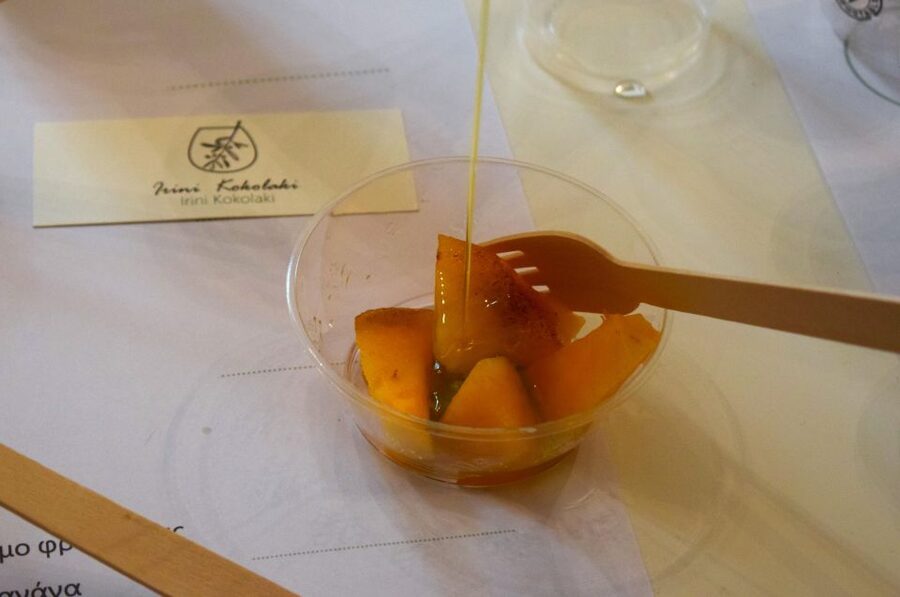
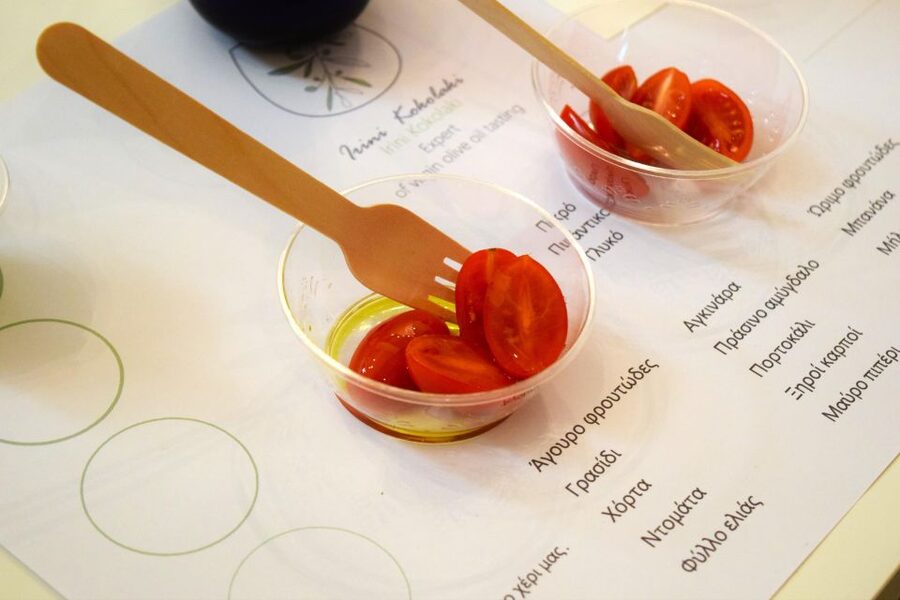
After comparing the oils, you pair them with simple Greek foods. The included pairings feature seasonal vegetables, fruits, and yogurt, with the highlights also noting chocolate.
This is where the tasting becomes more than a technical lesson. Oil is easier to understand when you try it with food. A sample that seems sharp on its own may work well with a mild ingredient. Another may suit a sweeter pairing. The food gives you a practical way to remember the differences.
Vegetables
Vegetables are a natural match for olive oil and help show how the oil can support or sharpen a dish. Seasonal produce keeps the pairing connected to the Greek table instead of turning the session into a display of rare ingredients.
You may find that a peppery oil gives plain vegetables more character. A milder oil may let the vegetable itself remain the focus. This is useful knowledge for shopping and cooking because it shows that the right oil depends partly on what you plan to serve.
Fruit
Fruit is a more surprising pairing, and it can make the tasting more memorable. The natural sweetness of fruit gives you a clear contrast with the bitterness, fruitiness, or peppery finish of the oils.
The goal is not to claim that every oil works with every fruit. It is to help you test combinations and notice how the flavors change together. This kind of comparison is also a good way to challenge the idea that olive oil belongs only on salads or savory dishes.
Yogurt
Yogurt is a familiar Greek food, but olive oil can bring out different qualities in it. A gentler oil may blend into the yogurt, while a more assertive sample may create a stronger contrast.
This pairing has everyday value. You can easily imagine using the lesson later with breakfast, a snack, or a simple meal at home. It also reinforces the connection between the tasting and Greek food culture rather than treating olive oil as an isolated product.
Chocolate
Dark chocolate is the most unexpected pairing listed for the experience. It may sound odd at first, which is exactly why it is useful. A tasting should give you a few combinations you would not think to try alone.
This does not mean you will love the pairing. That is part of the fun. You can test the combination without committing to a full dessert, then decide how the oil’s bitterness, fruitiness, or peppery finish works with chocolate.
Learning how to shop for better olive oil
The most practical part of the experience is the guidance on choosing extra virgin olive oil in the marketplace. You will not leave with only a memory of four samples. You should also have a better method for reading and judging the bottles available in Thessaloniki or at home.
The information provided does not list a specific shopping checklist, so I would not expect a detailed lesson on every label term or certification. Instead, the session focuses on bringing you into closer contact with the product and helping you understand quality through tasting.
That is still valuable. Grocery shelves can make olive oil look more complicated than it needs to be. A familiar brand, attractive bottle, or low price does not tell you everything about flavor or quality. After this session, you can use your senses more confidently and consider the kind of oil you actually want.
The tasting also helps you avoid one common mistake: assuming that a more intense oil is always the best choice. If you prefer sweetness and a softer profile, that preference is legitimate. If you like a spicy finish, you can seek that out. The instructor’s job is to help you identify those qualities, not dictate a single winner.
One especially useful goal is learning to describe what you taste. Words such as sweet, spicy, bitter, fruity, and mild give you a better way to compare oils. You can then explain what you want in a shop instead of choosing at random.
Is $73 a fair price?
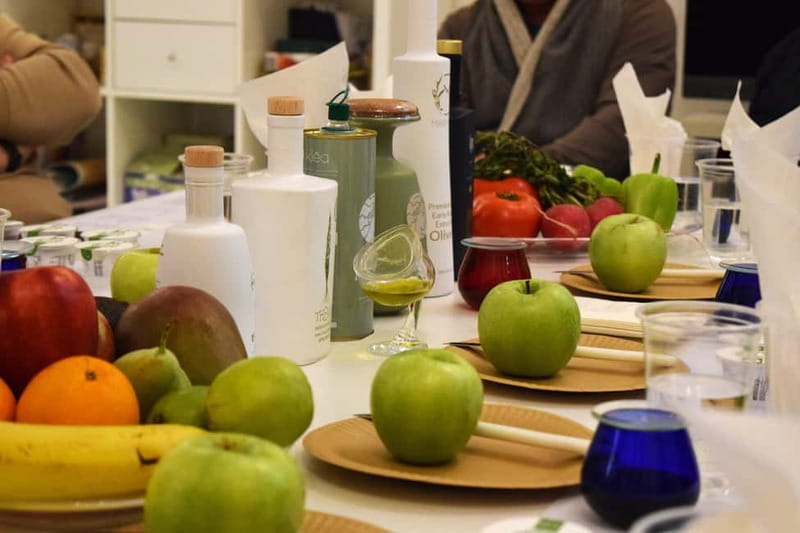
The cost is $73 per person, which places this experience in the premium range for a 90-minute food activity. You are paying for instruction, four different Greek extra virgin olive oils, several food pairings, and a small group rather than a full meal.
I see the value if you are genuinely curious about olive oil or plan to buy Greek oil during your stay. The knowledge can follow you into markets and grocery shops, and the tasting gives you a more informed way to enjoy meals for the rest of your trip.
The value is less clear if you mainly want a cheap snack or a broad food tour. You will not be visiting several food stops, and the activity does not promise a full lunch. It is a focused educational tasting, not a replacement for a meal.
The small group improves the price calculation. With no more than 10 participants, you should have a more personal setting than you would find at a large commercial demonstration. The multilingual instruction is another benefit for people who want to ask questions in a language other than English.
Free cancellation up to 24 hours ahead and the option to reserve now and pay later reduce the risk of fitting this into a changing Thessaloniki schedule. Those are useful booking terms, but the main decision should still come down to your interest in the subject.
Who will enjoy this experience most?
I would recommend the tasting to food-minded visitors, home cooks, and anyone who wants to understand a basic part of Greek daily life. It also suits people who enjoy guided tastings but prefer a smaller, quieter session to a crowded food tour.
It is a good choice for you if:
- You want practical advice for selecting olive oil.
- You enjoy comparing subtle flavor differences.
- You are open to unusual pairings such as yogurt, strawberries, or dark chocolate.
- You appreciate an instructor who can explain both quality and personal preference.
- You want an accessible activity in Thessaloniki that lasts only 90 minutes.
You may want to skip it if you dislike tasting unfamiliar foods or have little interest in olive oil. The session is centered on one product, so its appeal depends heavily on your curiosity.
Families and mixed-age groups should consider the food focus before booking. The information provided confirms wheelchair access and a small group, but it does not give age recommendations or details about children’s portions. If that matters for your party, ask before reserving.
Practical details for a smooth visit
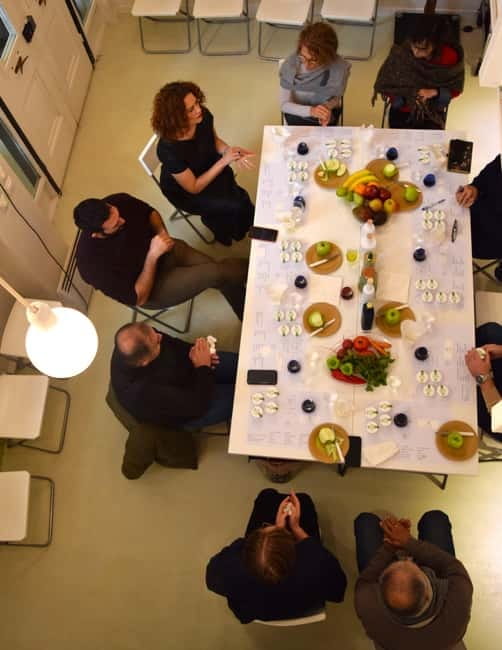
Plan to arrive at the Creativity Platform meeting point with coffee and tea finished at least 30 minutes earlier. Avoid perfume so you do not interfere with your own sense of smell or anyone else’s.
The activity returns to the same location, making it easy to plan around. You will not need transport between stops, and the 1.5-hour duration leaves room for another Thessaloniki activity before or after it.
Starting times vary, so check availability. The session is offered in English, French, Greek, Italian, and Spanish, and the group size is capped at 10. The activity is wheelchair accessible.
The experience provider is Irini Kokolaki. Her qualifications and enthusiasm receive especially strong praise, so I would expect the best part of the session to be the explanations that connect tasting technique with real shopping and cooking decisions.
Should you book this olive oil tasting?
Book it if you want more than a pleasant sample. At $73, this is best understood as a short food lesson with tasting included. You will compare four Greek oils, test them with vegetables, fruit, yogurt, and chocolate, and gain a better sense of how to choose oil for your own kitchen.
I especially recommend it for visitors who plan to buy Greek olive oil or who already enjoy learning how food is made and judged. The small group, multilingual instruction, and practical focus add real value.
Skip it if your priority is a full meal, a general food crawl, or the lowest possible price. But if you are curious about the product that anchors so much of Greek cooking, this focused Thessaloniki experience offers a useful and memorable introduction.
FAQ
How long does the olive oil tasting last?
The experience lasts 1.5 hours.
How many olive oils will I taste?
You will taste four different Greek extra virgin olive oils from across Greece.
What foods are paired with the olive oil?
Pairings include simple Greek ingredients such as seasonal vegetables, fruits, and yogurt. Chocolate is also listed as a pairing.
Where does the experience begin and end?
It begins at the Creativity Platform team’s space in Thessaloniki and ends back at the same meeting point.
What languages are available?
Instruction is offered in English, French, Greek, Italian, and Spanish.
Is the activity wheelchair accessible?
Yes, the activity is wheelchair accessible.
What should I do before the tasting?
Finish coffee and tea at least 30 minutes before the tasting, and avoid perfume so your sense of flavor and smell is not affected.
Just added around Greece
- Athens: Greek Wine & Olive Oil Tasting at Brettos Plaka★ 4.5 · 3 reviews
- Breakfast in the markets with olive oil and honey tasting★ 4.8 · 8 reviews
- PRIVATE RHODES TOUR + Lunch Stop & WINE/OLIVE OIL Tasting★ 5.0 · 2 reviews
- Olive Tour & Tasting★ 5.0 · 4 reviews
- Olive Facility Visit with Olive Oil Tasting Session★ 5.0 · 2 reviews
- SYSTASIS Olive Oil Tasting Experience in Ermioni Greece★ 5.0 · 4 reviews
- Olive Oil Tour close to Nafplio★ 4.5 · 3 reviews
- Olive Oil Tasting at the Mykonian Farm★ 4.5 · 3 reviews
Olive Oil and Food Pairings, compared.

Vineyard Tour with Wine, Olive Oil & Food Tasting
Read our review →
Symphony of Flavors – Olive Oil & Food Pairing at Corfu Town
Read our review →

Seggiano: Guided Tour of the Olive Grove and Food Tasting
Read our review →
Ascoli Olive Oil Tour with Tasting and Local Food Pairing
Read our review →
Street food tasting in the locals favorite hidden places
Read our review →
Olive Mill Tour with Oil and Food Tasting in Chianciano
Read our review →
Zadar, Šibenik: olive oil, wine & food tasting, Self Drive
Read our review →Browse the lists this tour appears in