
Review · CRETE
Traditional Olive Oil Making at Spiridi Olive Oil Farm – Crete
Turn olives into oil by hand. At Spiridi Olive Oil Farm near Agios Nikolaos, you do not just watch a demonstration. You weigh olives, push a stone mill, fill sacks with olive paste, and use a wooden press to extract oil. I especially like the small group limit of 10, which gives you a real turn at each step, and the 100ml bottle of family-made extra virgin olive oil makes a useful souvenir rather than a trinket.
The workshop takes place in a 130-year-old olive oil factory, with family members guiding you through the work in English. The main drawback is the price: at $78.60 per person for about 90 minutes, it is not a cheap tasting. You are paying for a participatory food lesson and access to historic equipment, not a full meal or a long farm tour.
Key points to know before you book
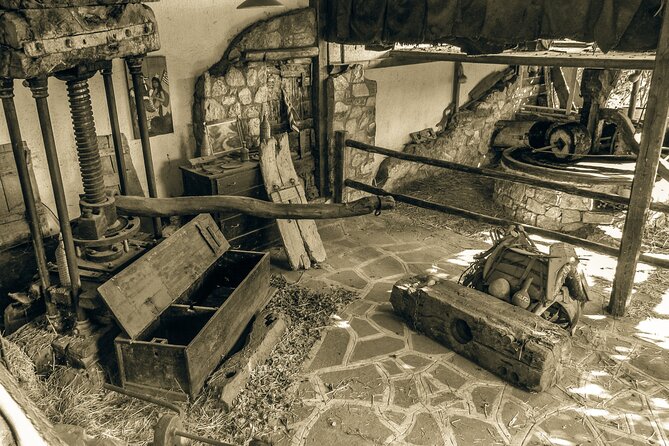
- You operate the old equipment: Weigh olives, push a stone mill, fill large sacks, and work a manual wooden press.
- The group is capped at 10 people: This matters because everyone needs a chance to handle the tools.
- The workshop lasts about 90 minutes: It is easy to fit into a morning near Agios Nikolaos.
- You taste the oil at the end: The tasting helps connect the physical work to the final food.
- A 100ml bottle is included: You take home the family’s extra virgin handmade olive oil.
- The setting has genuine age: The olive oil factory is 130 years old, giving the lesson a real link to Cretan food traditions.
Arriving at the 10:30 a.m. olive oil workshop
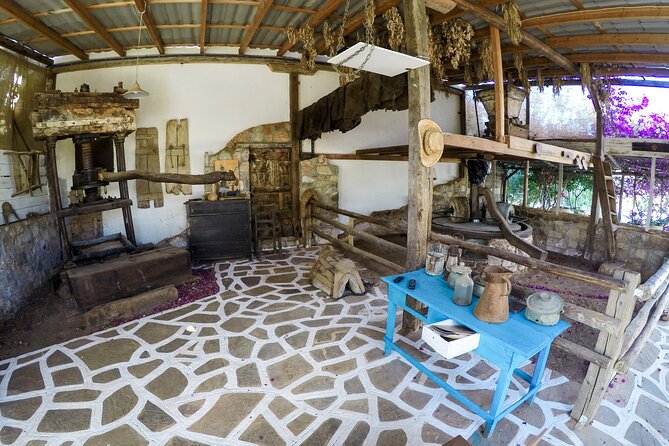
You meet at Spiridi Olive Oil Farm, also identified as the Cretan Olive Oil Farm, at Agios Nikolaos 721 00, Greece. The activity begins at 10:30 a.m. and finishes back at the same meeting point.
That fixed morning start is useful if you are staying in or near Agios Nikolaos. You can build the rest of your day around it instead of losing a full afternoon. The workshop itself takes about one hour and 30 minutes, though the actual demonstration has also been described as lasting about an hour. I would allow the full stated duration so you are not rushing away from the tasting or shop.
The farm offers a mobile ticket, and the activity is conducted in English. Confirmation is sent when you book. Since the workshop depends on a minimum number of people, the operator can cancel if that minimum is not met. In that case, you are offered another date or activity, or a full refund.
More Olive Farm Visits around Crete:
- Crete: Road-trip to Lasithi, Zeus Cave & Olive Mill Farm
★ 4.4 · 451 reviews - Moires: Cooking Class and Olive Oil Tasting at a Family Farm
★ 5.0 · 93 reviews - Kleanthi Olive Farm: Guided Tour with Local Delicacies Tasting
★ 5.0 · 51 reviews
Inside the 130-year-old olive oil factory
The setting does much of the teaching. Instead of hearing a talk in a modern visitor center, you work with the same basic tools used in traditional olive oil making.
The age of the factory matters because it puts the method in context. A stone mill and wooden press show how much labor once went into a product that now arrives in a supermarket bottle with very little explanation. You get a clearer idea of why olive oil has such a central place in Cretan cooking and daily life.
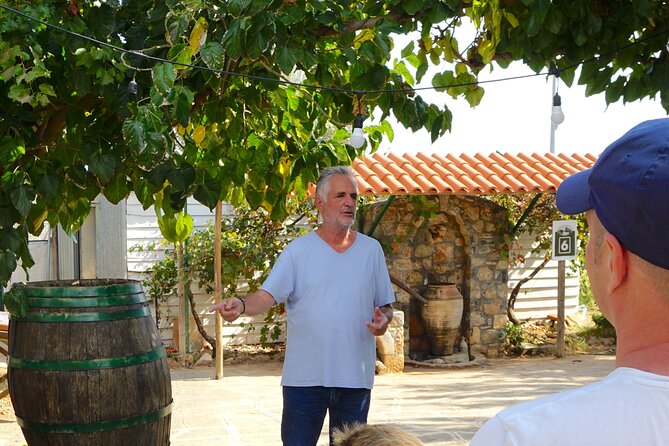
I like that the lesson is built around action. You do not need specialist food knowledge to follow it. The family guides you through each stage, gives help as you work, and explains what is happening along the way. The equipment may look simple, but the process becomes more understandable once you have to move the mill or handle the crushed olives yourself.
The old machinery also creates a modest limitation. This is a traditional demonstration, not a look at a modern industrial oil plant. If you want technical information about current commercial production, harvesting schedules, machinery, or detailed oil chemistry, you may find the workshop too basic. Its strength is the physical connection to the old method.
Weighing olives before the work begins
The first practical step is weighing the olives. This small task gives the process a useful starting point. You see that olive oil production begins with measured raw material, not simply a pile of fruit being crushed at random.
For you, weighing also makes the later stages easier to understand. The workshop follows a clear chain: olives become crushed paste, paste is packed into sacks, and pressure separates the liquid. Each step builds on the one before it.
This is a good point for families. Children can take part in a simple task before trying the heavier equipment. The group format also means you are not left watching one person work for the whole session. The operator says the number of people is limited so everyone can join in.
Pushing the stone mill yourself
Next comes the most memorable part for many people: crushing the olives with a stone mill. You push it yourself rather than watching the guide do all the work.
That physical effort is valuable because it changes your view of olive oil. A bottle on a kitchen shelf feels ordinary. Moving the mill reminds you that the product begins with time, weight, repetition, and muscle. You also get a sense of why the traditional method was a communal task rather than a quick kitchen chore.
The activity is supervised throughout. The family helps you handle the equipment and keeps the process moving. Children can have a go as well, though adults should expect to assist with any part that feels heavy or awkward.
I would not book this expecting a strenuous working day. The hands-on elements are short demonstrations and shared tasks, not several hours of labor. Still, wearing comfortable clothes and shoes makes sense. The activity involves crushed olives, large sacks, and old machinery, so this is better suited to practical clothing than your smartest sightseeing outfit.
More Olive Oil Tours around Crete:
- Crete: Quad Safari, Olive Mill with Tasting & Ghost Village
★ 4.9 · 1,004 reviews - From Chania: Olive Oil, Wine, Cheese & Honey Tasting Tour
★ 4.6 · 490 reviews - From Chania: Wine and Olive Oil Tasting Tour with Snacks
★ 4.8 · 354 reviews - The Terra Creta Olive Oil Experience Tour
★ 4.7 · 344 reviews
Filling sacks with olive paste
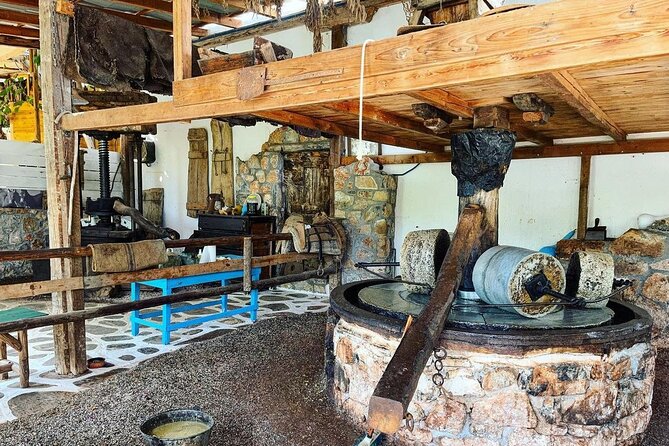
Once the olives are crushed, you transfer the paste into large sacks. This step can seem less dramatic than pushing the mill, but it explains how the material is prepared for pressing.
The sequence is what makes the workshop effective. You see the olives change form and take part in the preparation instead of jumping straight to a finished sample. That makes the final tasting more meaningful, since you have followed the oil from fruit to paste.
The sacks also show the traditional nature of the process. There is no quick button to press and no polished machine hiding the work. The method is open and easy to follow, which helps children and adults understand it at the same time.
Using the manual wooden press
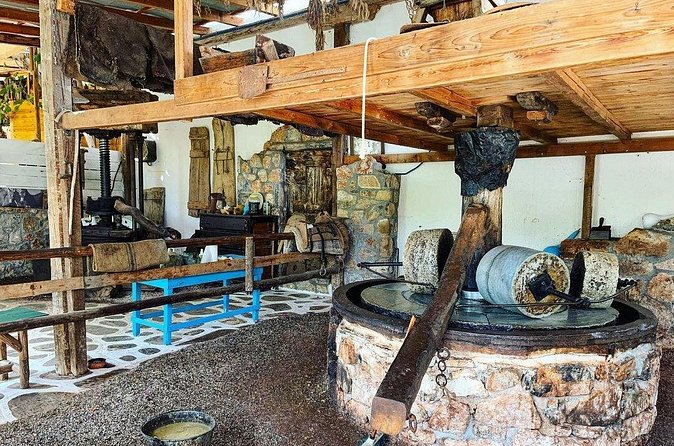
The olive paste is then placed in a manual wooden press. You help press it into oil, again with guidance from the family.
This is the point where the workshop feels most like a shared task. The tools are historic, but the instructions are practical. You are shown what to do and then given a turn. The experience does not depend on standing quietly while someone else performs the entire process.
The wooden press also gives you a useful comparison with modern production. Traditional oil making requires careful handling and patience. The workshop does not claim to recreate a full commercial harvest, and it should not be judged as one. Its purpose is to show the basic method and give you a direct connection to Cretan food customs.
Tasting the finished oil
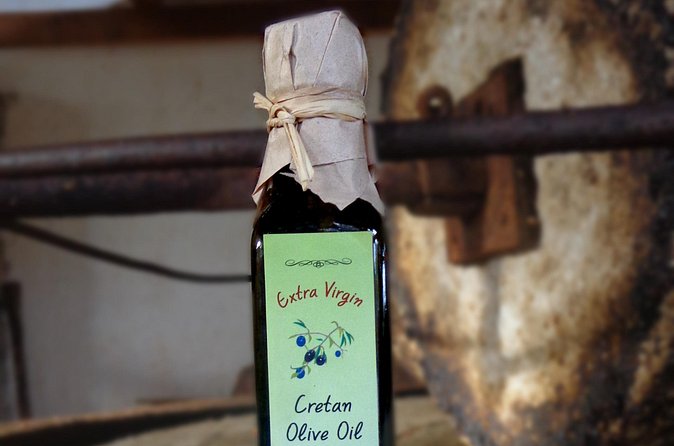
At the end, you taste olive oil made by the family. This is not a separate food tour, and food and drinks beyond water are not included, so you should not arrive expecting lunch. The tasting is a focused finish to the workshop.
The taste matters because it lets you connect the work to the ingredient itself. After weighing, crushing, packing, and pressing, you can consider the oil as a finished food rather than an abstract local product.
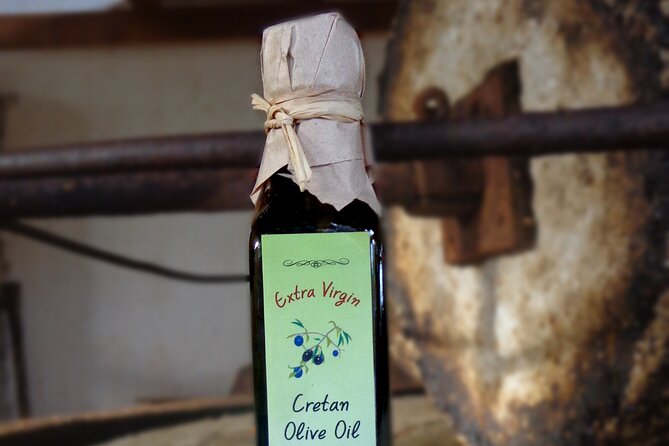
You also receive a 100ml bottle of the family’s extra virgin handmade olive oil. It is small enough to pack easily and large enough to serve as a proper sample at home. If you enjoy Cretan cooking, this is more useful than a generic souvenir. It also gives you a way to remember the process after the trip.
Drinking water is included. Plan on buying or eating anything else separately. The farm has a small shop with items to buy and taste, but the food and drink allowance for this particular workshop is limited.
A small group makes the difference
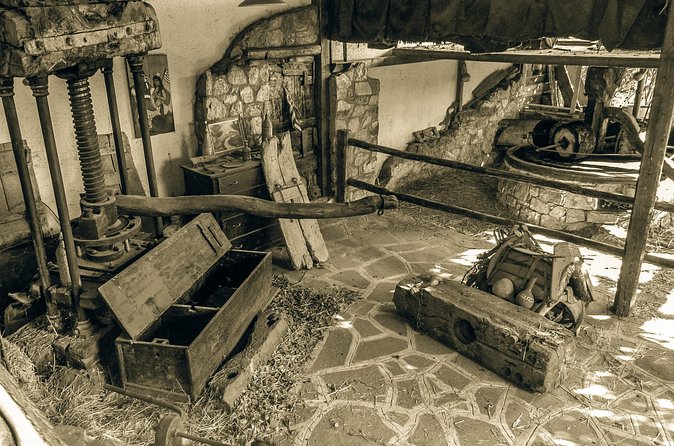
The maximum group size is 10. That number is important here. A hands-on activity loses much of its value if 25 people gather around one press while only one person gets to touch it.
With a small group, you have a better chance to weigh the olives, push the mill, fill the sacks, and work the press. The pace should also allow questions and help from the family. The experience is still shared, but it is not just a show at the front of a room.
The farm’s wider program includes other activities such as wine tasting, cheese making, cooking, and an electronic tour using provided tablets. Those are separate offerings, so you should not assume they are part of this olive oil booking. The extra options may be useful if you want to build a larger food-focused visit, but the olive oil workshop itself is the experience described here.
How the $78.60 price holds up
At $78.60 per person, this is a fairly expensive 90-minute activity. The value depends on what you want from Crete.
If you only want to taste olive oil and buy a bottle, you can likely find cheaper ways to do that. The included 100ml bottle is a pleasant extra, but it does not by itself justify the full cost.
The stronger value comes from the hands-on access. You are paying for a small group, family guidance, the old factory, the equipment, the tasting, and the chance to take part in every stage. For someone interested in food traditions, that is a more meaningful purchase than a quick tasting at a shop.
I would also compare the price with your wider day. If your schedule is tight, the short format is useful. You get a distinct local activity without committing to a full-day excursion. If you are watching every euro, however, this may feel costly for the time involved.
The activity has received an overall five-star rating from three submitted ratings, with praise focused on the hands-on format, clear presentation, friendly organization, and the chance for children to participate. That positive pattern fits the design of the workshop, but the small number of ratings means you should treat the score as encouraging rather than final proof.
Pairing it with Agios Nikolaos
The farm is in the Agios Nikolaos area, and the activity ends where it begins. One useful idea is to combine it with time in town afterward.
A short downhill walk toward town and the archaeological museum has been used as an add-on after the workshop. That walk is not part of the olive oil activity, and you should plan it separately, but it can help turn a 90-minute appointment into a fuller morning.
This pairing works because the workshop gives you a food connection while the museum provides a different look at the region. Check your own route and energy before setting off, since the walking portion is not included and the details of the path are not described in the activity information.
Who will enjoy this most
I would choose this for you if you like local food, old tools, and short activities with real participation. It is especially suited to:
- Couples who want a more personal Cretan food experience
- Families whose children enjoy practical demonstrations
- Small groups interested in traditional production
- Anyone staying near Agios Nikolaos
- Visitors who prefer a focused morning rather than a full-day tour
The format is also a good match if you want an English-speaking activity with clear guidance. The hosts have been described as professional, accommodating, entertaining, and able to communicate well in English. Tassos is named as one of the people involved in organizing the wider farm experience.
I would look elsewhere if you want a large meal, extensive countryside touring, or a full explanation of modern olive oil production. You will not receive food and drinks beyond water as part of this booking. The experience is about making and tasting oil, not dining.
Service animals are allowed. The supplied information does not describe general mobility access, seating, or the physical demands of the old equipment, so contact the farm before booking if those details matter to you.
Booking, timing, and cancellation
The activity is often booked about 18 days ahead, so I would not leave it until the last moment if the 10:30 a.m. slot is important to your plans.
Free cancellation is available if you cancel at least 24 hours before the local start time. Cancellations or changes made inside that 24-hour window are not refunded or accepted. If the minimum group is not reached and the operator cancels, you receive another option or a full refund.
Should you book Spiridi Olive Oil Farm?
I would book it if you want to understand Cretan olive oil by working with the process yourself. The stone mill, sacks, wooden press, tasting, and small bottle create a clear story in about 90 minutes. The 130-year-old factory gives the lesson a sense of place that a standard shop tasting cannot match.
I would skip it if your main goal is a cheap sample, a full meal, or a modern production tour. At $78.60 per person, the price asks you to value participation and family guidance. For food-minded visitors, families, and anyone based near Agios Nikolaos, that is a fair reason to go.
FAQ
Where does the olive oil workshop take place?
It takes place at Spiridi Olive Oil Farm, also identified as the Cretan Olive Oil Farm, in Agios Nikolaos, Crete, Greece.
What time does the activity start?
The workshop starts at 10:30 a.m.
How long does the olive oil experience last?
It lasts approximately one hour and 30 minutes.
What will I do during the workshop?
You will weigh olives, crush them with a stone mill, transfer the crushed olives into large sacks, and press the olive paste using a manual wooden press.
Is olive oil tasting included?
Yes. Olive oil tasting is included at the end of the workshop, along with drinking water.
Do I receive anything to take home?
Yes. Each participant receives a 100ml bottle of the family’s extra virgin handmade olive oil.
Just added around Crete
- 1 hour and 30 minutes wines and olive oil tasting in Greece★ 5.0 · 2 reviews
- Full Day Spinalonga Elouda Agios Nikolaos Olive factory Tour★ 4.5 · 5 reviews
- Crete in a Day: Knossos, Soap Workshops, Olive Oil & Wine Tasting★ 5.0 · 5 reviews
- PRIVATE Workshop ESSENTIAL OILS & OLIVE OIL Factory with TASTING★ 5.0 · 5 reviews
- Wine olive and Food of Crete, Heraklion★ 5.0 · 11 reviews
- Guided Tasting of 3 Extra Virgin Olive Oils at Douloufakis Winery★ 5.0 · 2 reviews
- Olive oil Tasting and Cretan Cuisine★ 5.0 · 2 reviews
- Shore Escape: Chania, Monastery & Olive Oil Tasting★ 5.0 · 6 reviews
Olive Farm Visits, compared.
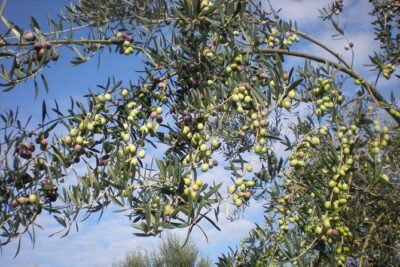
Sorrento Farm and Food Experience including Olive Oil, Limoncello, Wine tasting
Read our review →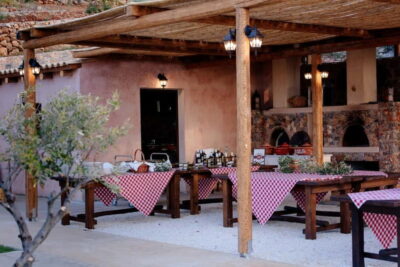
Road-trip to Lasithi, Zeus Cave & Olive Mill Farm
Read our review →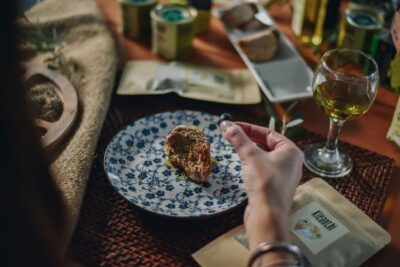
Olive Farm Tour with Tasting of Local Delicacies
Read our review →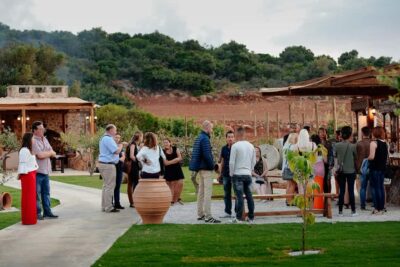
Lassithi, Zeus Cave, Olive Mill Farm & Knossos Combo Tour
Read our review →

Traditional Olive Grove and Dragon Fruit Farm Tour
Read our review →
Cooking Class and Olive Oil Tasting at a Family Farm
Read our review →
Sóller: Olive Oil Guided Tour and Tasting at Can Det Estate
Read our review →Browse the lists this tour appears in