
Review · MALAGA
Visit Oil Mill Museum and Olive Oil Tasting in Ronda
Olive oil gets its own museum. At LA Organic near Ronda, I like the mix of organic farming and modern art, plus the chance to taste several oils rather than simply watch a short demonstration. The route through olive groves and vineyards gives the visit a real sense of place, and the five-minute film makes the production process easy to follow. My main caution is that the tour can feel less satisfying when no oil is being produced, and bilingual explanations may take longer than expected.
I also like the attractive greenhouse, terraces, gastronomic bar, and views across the countryside. The tasting is not an afterthought: you compare oils of different intensity, including a blind tasting, then try more with bread and vinegar. The tour lasts about 1 hour 15 minutes to 1 hour 30 minutes, so it fits neatly beside a day in Ronda, though some people may find the museum areas too dark or the guide difficult to hear when the bar is busy.
Key points to know before you go
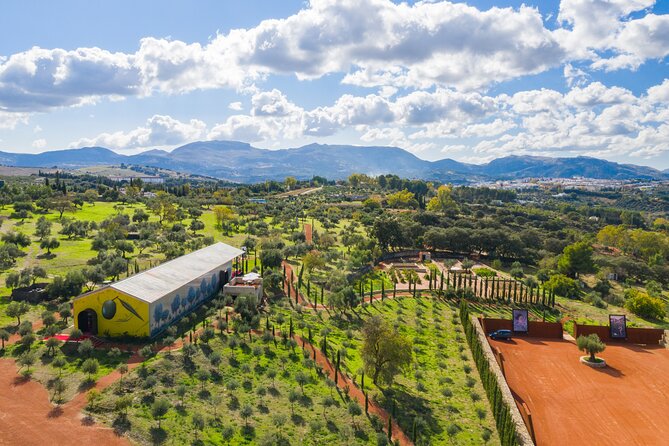
- Art begins in the car park: Photographs by Stefano Robotti introduce the property before the formal tour even starts.
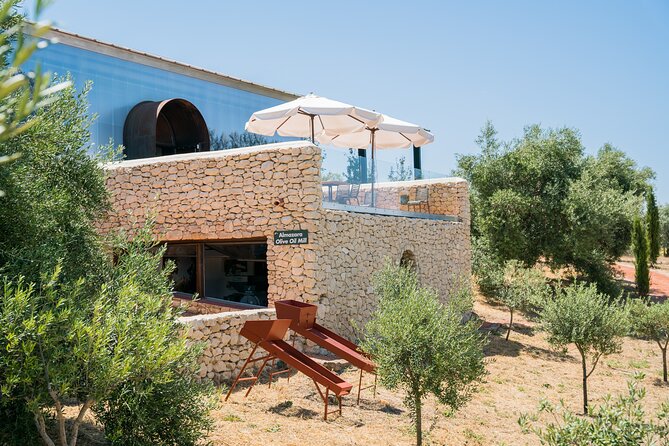
- The greenhouse is the main visitor hub: It combines an artisanal oil mill, projection room, tasting room, gastronomic bar, and two terraces.
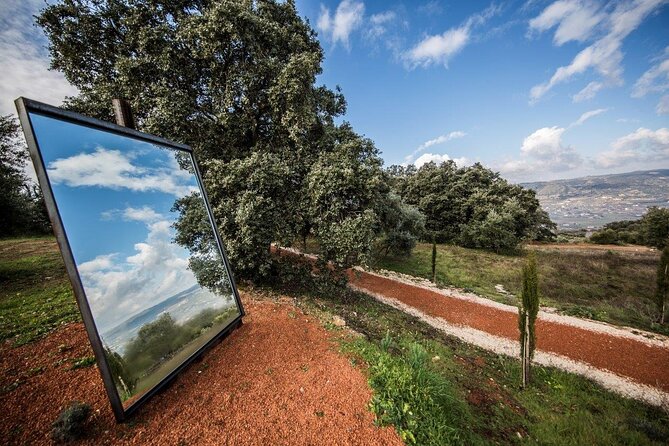
- The farm walk includes art installations: Sculptures and other features by Philippe Starck appear among the olive groves and organic vineyards.
- The tasting has several stages: You may compare two oils blind, then taste three oils with bread and vinegar.
- Lunch costs extra: A €20 country menu includes Iberian products, Payoyo cheese, salad, and seasonal fruit.
- Small enough to feel personal: The group limit is 30 people, though a bilingual tour can make explanations slower.
Why LA Organic is different from a standard olive oil visit
Many olive oil visits focus on machinery, harvest dates, and a quick sample at the end. LA Organic takes a broader approach. It treats the farm as a meeting point for agriculture, design, photography, architecture, and food.
That sounds grander than it feels. The visit remains fairly short and easy to manage. You are not signing up for an all-day farming lesson. Instead, you get a compact introduction to how olives become oil, followed by a walk outdoors and a guided tasting.
The setting does much of the work. You begin at La Almazara La Organic, on the A-367 between Ardales and Ronda, at kilometer 39.5. Before entering the main building, you see a series of photographs in the car park. Stefano Robotti designed this opening exhibition, giving you something to look at while the group gathers.
I like this start because it signals that the property is not trying to be a plain agricultural shed. The art is part of the experience from the first few minutes. If you arrive early, the car park exhibition gives you a useful way to spend the waiting time.
More Olive Oil Museums around Spain:
- Ronda: LA Almazara LA Organic, Olive Oil Museum and Tasting
★ 4.6 · 435 reviews - Guided tour of the Museum of Olive Culture Oil Tasting
★ 5.0 · 17 reviews - Split: Klis Fortress GOT and Olive Museum Entry Tickets
★ 4.6 · 283 reviews
Inside the greenhouse, where the tour begins
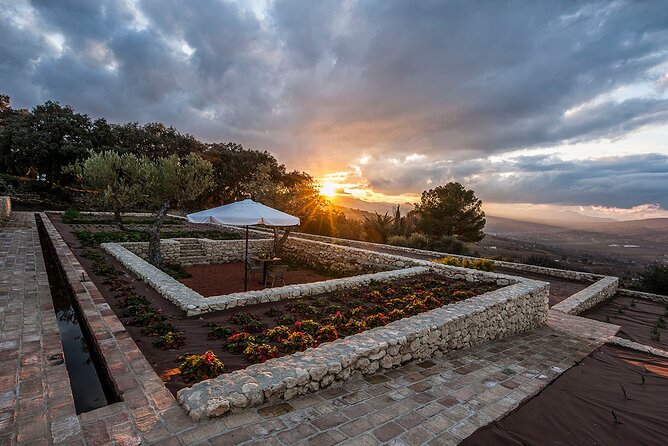
The main building is a greenhouse-style structure with several uses packed into one place. It contains an artisanal oil mill, a projection room, a gastronomic bar, a tasting room, and two terraces.
The five-minute introductory film explains the origin and history of olive oil, then outlines the production process. It is short enough to hold the attention of children and useful enough to give you basic terms before the walk begins.
This opening also helps set expectations. You will learn how the fruit is handled and how production affects the final oil, but this is not necessarily a working harvest-day demonstration. One of the clearest criticisms of the experience is that the equipment may not be operating during your visit, so you might see the setting without watching fresh olives being processed.
That matters if your main goal is to observe an active mill. I would treat the visit as an olive oil education and tasting experience, not as a guaranteed production tour.
The building itself is one of the strongest parts of the visit. You get a place to sit, sample, have a drink, or stay for lunch. The terraces also give you a chance to slow down after the guided portion instead of being hurried straight back to the car.
Walking among olive trees, vineyards, and Philippe Starck’s designs
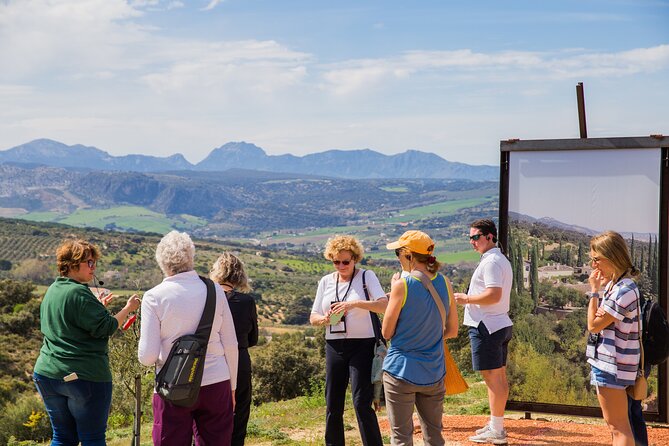
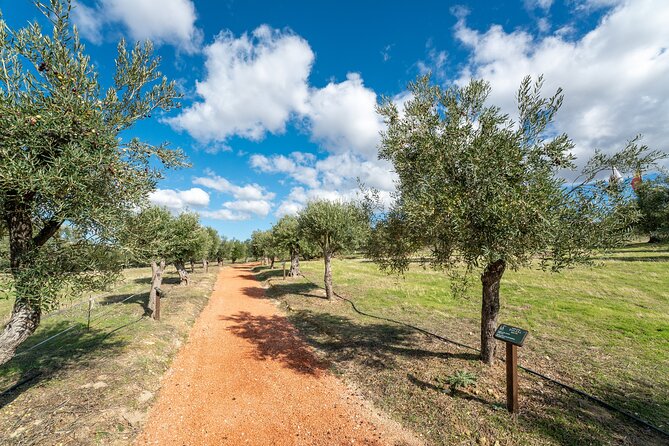
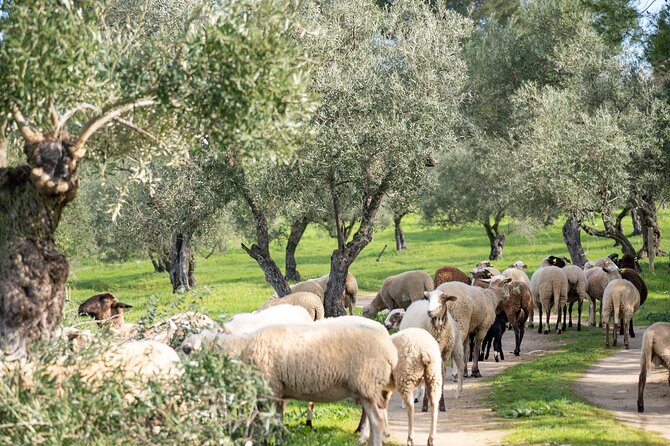
After the film, the route moves outdoors through olive groves and organic vineyards. This is where the experience feels most connected to Ronda rather than like a museum that could be anywhere.
You see the trees that supply the fruit, walk through the cultivated land, and encounter several surprises linked to Philippe Starck. The art pieces are integrated into the farm, so the walk is not only about identifying olive varieties or discussing harvest methods.
The combination works best for people who enjoy a little design with their food. You are learning about agriculture, but you are also looking at unusual structures and installations placed among the plantings. The setting is especially pleasant in good weather, when the walk and terraces let you enjoy the views as well as the subject.
Allow some energy for walking. One account describes the overall visit as requiring quite a lot of walking, so this is not simply a seated film followed by a tasting at the bar. The route is still short enough for most people to manage, and the activity notes say most participants can take part, but comfortable shoes are a sensible choice.
The outdoor portion may feel less exciting during a period when nothing is being harvested or pressed. That is the tradeoff. You get a pleasant farm setting and an art-focused route, but not necessarily the drama of machinery in action.
The museum and exhibition spaces
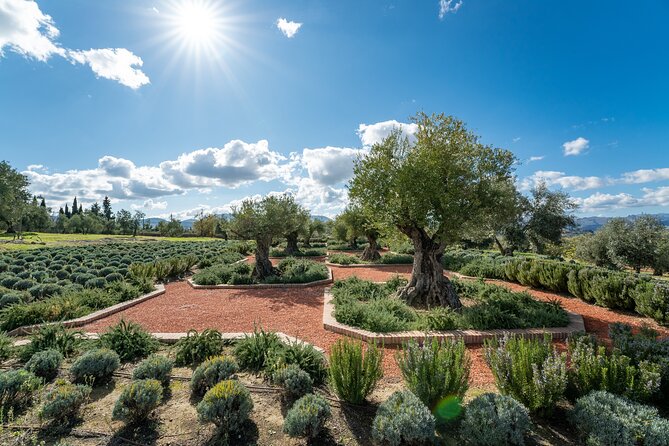
The museum element adds another layer to the visit. After walking the property, you may have time to look again at the exhibition areas, including a museum section inside the facility.
The displays connect olive oil with the story of the product and the creative identity of the farm. The photographs outside and the installations among the trees make the museum feel part of a larger art project rather than a collection of old tools alone.
There is one practical issue to keep in mind. A dark exhibition area has been difficult for some people to walk through, with the low light making it harder to see where to step. The darkness may be intended to create a mood, but it does not work for everyone.
The amount of time you get for the museum can also depend on the group and guide. Some people finish the formal tour and then spend extra time returning to the displays, shopping for oil, or sitting on the patio. That flexibility is welcome. You are not forced to leave as soon as the tasting ends.
More Olive Mill and Factory Tours around Spain:
- Guided Tasting Tour in 16th century House and Olive Oil Factory
★ 5.0 · 169 reviews - Jaén: Guided Olive Mill Tour with Olive Oil Tasting
★ 4.9 · 74 reviews - Picualia, olive oil mill tour & EVOO tasting
★ 5.0 · 49 reviews - Palma: Orange Farm, Olive Mill, & Winery Tour with Tastings
★ 4.9 · 44 reviews
The olive oil tasting is the main payoff
The tasting is the part that gives the visit practical value. You do not just hear that extra virgin olive oil can vary. You taste the differences for yourself.
The tasting can include two oils served blind, followed by three oils sampled with bread and vinegar. This format encourages you to pay attention to aroma, bitterness, peppery notes, and intensity before someone tells you what you are drinking.
That blind comparison is useful because supermarket habits often reduce olive oil to a label and a price. Here, you begin to notice that oils made from different olive varieties can have different personalities. A mild oil may suit one dish, while a stronger oil may work better when you want the flavor to announce itself.
Bread makes the tasting straightforward. Vinegar adds another comparison and shows how a familiar table pairing can change the flavor of the oil. I would take notes if you are considering buying bottles, especially if you want to remember which style suited you best.
The tasting has also been praised for warm bread and clear explanations. Guides such as Alina and Ursula have been singled out for friendly, well-informed presentations. The quality of the guide matters here because olive oil can sound technical when the explanation is not clear.
There is one sound issue. If other groups are eating or talking at the gastronomic bar, it can be hard to hear instructions. A guide may also be speaking in both English and Spanish, which can make the tasting move more slowly.
English, Spanish, and the pace of the explanation
The experience is offered in English, but a group may include both English and Spanish speakers. In that situation, the guide may repeat each section in both languages.
That arrangement is considerate, but it has a practical cost. You may wait through the other language, and the group can move on before you have had time to ask a question or look closely at what the guide just described.
If you prefer a single-language visit, check the language arrangement when booking. A bilingual tour can still be informative, but it may feel less smooth than an English-only session.
The quality of presentation is otherwise a strong point. The guides have been described as friendly and able to explain growing, harvesting, processing, and the project at LA Organic. I would stay close to the guide, especially outdoors, and ask questions during quieter moments rather than trying to speak over the bar area.
Lunch after the tasting, and why it can be worth adding
Lunch is not included in the $30.23 tour price. For an additional €20 per person, you can order a country menu with an Iberian assortment, Iberian ham, Payoyo cheese, garden salad, and seasonal fruit.
This is a simple menu, not a formal multi-course restaurant meal. That is part of its appeal. After a walk and tasting, regional ham, cheese, salad, and fruit make a sensible follow-up, and the meal lets you remain on the property instead of rushing elsewhere.
The food has received strong praise, including the ham, cheese, and local products. The bar and terraces also give you somewhere to enjoy the views after the formal tour. If you have time, I would consider the lunch add-on, especially if you are building a relaxed morning around the visit.
You do not need lunch to make the tour worthwhile. If your schedule is tight, the included tasting is enough. If you want a slower half-day outside Ronda, the extra meal helps the experience feel less compressed.
Price, timing, and group size
At $30.23 per person, the price is reasonable if you value the combination of guided farm walk, art, museum space, and multiple tastings. It is less compelling if you only want to see an olive press in operation for a few minutes.
The visit lasts roughly 1 hour 15 minutes to 1 hour 30 minutes. That makes it a good companion to sightseeing in Ronda rather than a full-day commitment. You finish back at the same meeting point, so plan your onward transport from there.
The maximum group size is 30 people. That is not an intimate private visit, but it is still limited enough to keep the activity manageable. The atmosphere may feel busier around the tasting room, especially if some people remain for food and drinks.
The activity is booked, on average, about 12 days ahead. I would reserve in advance if your Ronda schedule is fixed, particularly because weather can affect the outdoor route.
You receive confirmation when booking, mobile tickets are accepted, and service animals are allowed. Most people can participate, though the walking, uneven outdoor setting, and occasional low lighting are worth considering before you commit.
Free cancellation is available up to 24 hours before the start time for a full refund. Cancellations or changes inside that window are not refunded or accepted. If poor weather cancels the visit, or if the minimum number is not reached, you can choose another date or receive a refund.
Who will enjoy this Ronda experience most
I would recommend LA Organic to you if you like food, farming, design, and short cultural visits that offer more than a basic tasting.
It suits couples looking for a quieter outing, families who enjoy hands-on food experiences, and anyone curious about Spanish olive oil. Children may appreciate the art installations, the short film, and the tasting more than a long technical explanation.
It also works well for people staying in or near Ronda who want to see the countryside without committing to a full rural excursion. The visit is short, but the option to stay for lunch gives you control over the pace.
You may want to choose another activity if you expect to watch an active harvest or see every piece of mill equipment in operation. You should also think twice if bilingual guiding, background noise, or dark exhibition rooms would frustrate you.
Should you book LA Organic near Ronda?
Yes, if you want an attractive introduction to olive oil with art, scenery, and a proper tasting. The best parts are the farm route, the unusual setting, and the chance to compare oils in a way that teaches you what you are tasting.
I would book it as a 90-minute stop paired with time in Ronda, then add the €20 lunch if you want a slower outing. Just keep your expectations realistic: this is an art-and-food experience at an organic olive property, not a guaranteed working-mill demonstration. For most people, the mix offers good value and a pleasant change from standard sightseeing.
FAQ
Where does the olive oil experience take place?
It takes place at La Almazara La Organic, on Carretera Ardales Ronda A 367, KM 39.5, 29400 Ronda, Málaga, Spain.
How long does the visit last?
The experience lasts approximately 1 hour 15 minutes to 1 hour 30 minutes.
Is the olive oil tasting included in the price?
Yes. The price includes the organic olive oil tasting, all fees and taxes, and the route through the olive groves and vineyard.
Is lunch included?
No. Lunch costs an additional €20 per person. The country menu includes an Iberian assortment, Iberian ham, Payoyo cheese, garden salad, and seasonal fruit.
Is the tour available in English?
Yes, the experience is offered in English. A group may also include Spanish speakers, so some tours may be presented bilingually.
Can I cancel for a full refund?
Yes. You can cancel at least 24 hours before the start time for a full refund. Poor weather or failure to meet the minimum number of participants may also lead to a different date or a full refund.
Just added around Spain
- XXI Century Olive Oil Mill Tour★ 5.0 · 3 reviews
- Visit to an olive oil mill and oil tasting with aperitif and food and wine pairing.★ 5.0 · 2 reviews
- Treurer: Tapas Gourmet and Extra Virgin Olive Oil★ 4.7 · 3 reviews
- Ulldecona: Guided Tour of the Millenary Olive Trees of Arión★ 5.0 · 2 reviews
- Treurer: Olive Oil Night. Gastronomic experience★ 5.0 · 15 reviews
- Olive Oil and Winery Tour from Zaragoza City★ 5.0 · 4 reviews
- Olive Oil Private Full-Day Tour with Tasting in Valencia★ 5.0 · 2 reviews
- Olive Oil Tour and Visit to Belchite Old Town★ 5.0 · 16 reviews
Olive Mill and Factory Tours, compared.
Knossos-Zeus Cave -Old Traditional Villages-Olive Oil Factory
Read our review →
The Governor’s Olive Mill Tour with Olive Oil Tasting
Read our review →
Road-trip to Lasithi, Zeus Cave & Olive Mill Farm
Read our review →
Lassithi, Zeus Cave, Olive Mill Farm & Knossos Combo Tour
Read our review →
Zeus Cave, Lassithi Plateau, Olive Oil Factory, Kritza, Pottery
Read our review →
Zeus Cave, Lassithi Plateau, and Olive Factory Tour
Read our review →Browse the lists this tour appears in