
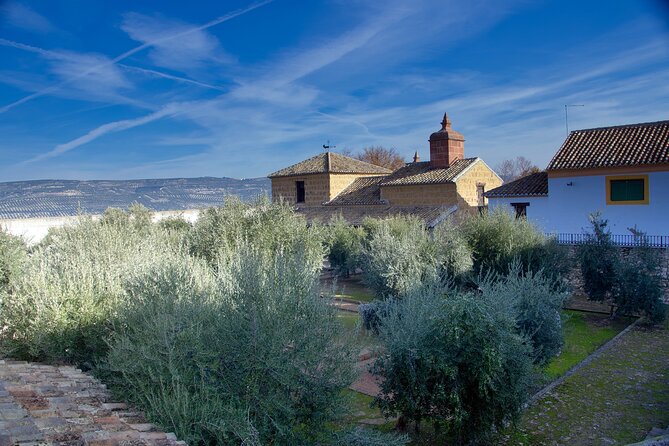
Review · ANDALUCIA
Guided tour of the Museum of Olive Culture Oil Tasting
Olive oil has a story worth tasting. This two-hour visit in Jaén combines the Museum of Olive Culture with a hands-on introduction to tasting, making it a useful stop for anyone curious about Andalusia’s most famous agricultural tradition. I like the chance to see original late-19th-century milling equipment, and I like that the tasting includes proper glasses, tasting sheets, water, an apple, and pencils rather than a quick pour at a shop. The main consideration is location: you must reach the museum at Finca Hacienda La Laguna in Puente del Obispo, and no transportation to the meeting point is listed.
The experience costs $17.94 per person and is offered in English. With a maximum of 20 people, it should feel more focused than a large coach-group visit, though the radio guides available for €1.50 on arrival may be useful if you want extra help hearing the guide clearly. The 4.8 rating from 17 reviews and 94% recommendation suggest a strong experience, especially for its friendly look at old traditions, olive varieties, and oil quality.
Key points at a glance
- More than 30 olive varieties: The museum garden gives you a clear sense of how much variety exists within the olive tree family.
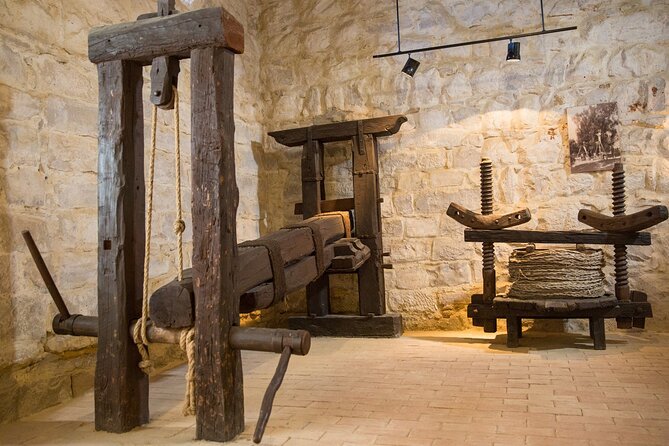
- Original 19th-century machinery: You see the old milling and pressing systems, along with farming tools used in olive production.
- The Oil Cathedral: The mill’s winery, declared a Cultural Interest site in 1992, is one of the visit’s most memorable spaces.
- A real tasting workshop: You learn basic organoleptic qualities, meaning the smells, flavors, and sensations you notice in the oil.
- Small maximum group: The experience accepts no more than 20 people, which suits questions and close viewing.
- Useful practical setup: The tour starts and ends at the museum, runs in English at 11 a.m., and includes admission.
Why this Jaén olive oil visit is worth your morning
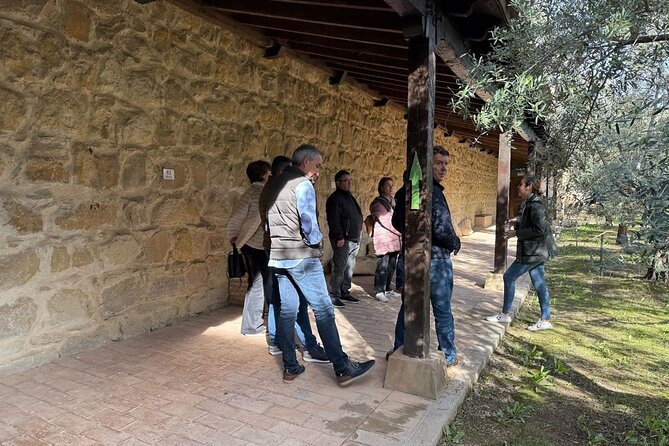
Jaén is closely tied to olive growing, and this experience gives you a way to understand that connection through objects, trees, buildings, and taste. You are not simply shown a bottle and told that the oil is local. You follow the process from tree varieties to old pressing methods, then put your own senses to work.
That sequence matters. A museum visit can sometimes feel like a collection of disconnected tools. Here, the tasting gives the displays a purpose. After you see how olives were once milled and pressed, you get a basic framework for thinking about what ends up in your glass.
I especially like the balance between seeing and doing. The garden offers a visual introduction, the machinery explains production, and the tasting asks you to pay attention. At $17.94, that makes the price reasonable for a two-hour cultural activity, particularly if you already have an interest in food traditions.
The experience is not designed as a full-day food tour or a broad survey of Andalusian cuisine. It focuses tightly on olive culture. That focus is its strength, but it also means you should not book it expecting a large meal, extensive food pairing, or a long visit through the surrounding province.
More Olive Oil Museums around Spain:
- Ronda: LA Almazara LA Organic, Olive Oil Museum and Tasting
★ 4.6 · 435 reviews - Visit Oil Mill Museum and Olive Oil Tasting in Ronda
★ 4.5 · 105 reviews - Split: Klis Fortress GOT and Olive Museum Entry Tickets
★ 4.6 · 283 reviews
Starting at Finca Hacienda La Laguna at 11 a.m.
The meeting point is the Museo de la Cultura del Olivo, Oleoturismo, Cata de Aceites, at Finca Hacienda La Laguna, 23529 Puente del Obispo, Jaén, Spain. The scheduled start time is 11 a.m., and the activity finishes back at the same place.
That simple start and finish can help you plan the rest of your day. You do not need to change meeting points during the activity, and the official duration is about two hours. Still, check your route carefully before setting out. The information provided identifies the meeting place but does not include transportation arrangements, pickup service, parking details, or directions from nearby towns.
The tour is offered in English. If you want extra audio support or another language, radio guides may be hired on arrival for €1.50. Since that option costs little, it may be worth considering if you have hearing concerns or prefer additional spoken explanation. The published information does not specify which languages are available through the radio guides, so ask when you arrive.
A maximum of 20 people keeps the group from becoming unwieldy. That does not guarantee a private-feeling visit, but it should make it easier to follow the guide through the museum and take part in the tasting without waiting behind a very large crowd.
The garden and its 30 different olive trees
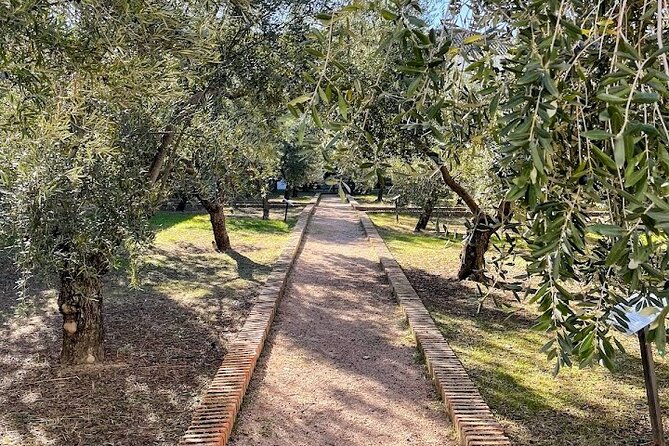
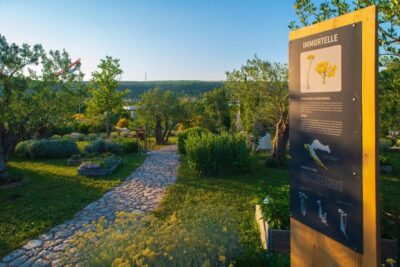
The visit begins with the museum’s spaces, including a garden with more than 30 varieties of olive tree. This is a useful first stop because it shows that an olive grove is not simply a field of identical trees.
You can compare the idea of variety before you begin tasting. Different olive types contribute to the wider character of olive production, and seeing the trees gives the subject a physical starting point. The garden also helps connect the museum to the living crop rather than presenting olive oil as something that begins inside a bottle.
The supplied details do not identify the names of the varieties or describe a seasonal schedule for the garden. You should therefore treat this part as a guided introduction, not as a specialist botanical tour. If a certain variety interests you, ask the guide about it during the visit.
This is also where the experience may appeal to families and first-time food enthusiasts. You do not need a technical background to understand that olive growing involves different tree types, tools, and methods. The subject becomes more approachable when you can look at the trees before discussing the finished oil.
Seeing the old milling and pressing systems
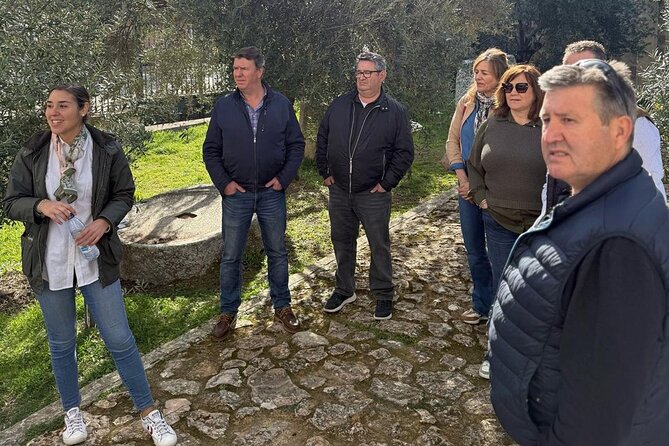
The museum preserves original milling and pressing systems from the late 19th century. You will also see other tools and equipment connected with field work.
These machines give the tour a practical center. Instead of hearing only about tradition in general terms, you can look at the equipment that made production possible in an earlier period. The old systems also help explain that olive oil production required several stages and considerable physical work long before modern equipment changed the process.
I appreciate that the tour does not stop with a display of agricultural objects. A specialized guide explains the different museum areas, so you can ask how the tools were used and how the old systems fit into olive production. The data does not specify whether machinery is demonstrated or operated, so expect to view and learn about the systems rather than assume there will be a working demonstration.
For visitors who enjoy industrial history, this may be the most satisfying part of the museum. For people mainly interested in tasting, it provides useful background without requiring a separate technical museum visit. The balance depends on the guide and on your questions, but the machinery gives the experience more substance than a simple commercial tasting.
More Guided Tours around Spain:
- Guided tour and olive oil tasting in Alhaurin el Grande (Málaga)
★ 5.0 · 200 reviews - Guided Tasting Tour in 16th century House and Olive Oil Factory
★ 5.0 · 169 reviews - Sóller: Olive Oil Guided Tour and Tasting at Can Det Estate
★ 4.8 · 82 reviews - Jaén: Guided Olive Mill Tour with Olive Oil Tasting
★ 4.9 · 74 reviews
The Oil Cathedral and its protected winery
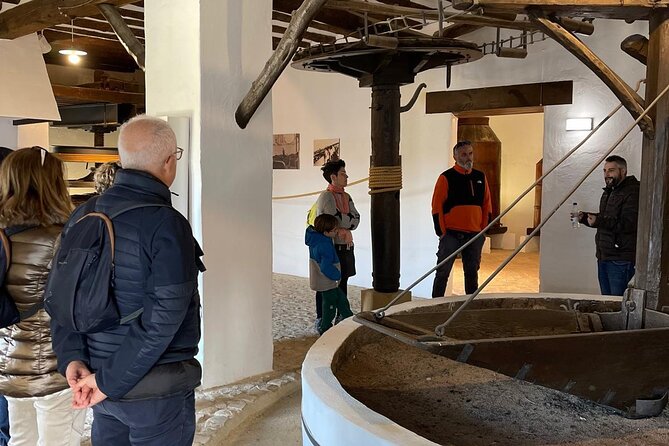
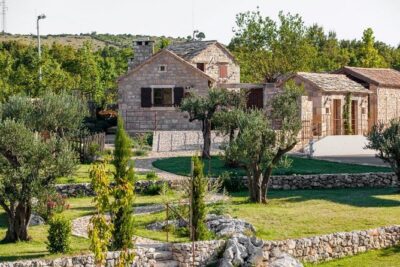
The final museum highlight is called the Cathedral of Oil. It is the winery of the mill and was declared a Cultural Interest site in 1992.
The name sets a certain expectation, but the important point is the building’s role. This is where the mill’s oil was stored, and the space connects the production process with the architectural character of the site. It gives you a chance to see how the finished product was handled after pressing.
A protected cultural site also adds historical weight to the visit. You are not moving through a modern tasting room built only for tourism. The museum presents a place linked to older olive oil production and the traditions of the area.
The information available does not provide architectural measurements, storage capacity, or a detailed description of the winery’s interior. I would not book this expecting a long architectural lecture. Think of it as a key museum space that helps bring the old mill together.
Learning how to taste olive oil
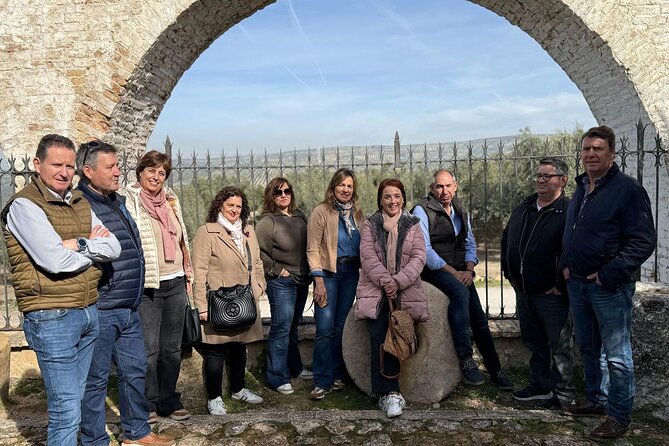
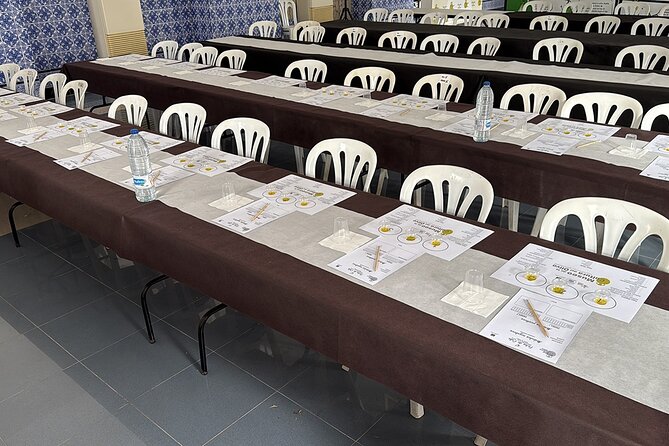
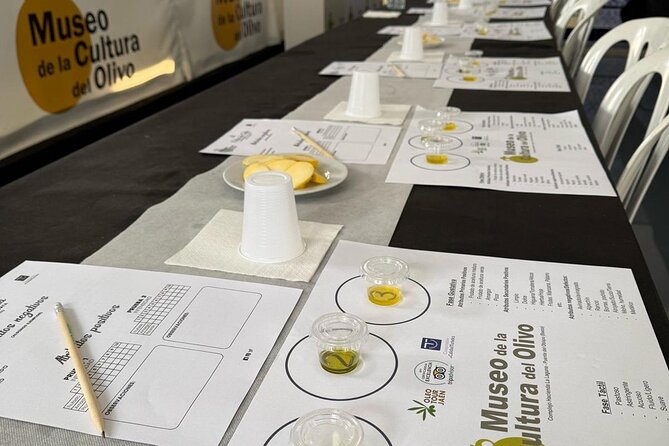
After the museum visit, you take part in an initiation workshop devoted to olive oil tasting. The aim is to recognize the main organoleptic characteristics of different oils. In plain terms, you begin paying attention to what you smell, taste, and feel rather than judging an oil only by its label or price.
The workshop provides tasting glasses, tasting sheets, pencils, water, and an apple. Those details matter. Water helps clear your palate, while the apple gives you a way to reset your mouth between samples. The glasses and written sheets make the session feel more structured than an informal sample at a market stall.
You are asked to think like a professional taster, but this is an introduction, not professional certification. You should expect a beginner-friendly explanation of how to notice qualities in the oil. The supplied information does not state how many oils you taste, which brands are used, or whether food is served with them, so do not count on a full meal or a large comparative flight.
This part received the clearest praise in the available feedback. The experience was described as a good way to learn how to taste oil and recognize quality, along with the history, old traditions, and types of trees. That is a useful result for a short visit. You leave with a method for thinking about olive oil, not just a souvenir bottle.
The tasting may also change how you shop later. You can become more alert to aroma, flavor, and mouthfeel, even if you never learn every technical term. A little guided practice can make a familiar pantry staple more interesting.
What the two-hour format means for you
Two hours is enough time for a focused introduction, but not enough for every aspect of olive production. You get the garden, the old machinery, the protected winery, and the tasting workshop in one compact visit.
I see the length as a plus if you are building a busy day in Jaén province. The experience has a clear subject and does not ask you to give up half a day. It also works well for visitors who want one cultural activity before lunch or before continuing to another stop.
The tradeoff is pace. The guide must move the group through several museum areas and still leave time for the tasting. If you like to linger over every object, take detailed notes, or ask many questions, two hours may feel short. The group limit of 20 helps, but the tour is still scheduled rather than self-paced.
The English presentation is another practical advantage. You can follow the main explanation without arranging a separate translator. Radio guides cost an additional €1.50 and can be hired on arrival, though the listed information does not clarify their exact language range.
Who will get the most from this experience
I would recommend this visit to you if you fit one or more of these descriptions:
- You want to understand Jaén through its olive-growing traditions.
- You enjoy food and drink experiences that explain the product instead of simply selling it.
- You like old machinery, working tools, and historic production spaces.
- You have never learned how to taste olive oil and want a friendly starting point.
- You prefer a short, organized activity with admission and tasting materials included.
- You are comfortable making your own way to the museum in Puente del Obispo.
Families can likely participate because most people can take part, and service animals are allowed. The available information does not give a specific children’s program, so parents should not expect a separate activity designed just for young children.
You may want to skip it if your main goal is a long gourmet meal, a large oil purchase, or a broad tour of Andalusia. This is a museum and tasting workshop, not a full food itinerary. It is also less convenient if you need hotel pickup, since no pickup service is listed.
The price, group size, and cancellation terms
At $17.94 per person, the cost covers the guided museum visit, admission, and the oil tasting workshop. You also receive the materials needed for tasting, including glasses, water, an apple, tasting sheets, and pencils. I consider that fair value for two hours, especially because the experience combines cultural interpretation with participation.
The group limit is 20 people. That number is not intimate in the way a private tasting would be, but it is small enough to keep the activity manageable. If you want a more personal conversation with the guide, arrive ready with a few questions rather than assuming every detail will be covered automatically.
You can cancel for a full refund if you do so at least 24 hours before the 11 a.m. start time. Cancellations or changes made less than 24 hours before the activity are not refunded or accepted, and the cut-off follows local time. Confirmation is provided when you book.
Final call: should you book it?
Book this experience if you want a compact, clearly focused introduction to Jaén’s olive culture. The combination of more than 30 tree varieties, original milling and pressing equipment, the protected Oil Cathedral, and a structured tasting gives you several ways to connect with the subject.
I would give it priority if olive oil is more than a condiment for you, or if you like seeing how local traditions developed. The tasting is the strongest reason to go, while the old mill and winery give that tasting a useful setting.
Think twice only if reaching Finca Hacienda La Laguna is difficult for your itinerary, or if you want a full meal and extensive product sampling. For most visitors already planning to explore the Jaén area, $17.94 is a sensible price for two hours of local culture, practical tasting skills, and a closer look at the work behind Andalusia’s famous oil.
FAQ
Where does the olive oil tour begin?
It begins at Museo de la Cultura del Olivo, Oleoturismo, Cata de Aceites, Finca Hacienda La Laguna, 23529 Puente del Obispo, Jaén, Spain.
What time does the experience start?
The scheduled start time is 11 a.m.
How long does the experience last?
The activity lasts approximately two hours.
Where does the experience end?
It ends back at the museum meeting point.
Is admission to the museum included?
Yes. Admission to the museum is included.
Is the tour offered in English?
Yes. The experience is offered in English.
Can I hire a radio guide?
Yes. Radio guides may be hired on arrival for €1.50. The available information does not specify all languages offered.
How many people can join the tour?
The maximum group size is 20 people.
What is included in the tasting workshop?
The workshop provides tasting sheets, pencils, an apple, water, and tasting glasses.
Can I cancel for a full refund?
Yes. You can receive a full refund if you cancel at least 24 hours before the experience start time. Changes or cancellations made less than 24 hours before the start are not accepted or refunded.
Just added around Spain
- XXI Century Olive Oil Mill Tour★ 5.0 · 3 reviews
- Visit to an olive oil mill and oil tasting with aperitif and food and wine pairing.★ 5.0 · 2 reviews
- Treurer: Tapas Gourmet and Extra Virgin Olive Oil★ 4.7 · 3 reviews
- Ulldecona: Guided Tour of the Millenary Olive Trees of Arión★ 5.0 · 2 reviews
- Treurer: Olive Oil Night. Gastronomic experience★ 5.0 · 15 reviews
- Olive Oil and Winery Tour from Zaragoza City★ 5.0 · 4 reviews
- Olive Oil Private Full-Day Tour with Tasting in Valencia★ 5.0 · 2 reviews
- Olive Oil Tour and Visit to Belchite Old Town★ 5.0 · 16 reviews
Olive Oil Museums, compared.
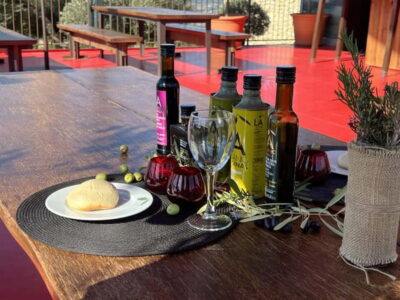
LA Almazara LA Organic, Olive Oil Museum and Tasting
Read our review →
Klis Fortress GOT and Olive Museum Entry Tickets
Read our review →
Blue Line Sightseeing to Trogir, Klis & Olive Museum
Read our review →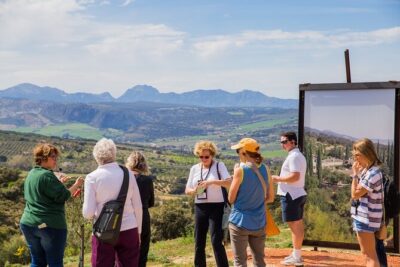
Visit Oil Mill Museum and Olive Oil Tasting in Ronda
Read our review →
Olive museum Klis with educational olive oil tasting
Read our review →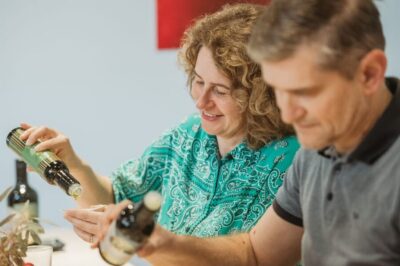
House of Istrian Olive Oil Museum and Guided Tasting
Read our review →Browse the lists this tour appears in