
Review · ANDALUSIA
Cazorla: Olive grove and mill tour
Olive oil starts in the trees. This four-hour Cazorla experience takes you from centenary olive groves to one of the world’s biggest modern mills, then finishes with a hands-on tasting. I like the clear progression: you first see how olives grow, then follow them through production, then learn how to judge the finished oil. I also like the small group, limited to eight people, which gives you room to ask questions. The main drawback is that the tour is conducted in Spanish, and it needs at least four people to run.
The tasting is more serious than a quick pour over bread. You use official glasses and tasting sheets, compare two olive oils, smell common defects, and practice identifying aromas. Antonio gets special praise for making the explanations lively and answering every question, though you should plan to drive yourself unless you are among the first four people to book.
Key points at a glance
- Centenary trees and thousand-year specimens: See the old olive-growing tradition in the Cazorla area and learn about regional varieties.
- A working industrial mill: Follow olive oil from the reception yard through extraction and bottling at SCA La Bética Aceitera in Quesada.
- A cooperative with more than 2,000 associates: Get a useful look at how a large olive-oil operation functions.
- A real tasting lesson: Compare two oils, use official tasting equipment, and identify aromas and faults.
- A small Spanish-language group: With no more than eight participants, you can ask questions without shouting across a crowd.
- A four-hour schedule: The tour includes grove visits, a mill tour, and a 75-minute food tasting, returning to the original meeting point.
Why olive oil makes a good Cazorla outing
Cazorla is a fine place to look beyond castles, mountain scenery, and old town streets. In this part of Andalusia, olive trees are not just an agricultural backdrop. They shape the daily economy, the countryside, and the food you eat at nearly every table.
I like this experience because it explains the whole chain instead of treating olive oil as a fancy condiment. You see the trees, learn how they are cultivated, watch the industrial process, and then taste the result with some care. That order matters. After seeing where the oil begins, you have a much better sense of why harvest timing, olive variety, and handling affect the bottle in your kitchen.
The tour costs $28 per person. For four hours with a guide, access to a major mill, official tasting materials, two oils, water during the tasting, and small souvenirs, that is a fair price. It is especially good value if you are curious about Spanish food and would otherwise spend money on a shorter tasting with little explanation.
This is not the right pick if you want an English-language outing or a quick stop between other sights. The guide speaks Spanish, and the visit is designed around explanation. You will get more from it if you can follow a Spanish presentation, ask questions, and take part in the tasting rather than simply watch.
More Olive Mill and Factory Tours around Spain:
- Guided Tasting Tour in 16th century House and Olive Oil Factory
★ 5.0 · 169 reviews - Visit Oil Mill Museum and Olive Oil Tasting in Ronda
★ 4.5 · 105 reviews - Jaén: Guided Olive Mill Tour with Olive Oil Tasting
★ 4.9 · 74 reviews
Meeting at the Villa Turística de Cazorla
The experience begins at the public car park next to the Villa Turística de Cazorla. It also ends there, which keeps the arrangement simple and avoids leaving you at a second location.
Transportation has one unusual condition. It is included for the first four people who book. After those four places are taken, you need to use your own vehicle for the tour. Check this point when booking, especially if you are not traveling by car.
The activity lasts four hours, but starting times vary. You need to check the available time before reserving. The tour runs only when at least four people have booked in total, so keep that minimum in mind when building your day around it. If the number is too low, you will be notified in time to cancel.
Walking among Cazorla’s old olive trees
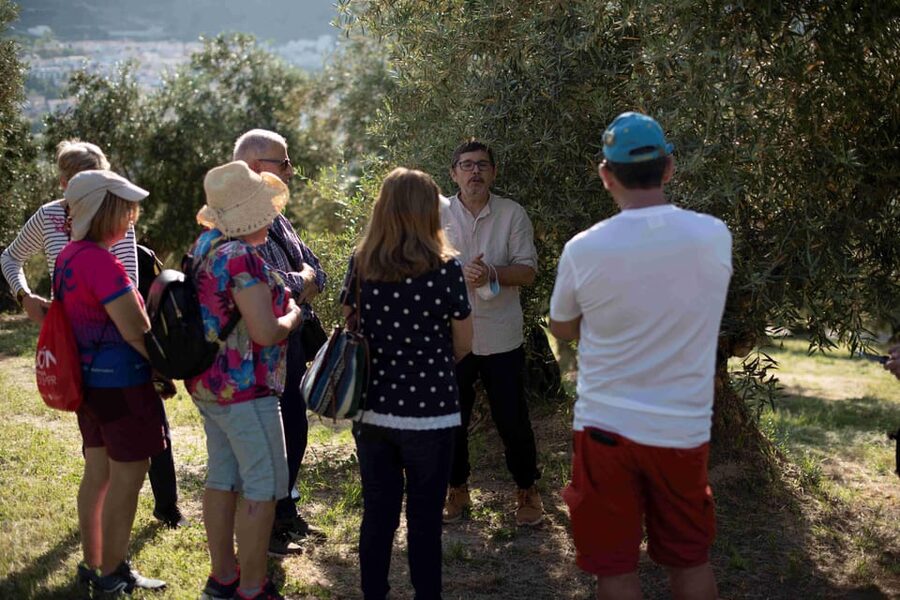
The first guided stop is listed at WX7M+49 Cazorla and lasts about one hour. The focus here is cultivation, not just scenery. You learn how olive trees are grown and how different varieties are used in the region.
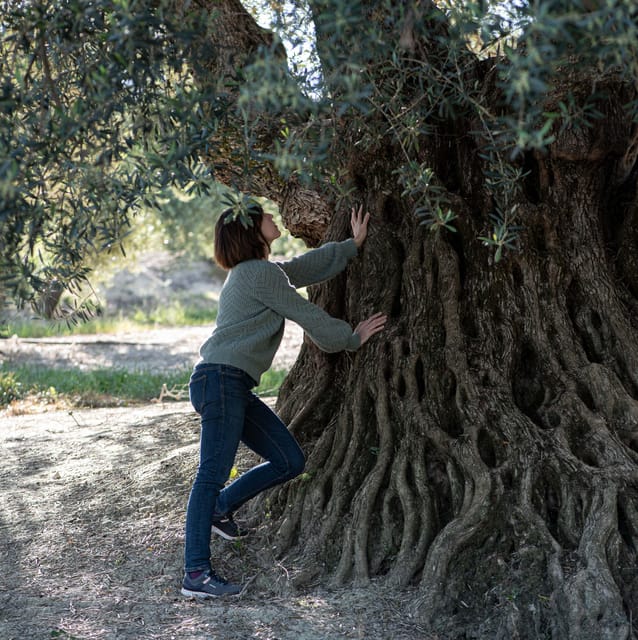
The old trees are the star. You may see centenary specimens, along with olive trees described as thousands of years old. Their size gives you a better sense of how long olive growing has shaped this part of Andalusia than a short talk in a shop ever could.
Pay attention to the contrast between ordinary old trees and the huge ancient examples. The tour uses those trees to explain the work behind olive production, giving you context for pruning, care, varieties, and harvest. The supplied information does not promise a particular harvest activity, so do not expect to pick olives yourself. This is a guided look at cultivation and the setting where the crop begins.
I find this opening useful because it slows the subject down. Olive oil can seem like a finished product with a label and a price. Here, you start with the living tree and the long time scale behind it. That makes the later factory visit easier to understand.
The grove visit may be less appealing if you have limited mobility. The activity is not suitable for wheelchair users, and the full tour is not suitable for people with claustrophobia or hearing impairments. The details do not specify the walking surface or distance, so ask the provider if those points matter to you.
Following the olives through SCA La Bética Aceitera
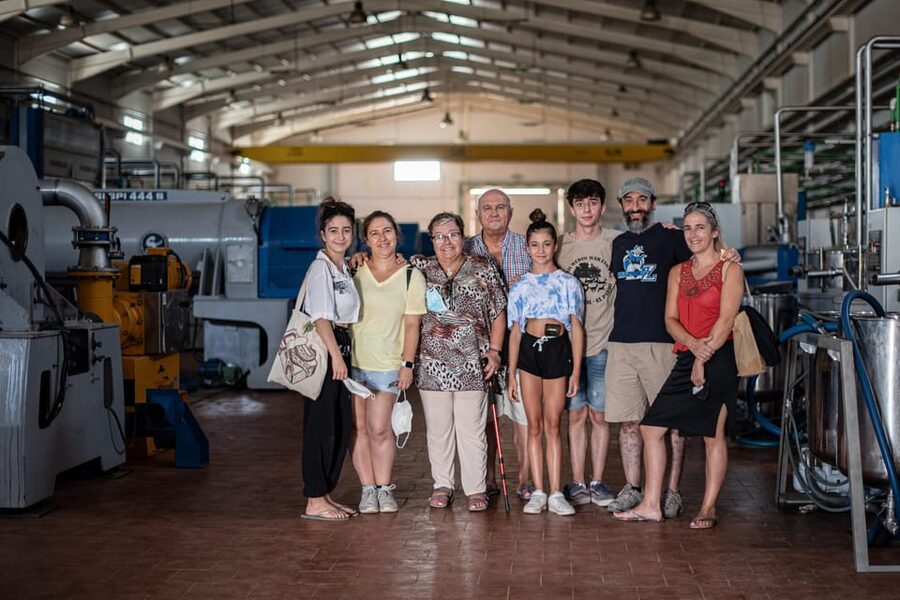
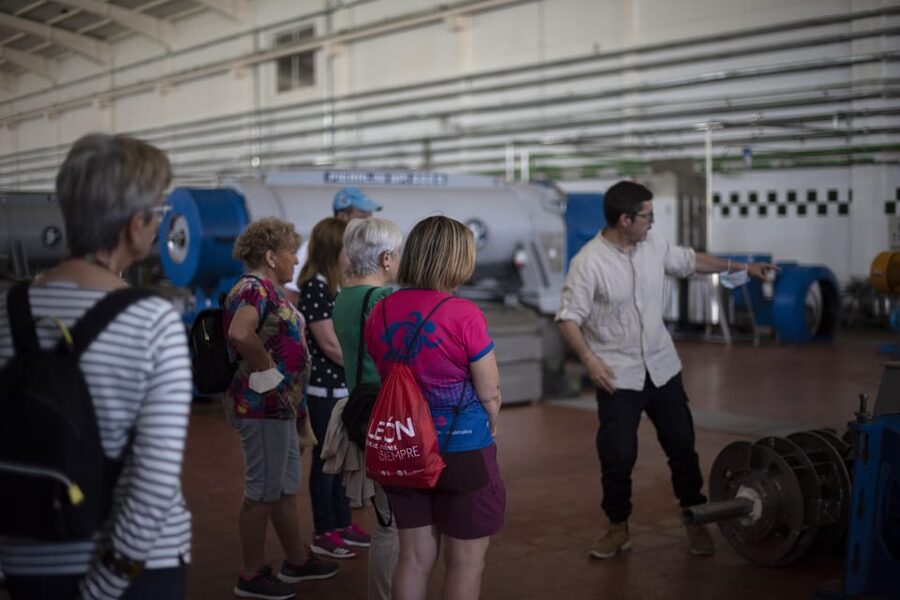
After the grove, the tour moves to SCA La Bética Aceitera in Quesada. This guided visit lasts about one hour and shifts from traditional cultivation to large-scale production.
You follow the oil through the main stages, beginning in the reception yard and continuing through extraction to bottling. That sequence is the heart of the tour. Instead of hearing a vague explanation about pressing olives, you see how a large modern mill organizes the process.
The mill is described as one of the biggest and most modern in the world. More important for you, it offers a practical look at how a cooperative with more than 2,000 associates works. That adds a social and economic side to the visit. Olive oil production here is not simply one farmer and one small press. It is a coordinated operation that gathers, processes, and bottles oil at a much larger scale.
I like the pairing of the grove and the mill. The first stop gives you the human and agricultural side. The second shows the machinery, organization, and volume needed to handle production from a large membership. Together, they answer two useful questions: how do you care for the tree, and what happens after the olives leave it?
The mill is also where the tour may feel less intimate. A large working facility cannot offer the same atmosphere as a tiny family press. If your ideal olive-oil visit means a quiet, rustic room and a personal chat with one producer, this may feel more industrial. If you want to understand the actual production chain, the scale is a benefit.
More Olive Grove Walks around Spain:
- Visit of the olive grove, olive oil tasting and snack
★ 4.9 · 111 reviews - Jaen: Olive oil tour with the 5 senses, grove and tasing
★ 4.9 · 53 reviews - Córdoba: Visit a family organic olive grove with tasting
★ 5.0 · 30 reviews - Granada in EVOO: Olive grove guided tour and sensory tasting
★ 4.8 · 26 reviews
Learning to taste oil at Agraria OLEARUM
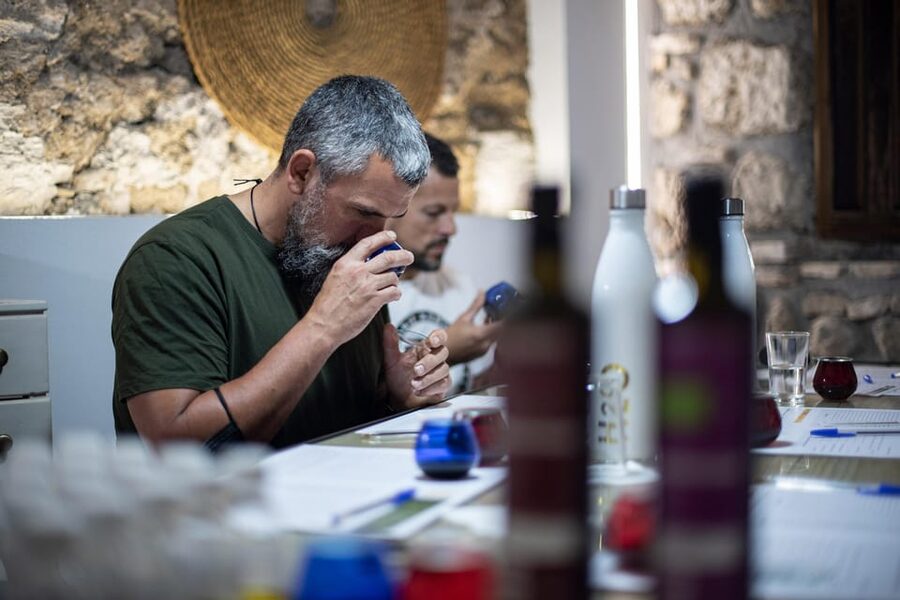
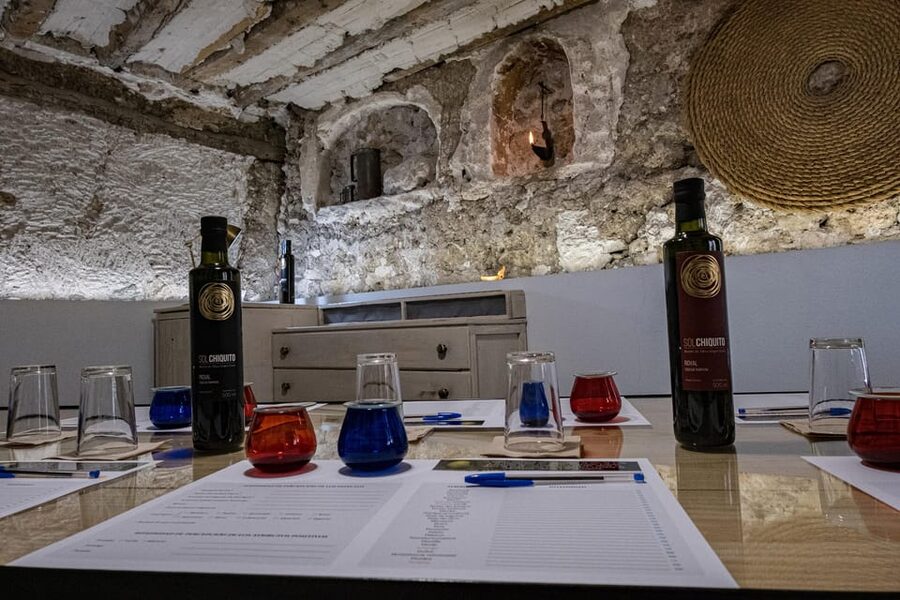
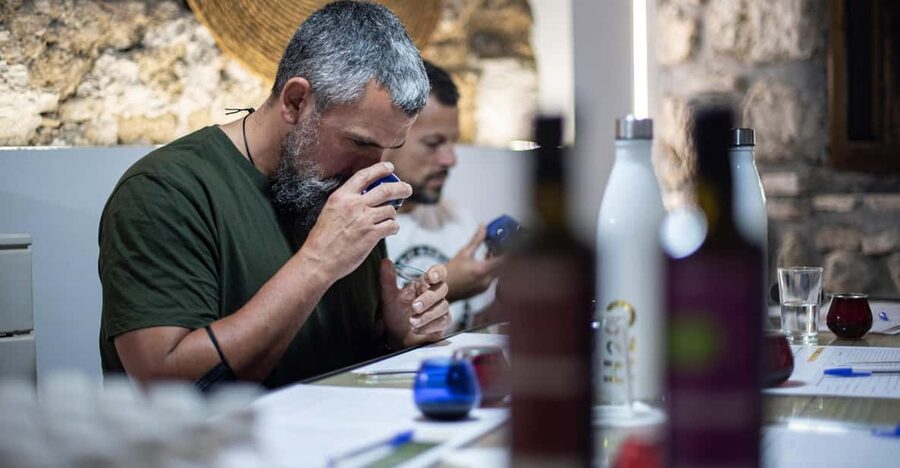
The final stop is Agraria OLEARUM, where the food tasting lasts about 75 minutes. This is more than a snack break. You get official tasting equipment, including tasting glasses and a tasting sheet, and learn how an official tasting panel operates.
You taste two different olive oils. The point is not simply to decide which one you prefer. You are asked to pay attention to aromas and use your senses with more precision. You also smell examples of defects that can occur in olive oil, which is one of the most practical parts of the session.
That lesson can change how you shop. Once you know that oil can have faults, you are less likely to judge a bottle only by its packaging or price. The tasting also helps you understand why a fresh, well-made oil can taste very different from an old or poorly handled one.
There is a game based on identifying aromas, so the session has a playful side. You can also ask questions about using olive oil and its connection with health. The supplied details do not give medical advice, so treat that discussion as general food education rather than personal health guidance.
Water is included during the tasting. You also receive a bookmark and photographs of you taking part in the tasting. Those are modest souvenirs, but they are more personal than a generic branded item.
Antonio is singled out for explaining everything clearly and answering questions. The strongest praise centers on his wisdom, easy manner, and ability to make the four hours feel short. That matters here because tastings can become dry when the guide recites technical terms. A good guide helps you connect each smell and flavor to something you can actually use.
How the small group changes the experience
The group is limited to eight participants. That is a good size for a tasting because everyone needs access to the glasses, tasting sheets, and guide. You should also have a better chance to ask about varieties, mill processes, or the health questions that come up.
A small group does not guarantee a private tour. It does mean the session should feel less crowded than a large coach excursion. If the minimum of four people is reached, the group may still be quite small. The provider does not promise a private booking, so do not assume you will have the guide to yourself.
The language is Spanish. If you understand Spanish well, this format should give you a more direct connection to the guide and the local subject. If you do not, the tasting and mill equipment may still be interesting, but much of the value comes from the explanations. There is no English guide listed.
Practical details that affect your choice
The meeting point is the public car park beside the Villa Turística de Cazorla. You return there at the end. Transportation is included only for the first four people to book, so confirm your transport arrangement rather than assuming a vehicle will be available.
The experience is not suitable for wheelchair users, people with claustrophobia, or people with hearing impairments. The listing does not provide further detail about the terrain, enclosed areas, or communication support, so contact Olearum before booking if any of these concerns apply.
You can cancel up to 24 hours before the start for a full refund. You can also reserve now and pay later, which helps if your Andalusia schedule is still shifting. Those policies are useful, but the more important planning point is the four-person minimum.
The tour is supplied by Olearum, the organization behind the olive-oil visit and tasting. The high praise focuses on the quality of the explanations, especially Antonio’s ability to answer questions and keep the subject moving. I would choose this activity for a morning or afternoon when you want a focused food experience rather than a packed sightseeing schedule.
Who should book this Cazorla olive-oil tour?
You should book it if you want to understand Andalusian olive oil from tree to bottle. It suits food-minded visitors, Spanish speakers, anyone interested in farming, and people who enjoy learning how everyday products are made.
It is also a good fit if you like experiences that connect rural life with local business. The ancient trees show the tradition. The large cooperative shows the modern system. The tasting gives you a skill you can use later.
I would be more cautious if you have only a short time in Cazorla, need English, cannot use your own transport, or want a relaxed tasting without a mill visit. Four hours is a meaningful part of your day, and the visit asks you to move between three distinct parts rather than sit in one tasting room.
Should you book it?
For $28, I think this is a strong-value choice if you can follow Spanish and arrange transport. The combination of ancient olive trees, a major working mill, and a structured tasting gives you much more context than a simple sample-and-shop stop.
Book it for the explanations, not just the oil. Antonio’s clear teaching and question-friendly style are central to the experience. Skip it if you need an English-language tour, accessible facilities, or a guaranteed departure without the four-person minimum.
FAQ
How long does the Cazorla olive-oil tour last?
The experience lasts four hours. The olive grove visit takes about one hour, the mill visit takes about one hour, and the tasting at Agraria OLEARUM lasts about 75 minutes, with travel and transitions included in the overall schedule.
Where does the tour start?
You meet at the public car park next to the Villa Turística de Cazorla. The activity ends back at the same meeting point.
Is transportation included?
Transportation is included for the first four people who book. If you are not among those first four bookings, you need to use your own vehicle.
What language is the tour in?
The live tour guide speaks Spanish. No other guide language is listed.
How many people can join the tour?
The group is limited to eight participants. The tour also needs a minimum of four people in total to operate.
What will I taste?
You will taste two different olive oils. The tasting also includes aromas associated with defects that can occur in olive oil.
What is included in the tasting?
Official tasting materials are included, such as tasting glasses and a tasting sheet. Water is provided during the tasting, and you receive a bookmark and photographs of you taking part.
Can I cancel the booking?
Yes. You can cancel up to 24 hours in advance for a full refund. You can also reserve now and pay later.
Just added around Spain
- XXI Century Olive Oil Mill Tour★ 5.0 · 3 reviews
- Visit to an olive oil mill and oil tasting with aperitif and food and wine pairing.★ 5.0 · 2 reviews
- Treurer: Tapas Gourmet and Extra Virgin Olive Oil★ 4.7 · 3 reviews
- Ulldecona: Guided Tour of the Millenary Olive Trees of Arión★ 5.0 · 2 reviews
- Treurer: Olive Oil Night. Gastronomic experience★ 5.0 · 15 reviews
- Olive Oil and Winery Tour from Zaragoza City★ 5.0 · 4 reviews
- Olive Oil Private Full-Day Tour with Tasting in Valencia★ 5.0 · 2 reviews
- Olive Oil Tour and Visit to Belchite Old Town★ 5.0 · 16 reviews
Olive Mill and Factory Tours, compared.
Knossos-Zeus Cave -Old Traditional Villages-Olive Oil Factory
Read our review →
The Governor’s Olive Mill Tour with Olive Oil Tasting
Read our review →
Road-trip to Lasithi, Zeus Cave & Olive Mill Farm
Read our review →
Lassithi, Zeus Cave, Olive Mill Farm & Knossos Combo Tour
Read our review →
Zeus Cave, Lassithi Plateau, Olive Oil Factory, Kritza, Pottery
Read our review →
Zeus Cave, Lassithi Plateau, and Olive Factory Tour
Read our review →Browse the lists this tour appears in