
Review · SEVILLE
Olive Oil Tasting Experience in Sevilla
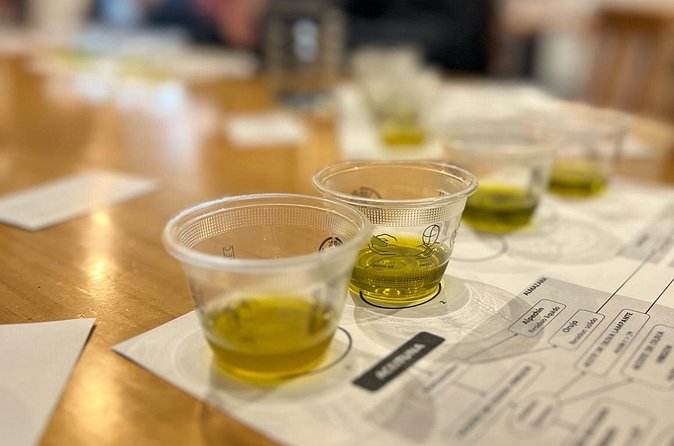
Taste Seville through its olive oil. This one-hour-15-minute experience gives you four Andalusian oils to smell, taste, compare, and discuss, with an expert guide explaining how olives shape southern Spain’s food culture. I especially like the small, focused format and the chance to learn by tasting rather than simply listening. The main consideration is that the experience is built around olive oil alone, so it may feel limited if you want a broader tapas or market tour.
I also like the clear educational structure. You learn about production methods and oil classifications before comparing the samples, which helps the tasting make sense. The only practical drawback is the relatively early 10:45 a.m. start, plus the possibility of cancellation if the minimum group size is not reached or weather affects the activity.
Key points at a glance
- Four Andalusian oils: Compare four oils and notice how their aromas and flavors differ.
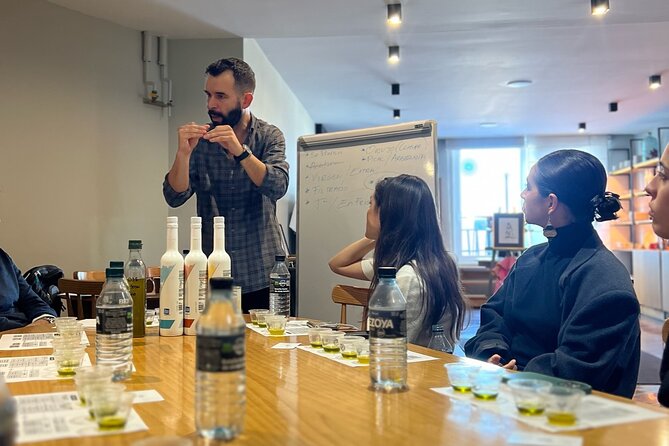
- A lesson before the tasting: The guide explains olive growing, production, and classifications before you begin sampling.
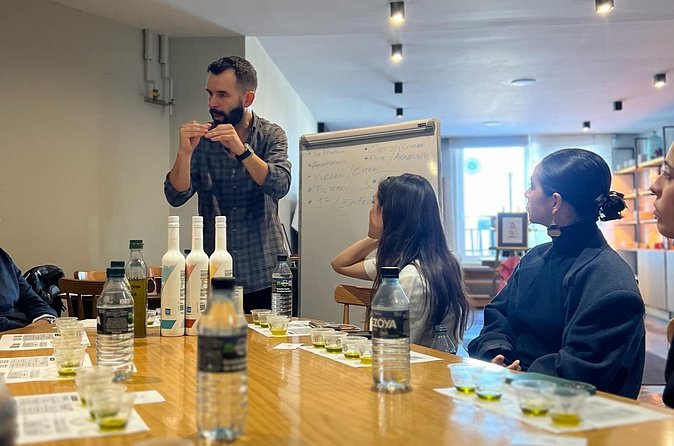
- Andreas earns special praise: He is described as an excellent teacher and olive oil sommelier who speaks English clearly.
- A compact Seville activity: The experience lasts about 75 minutes and returns to the meeting point.
- Easy central starting point: Meet at Paseo de las Delicias 1 in Casco Antiguo at 10:45 a.m.
- Low-cost food experience: At $12.09 per person, it offers a useful introduction without taking half a day.
Why olive oil makes sense in Seville
Andalusia is one of Spain’s great olive-growing regions, so olive oil is not a side note here. It is part of the local economy, kitchen, and daily table. This experience uses that regional connection as its subject, helping you understand why southern Spain produces so much oil and why bottles that look similar can taste very different.
I like this approach because it gives you more than a quick sample with bread. The guide explains the history and cultural importance of olives, then connects that background to what you taste. You are not expected to arrive with a trained palate. The point is to learn how to pay attention.
The four-oil format is particularly useful. One sample can be hard to judge on its own, especially if you are new to tasting olive oil. Four oils let you compare aroma, texture, intensity, and finish while the differences are still fresh in your mouth.
More Olive Oil Tours around Spain:
- Ronda: LA Almazara LA Organic, Olive Oil Museum and Tasting
★ 4.6 · 435 reviews - Guided tour and olive oil tasting in Alhaurin el Grande (Málaga)
★ 5.0 · 200 reviews - Guided Tasting Tour in 16th century House and Olive Oil Factory
★ 5.0 · 169 reviews
Meeting at Paseo de las Delicias at 10:45 a.m.
Your meeting point is Paseo de las Delicias 1 in Seville’s Casco Antiguo. The activity begins at 10:45 a.m. and ends back at the same meeting point, so you do not need to arrange a separate pickup or find your way to a second location afterward.
That return to the starting point matters in a busy sightseeing day. You can plan another activity after the tasting without building in complicated transportation. The meeting point is also near public transportation, which helps if you are staying outside the old center.
The morning time has two sides. It leaves your afternoon free for Seville’s major sights, lunch, or a slower walk through the historic center. On the other hand, 10:45 a.m. is not an especially late start, so you need to plan around it rather than treating the tasting as a spontaneous afternoon stop.
The experience lasts approximately one hour and 15 minutes. That is long enough for a proper introduction and tasting, but short enough to fit neatly into a day of sightseeing. If you want a full meal, farm visit, or mill tour, this is not that kind of outing. It is a concentrated tasting lesson.
The opening lesson: olives, culture, and production
The experience begins with context about olives and their place in southern Spain. This part gives the tasting a reason to exist. You learn why olives grow so abundantly in the region and how olive oil became tied to local food and culture.
The guide also covers the olive oil making process and classifications. That information is important because the label extra virgin is not simply a decorative term. It refers to a category with specific standards, and the guide’s explanation helps you understand why a high-quality extra virgin oil can taste noticeably different from other types.
This educational portion is one of the strongest reasons to book. The tasting is not treated as a guessing game. You first receive a framework, then use it while sampling. That order makes the experience friendlier for beginners and more useful for anyone who has bought olive oil without knowing what to look for.
The information is delivered in English. Andreas receives particular praise for explaining the process and classifications clearly, with one assessment describing him as an excellent teacher and olive oil sommelier. Another especially positive detail is that the owner of the company may lead the session, adding a personal connection to the subject.
Because the experience can include up to 30 people, the group may not always feel private. Still, the strongest feedback describes the session as intimate, educational, and fun. The actual feel may depend on the day’s attendance, but the maximum size gives you a sense of the upper limit.
Tasting four oils side by side
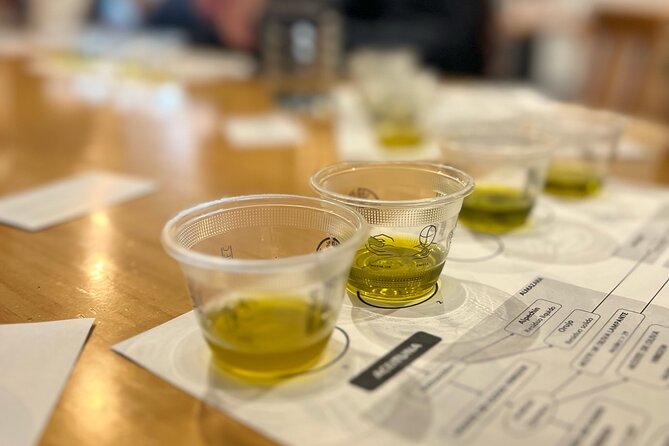
After the introduction, you taste four olive oils and compare their flavor profiles. This is the heart of the activity. You smell each oil, taste it, and consider how one differs from the next.
A useful tasting is not just about deciding which oil you like best. You may notice different aromas, levels of bitterness, peppery sensations, or finishes that linger after swallowing. The supplied experience details do not specify the exact oils or olive varieties, so you should not expect a fixed list of four named products. What you can count on is a contrast among four samples from southern Spain.
The side-by-side format helps you develop a practical skill. By the end, you may be able to appreciate the difference between a high-quality extra virgin olive oil and other classifications. That was a key result described by one participant, who began to recognize the quality gap only after comparing the oils directly.
I like this more than a long lecture about olive cultivation. Your palate becomes part of the lesson. You can ask questions as you taste, and the guide is there to explain why an oil may smell or feel different. If you have ever stood in a shop staring at a wall of olive oil bottles, this kind of comparison can make future choices less random.
Do not expect this to turn you into a professional taster in 75 minutes. The claim is more modest and more useful: you leave with a better vocabulary, a clearer idea of classifications, and a stronger sense of what you personally enjoy.
Same groves, a different afternoon:
- Visit of the olive grove, olive oil tasting and snack
★ 4.9 · 111 reviews - Visit Oil Mill Museum and Olive Oil Tasting in Ronda
★ 4.5 · 105 reviews - Private Tasting of Olive Oil in Córdoba
★ 5.0 · 93 reviews - Olive Oil tasting breakfast & Tour in Cordoba
★ 4.5 · 84 reviews
The guide makes the difference
The guide’s role matters more here than it would on a simple sightseeing walk. Olive oil tasting can become vague if nobody explains what to notice. A good guide gives you a method, answers questions, and keeps the session moving.
Andreas receives the clearest praise. He is described as an excellent teacher and olive oil sommelier who explains the production process and classifications in excellent English. That combination is important. Technical information is only useful if you can follow it, and tasting is much less intimidating when the guide welcomes questions.
Another strong detail is the chance that the company owner leads the experience. You may hear directly from someone closely involved with the business and the tasting program. The information does not promise that the owner will lead every session, so I would treat that as a possibility rather than a guarantee.
The tone appears to be relaxed rather than formal. The activity is described as interactive, and the guide helps you compare the oils instead of simply presenting them. That makes it a good choice if you enjoy asking questions and trying something new without needing prior knowledge.
Is $12.09 a good value?
At $12.09 per person, this is an inexpensive Seville activity. The value comes from the combination of four tastings, an English-language lesson, and a short time commitment.
I would judge the price favorably if you want a food-focused introduction rather than a full culinary tour. You get a guided comparison and information you can use later when shopping or ordering olive oil. The experience also does not consume an entire morning or afternoon.
The value is less obvious if you already know olive oil well or want a larger tasting menu. The available details do not mention bread, tapas, a meal, a farm visit, or a trip to an olive mill. You should book it for the learning and tasting, not for a full meal or countryside excursion.
The low price also makes it a sensible add-on. You can pair it with other Seville plans without committing a large part of your sightseeing budget. For many people, the most lasting benefit will be learning how to tell a good extra virgin oil from a more ordinary one.
Who should book this experience?
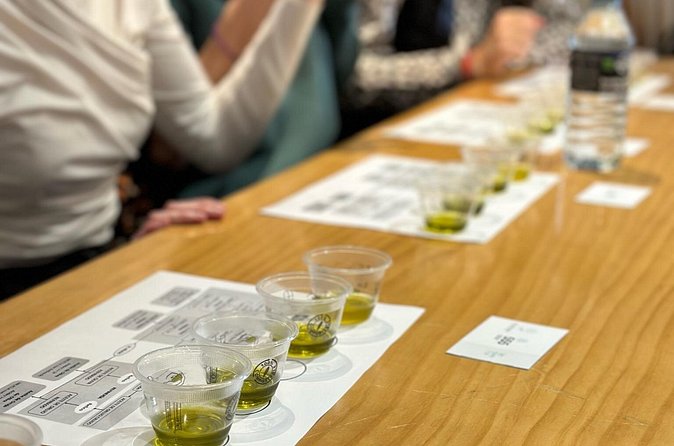
I would recommend it most strongly to first-time visitors who want a manageable introduction to Andalusian food culture. It also suits anyone who cooks with olive oil, enjoys tasting sessions, or wants a short activity that feels different from another church, palace, or museum.
Food-focused couples and small groups should find the format appealing. Families may also appreciate the short duration, although the available information only says that most people can participate and does not provide a specific children’s program.
This experience is also useful for shoppers. If you plan to bring olive oil home, the tasting may help you understand labels and quality before you buy. The guide’s explanation of classifications is likely to be more useful than simply choosing a bottle based on its packaging.
I would be less likely to recommend it to someone seeking a complete Andalusian food tour. There is no stated meal, market visit, cooking class, or producer visit. You are paying for a focused tasting lesson, and that focus is both its strength and its limitation.
Group size, timing, and practical planning
The maximum group size is 30 people. That is not a tiny private class, but it is still a defined limit. The quality of the session will depend partly on attendance and how actively the guide manages questions.
The activity is offered in English, which makes it straightforward for English-speaking visitors. Mobile tickets are accepted, confirmation arrives when you book, and the meeting point is near public transportation. Service animals are allowed, and most people can participate.
You should allow a little extra time to reach Paseo de las Delicias 1. The stated start is 10:45 a.m., and tasting activities work best when you arrive calm rather than rushing in from another appointment. Since the experience ends at the meeting point, you can plan your next stop from there.
The experience requires good weather and a minimum number of participants. If poor weather or low enrollment causes a cancellation, you are offered a different date or experience, or a full refund. For your own planning, that means you should avoid booking a nonrefundable activity immediately afterward.
Free cancellation is available until 24 hours before the start time. If you cancel inside that window, you do not receive a refund, and changes made within 24 hours are not accepted. The cutoff follows Seville local time.
What you will remember afterward
The most useful result is not a single favorite oil. It is the ability to compare oils with a little more confidence. You learn to slow down, smell first, taste carefully, and notice how classifications relate to quality.
I also like the cultural angle. Seville can sometimes feel like a parade of famous monuments, but food traditions show you how the region works day to day. Olive oil connects agriculture, cooking, trade, and local identity in a simple form you can taste.
The experience may also change how you use olive oil at home. Once you recognize the difference between oils, you may choose one for finishing a dish and another for everyday cooking. The activity does not promise specific recipes or food pairings, so any later kitchen use is up to you, but the tasting gives you a better starting point.
Should you book the Seville olive oil tasting?
Book it if you want an affordable, short, English-language activity that teaches you something concrete. The strongest reasons are the four-oil comparison, the clear explanation of production and classifications, and the praise for Andreas as a teacher and olive oil sommelier.
Skip it if you want a full meal, a visit to an olive farm, or a broad tour of Andalusian cuisine. You should also think twice if the 10:45 a.m. start clashes with your plans or if a possible weather or minimum-group cancellation would cause problems.
For $12.09, I think this is a smart choice for curious food lovers and first-time olive oil tasters. It gives you a taste of Andalusia that is practical, easy to fit into a Seville itinerary, and likely to make every future bottle of olive oil a little more interesting.
FAQ
How long does the olive oil tasting experience last?
The experience lasts approximately one hour and 15 minutes.
Where does the experience begin?
It begins at Paseo de las Delicias 1, Casco Antiguo, 41001 Seville, Spain.
What time does the tasting start?
The stated start time is 10:45 a.m.
Where does the activity end?
The activity ends back at the meeting point.
How many olive oils will I taste?
You will taste four types of olive oil from southern Spain.
Can I cancel for a full refund?
Yes. You can cancel at least 24 hours before the start time for a full refund. Cancellations made less than 24 hours before the start time are not refunded.
Just added around Spain
- XXI Century Olive Oil Mill Tour★ 5.0 · 3 reviews
- Visit to an olive oil mill and oil tasting with aperitif and food and wine pairing.★ 5.0 · 2 reviews
- Treurer: Tapas Gourmet and Extra Virgin Olive Oil★ 4.7 · 3 reviews
- Ulldecona: Guided Tour of the Millenary Olive Trees of Arión★ 5.0 · 2 reviews
- Treurer: Olive Oil Night. Gastronomic experience★ 5.0 · 15 reviews
- Olive Oil and Winery Tour from Zaragoza City★ 5.0 · 4 reviews
- Olive Oil Private Full-Day Tour with Tasting in Valencia★ 5.0 · 2 reviews
- Olive Oil Tour and Visit to Belchite Old Town★ 5.0 · 16 reviews
Seville Olive Oil Tours, compared.
Oleotourism and olive oil tasting in Seville – Private tour
Read our review →
Olive Oil Tasting and Culinary Day Trip in Carmona
Read our review →Browse the lists this tour appears in