
Review · CORDOBA
Private Tasting of Olive Oil in Córdoba
Olive oil is Córdoba’s liquid lesson. This tasting turns a familiar kitchen staple into a clear, hands-on food experience, with five Andalusian extra virgin olive oils, guided comparisons, and simple pairings. I like the friendly teaching style, especially when hosts such as Mari Carmen, Cristina, and Álvaro explain how harvesting and milling shape flavor. I also like the small-group feel and the chance to leave with a better idea of what to buy. The main drawback is that the tasting takes place in an olive oil shop, not at a farm or mill.
You should expect a calm, food-focused hour rather than a grand sightseeing event. The price is reasonable for a private tasting, but people looking for Córdoba’s major monuments or an active outdoor excursion may find it too quiet. One practical note: some sessions have lasted closer to two hours, so avoid booking it tightly between other plans.
Key points to know before booking
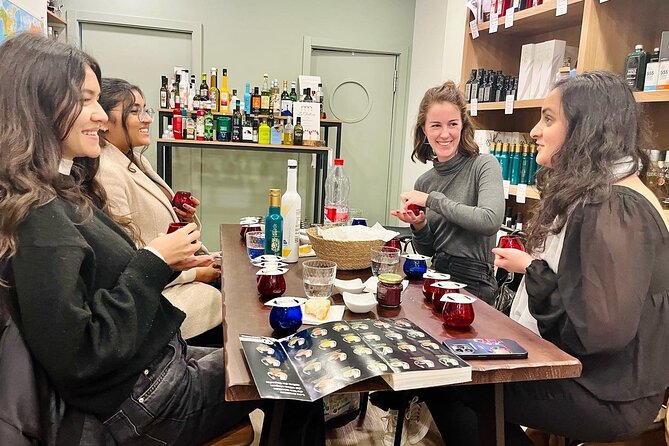
- Five Andalusian extra virgin olive oils: Compare varieties, aromas, flavors, and quality in one sitting.
- A lesson from field to mill: Learn how cultivation, harvesting, pressing, and processing affect the final oil.
- Hosts with real subject knowledge: Mari Carmen, Cristina, and Álvaro are praised for clear, lively explanations.
- A shop setting with useful buying advice: You can browse local oils, vinegars, and other products after the tasting, without reported pressure to purchase.
- A private format: Only your group participates, although some sessions may be arranged alongside another small group.
- Flexible cancellation: Cancel at least 24 hours before the start time for a full refund.
Why an olive oil tasting fits Córdoba
Córdoba is famous for the Mezquita, Roman Bridge, and Alcázar, but olive oil explains a quieter part of Andalusian life. The province sits within one of Spain’s great olive-growing regions, and oil is not just a condiment here. It is agriculture, family work, local trade, and a daily part of the table.
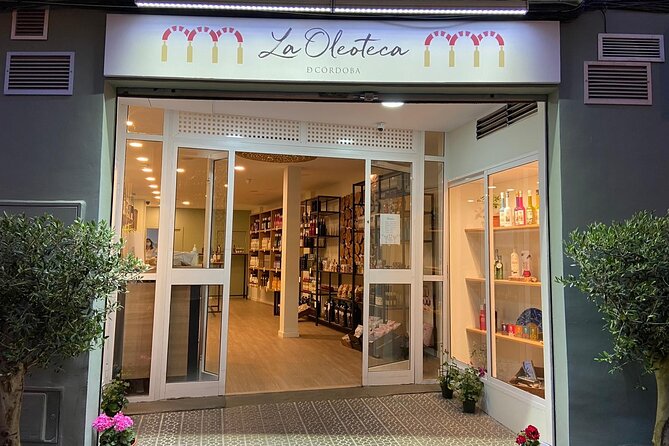
This experience gives you a way to understand that culture without committing to a full-day countryside outing. You meet at La Oleoteca de Córdoba, an olive oil shop at C. Ángel de Saavedra, 8, in the Centro area. The activity finishes at the same place, so the logistics are simple.
I like this kind of food activity after a morning spent seeing monuments. You can sit down, pay attention, and use your senses instead of rushing from one sight to the next. It also works well on a day trip, since the listed duration is about one hour and 15 minutes.
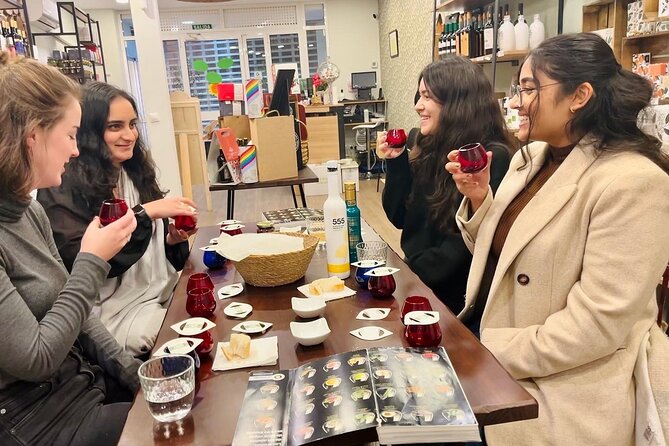
The setting matters. You are not visiting an olive grove or watching machinery operate at a mill. Instead, you are in a specialist shop surrounded by products you can examine after the tasting. That makes the experience less scenic, but more useful if your goal is to understand labels and choose a bottle to take home.
More Olive Oil Tours around Spain:
- Ronda: LA Almazara LA Organic, Olive Oil Museum and Tasting
★ 4.6 · 435 reviews - Guided tour and olive oil tasting in Alhaurin el Grande (Málaga)
★ 5.0 · 200 reviews - Guided Tasting Tour in 16th century House and Olive Oil Factory
★ 5.0 · 169 reviews
What happens during the tasting
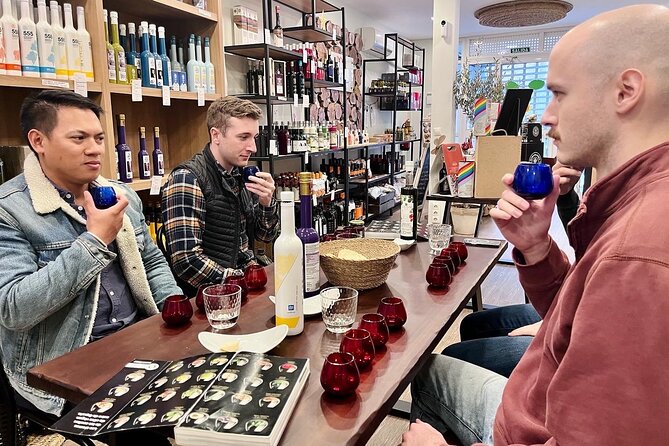
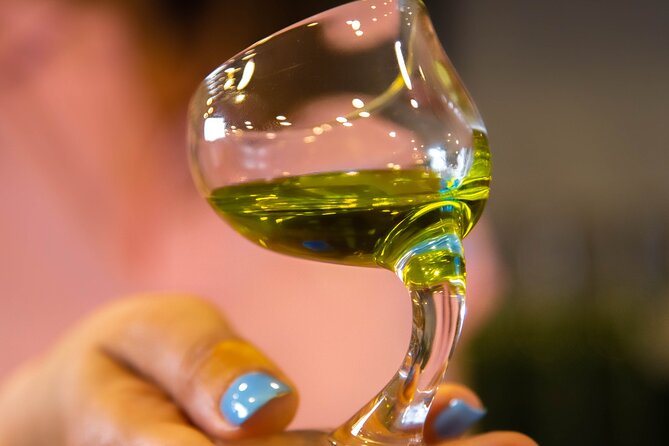
The core of the activity is a sensory tasting of five extra virgin olive oils from Andalusia. The oils are presented for comparison, allowing you to notice how different varieties can produce different smells, textures, and flavors.
You learn the basic method used to assess olive oil. That generally means paying attention to aroma first, then tasting a small amount and considering the balance of fruitiness, bitterness, and peppery sensations. The teaching is aimed at ordinary people, not only chefs or food professionals.
That point comes through in the way the hosts work. Mari Carmen is described as warm, funny, and exceptionally well informed. She has advanced academic training in olive oil and comes from a family involved in olive farming. Cristina is praised for making the subject easy to follow, even when she is hosting only two people. Álvaro brings plenty of energy to the story of harvesting, pressing, and processing.
You do not need a trained palate. Part of the fun is discovering that you can notice differences after a little guidance. One person who had never paid close attention to olive oil found that the distinctions between better and poorer oils became clear by the end.
The session also teaches you to identify positive attributes and possible defects. This is valuable because the words on a bottle can be confusing. You learn that extra virgin is not simply a decorative phrase, and that production, storage, and handling affect what reaches your plate.
From olive grove to mill
The teaching moves beyond tasting notes. You hear how the olive fruit is cultivated, harvested, pressed, and processed into oil. This gives the flavors a practical explanation.
The time of harvest, the condition of the olives, and the care taken before milling can all influence the result. The point is not to memorize technical terms. It is to understand why one oil smells fresh and grassy while another may seem flat, harsh, or unpleasant.
The hosts also explain olive oil classifications and the difference between varieties and styles. You may discuss extra virgin, virgin, and cold-pressed oils, as well as infused versions. The experience is especially useful if you have ever stood in a shop staring at several bottles and wondered why the prices differ.
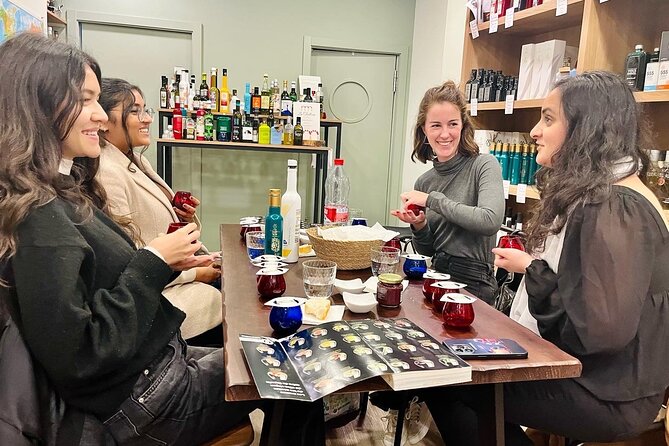
Some sessions use a classification or tasting sheet. One useful improvement would be an English version for English-speaking participants, since the material may not always be available in English. The spoken explanations, however, are offered in English, which keeps the activity accessible to international visitors.
The shop setting gives the lesson a practical finish. You can look at products from different parts of the region and ask for help choosing among them. Mari Carmen has even been described as an official olive oil judge in Spain, so the advice can go well beyond a sales pitch.
The food pairings at the end
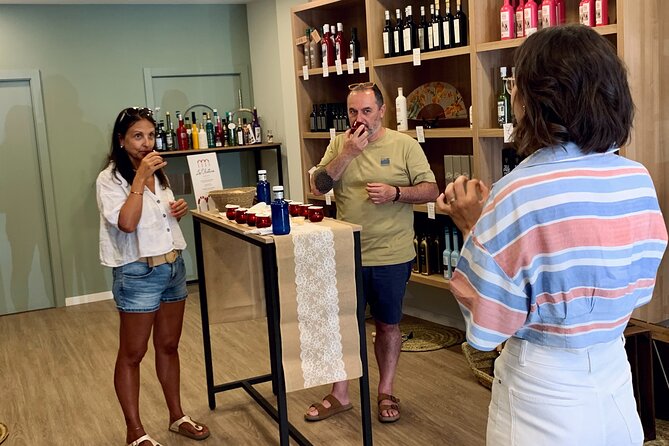
After tasting the oils on their own, you sample them with different pairings. Bread is included in the tasting, and some sessions have offered additional products around the shop, including infused oils and other olive-based foods.
This final stage helps you connect the oil to everyday meals. A peppery oil may work well when you want a strong finish, while a softer oil may suit a different dish. The activity is not a cooking class, though, and you should not expect to prepare a full meal.
One note deserves attention: olive oil is calorie-dense and can feel heavy if you consume too much straight. A participant felt unwell after taking in more oil than expected and suggested a warning at the beginning. Water is provided, but it is sensible to taste small amounts and pace yourself.
The original food description centers on the olive oil tasting and pairings. Do not count on making a traditional Córdoba dessert or preparing salmorejo and paella as part of this particular activity. Those dishes appear in separate food-related experiences, not as a dependable part of this tasting.
Same groves, a different afternoon:
- Visit of the olive grove, olive oil tasting and snack
★ 4.9 · 111 reviews - Visit Oil Mill Museum and Olive Oil Tasting in Ronda
★ 4.5 · 105 reviews - Olive Oil tasting breakfast & Tour in Cordoba
★ 4.5 · 84 reviews - Sóller: Olive Oil Guided Tour and Tasting at Can Det Estate
★ 4.8 · 82 reviews
The hosts make the difference
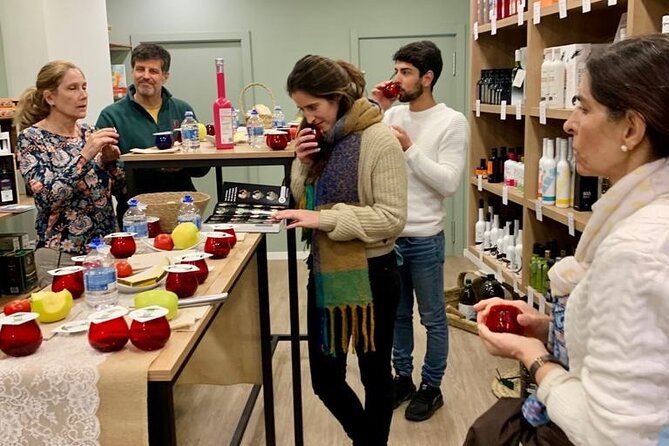
The strongest part of this experience is the human element. The subject could become dry if it were only a talk about classifications and production methods. Instead, the hosts use humor, questions, and plenty of sensory comparison.
Mari Carmen receives especially warm praise for her friendliness and enthusiasm. She makes the subject feel personal by connecting it to family olive farming and her own professional training. That combination helps explain why the tasting appeals to both a professional chef and someone who knows little about oil.
Cristina is also praised for adapting the session to a very small group. That matters if you prefer direct conversation and time to ask questions. Álvaro’s style is more animated, with an energetic explanation of the route from olive harvest to finished bottle.
The private format means only your group is meant to participate. In practice, some sessions may bring your group together with another couple or small party, which can add a pleasant social element. One couple enjoyed discussing the tasting with another pair, while another session was held just for two people because of scheduling.
That variation is worth knowing. If you want an entirely private lesson, confirm the arrangement when booking. If you enjoy sharing opinions over food, a small mixed group may make the tasting more lively.
What you get for about $35
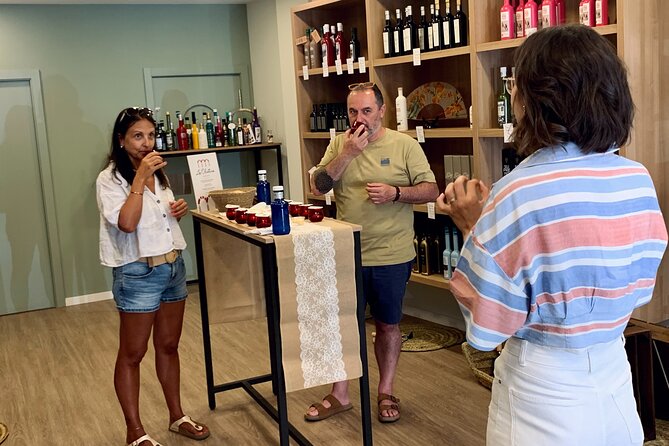
At about $35.07 per person, the value depends on what you want from Córdoba. You are paying for instruction, five oils, food pairings, and access to a specialist shop where you can continue asking questions. For a short cultural activity in the city center, that is a fair price.
The value is strongest for people who cook, enjoy regional food, or want to bring home something more meaningful than a generic souvenir. After tasting several oils, you can make a purchase based on flavor rather than packaging alone. The shop carries local oils and other products, and there is no reported pressure to buy.
If you are mainly interested in famous sights, the same money could go toward another attraction or a longer tour. This tasting will not show you Córdoba’s monuments, countryside, or a working mill. Its payoff is knowledge you can use at the market, in a restaurant, and in your own kitchen.
The activity is also a good choice for families with older children. A 10-year-old joined one session successfully, taking part in the smelling, tasting, and discussion. Younger children may find the presentation slow, but the format is not limited to food professionals.
Timing, meeting point, and practical details
The meeting point is C. Ángel de Saavedra, 8, in Córdoba’s Centro. The experience returns to this location, so you do not need to arrange transportation between several stops.
The scheduled duration is approximately one hour and 15 minutes. Some participants describe sessions lasting two hours or a couple of hours, especially when questions continue and the host gives a more personal presentation. I would allow extra time rather than placing this directly before a train, timed monument entry, or restaurant reservation.
The activity is offered in English and uses a mobile ticket. Booking confirmation is issued at the time of booking. Service animals are allowed, and most people can participate.
The experience is booked around 18 days ahead on average, so I would reserve before your Córdoba visit if your schedule is tight. The provider offers free cancellation when you cancel at least 24 hours before the local start time. Changes or cancellations inside that 24-hour window are not accepted for a refund.
Who should book this Córdoba tasting?
I would choose this activity if you want a small, focused food experience with real instruction. It suits curious cooks, food lovers, couples, families with older children, and anyone who wants to understand Spanish olive oil before buying a bottle.
It is also a smart choice for repeat visitors who have already seen the main monuments. The session adds local context without taking up an entire day.
I would skip it if you want a farm visit, a mill tour, a cooking lesson, or a dramatic outdoor setting. You remain in a shop throughout, and the main activity is listening, smelling, tasting, and asking questions.
Should you book it?
Book it if you want to taste five Andalusian oils and learn how to judge them. The hosts bring warmth and expertise, and the shop makes it easy to continue browsing or buy a bottle afterward. For about $35, it offers a useful look at one of the region’s most important foods.
Do not book it expecting major sights or a countryside excursion. This is a compact, educational tasting. Its reward is simple: after an hour with Mari Carmen, Cristina, or Álvaro, you should understand your olive oil better and shop for it with more confidence.
FAQ
Where does the olive oil tasting take place?
It begins at C. Ángel de Saavedra, 8, Centro, 14003 Córdoba, Spain, at La Oleoteca de Córdoba. The activity ends back at the same meeting point.
How long does the experience last?
The listed duration is approximately one hour and 15 minutes. Some sessions described by participants lasted closer to two hours, so allow extra time if you have later plans.
How many olive oils are included?
The tasting includes five Andalusian extra virgin olive oils. You learn to compare their aromas, flavors, positive attributes, and possible defects.
Is the tasting offered in English?
Yes. The experience is offered in English, and the hosts explain olive oil production and tasting in English.
Is this a private activity?
Yes. It is described as a private tour or activity in which only your group participates. Some sessions may still be arranged with another small group, so confirm the setup if complete privacy matters to you.
Is food included?
The activity includes olive oil tasting with different pairings. Bread is provided in at least some sessions, and water is available.
Does the activity include a farm or olive mill visit?
No. The tasting takes place in an olive oil shop. You learn about cultivation, harvesting, milling, and processing through the presentation rather than by visiting a farm or factory.
Can I buy olive oil after the tasting?
Yes. The shop offers a selection of olive oils and related products, and you can ask for help choosing what to buy. The experience is not described as requiring a purchase.
Can children participate?
Most people can participate, and a 10-year-old took part in one session. The activity is suitable for children who can engage with a presentation and tasting.
What is the cancellation policy?
You can cancel at least 24 hours before the local start time for a full refund. Cancellations or changes made less than 24 hours before the start time are not accepted for a refund.
Just added around Spain
- XXI Century Olive Oil Mill Tour★ 5.0 · 3 reviews
- Visit to an olive oil mill and oil tasting with aperitif and food and wine pairing.★ 5.0 · 2 reviews
- Treurer: Tapas Gourmet and Extra Virgin Olive Oil★ 4.7 · 3 reviews
- Ulldecona: Guided Tour of the Millenary Olive Trees of Arión★ 5.0 · 2 reviews
- Treurer: Olive Oil Night. Gastronomic experience★ 5.0 · 15 reviews
- Olive Oil and Winery Tour from Zaragoza City★ 5.0 · 4 reviews
- Olive Oil Tour and Visit to Belchite Old Town★ 5.0 · 16 reviews
- Olive Oil Private Full-Day Tour with Tasting in Valencia★ 5.0 · 2 reviews
Cordoba Olive Oil Tours, compared.

Córdoba: Visit a family organic olive grove with tasting
Read our review →
Full day in Cordoba between Vineyards and Olive Trees with a Convertible Car
Read our review →
Browse the lists this tour appears in