
Review · VALENCIAN COMMUNITY
Johnny Madge Olive Oil Tastings
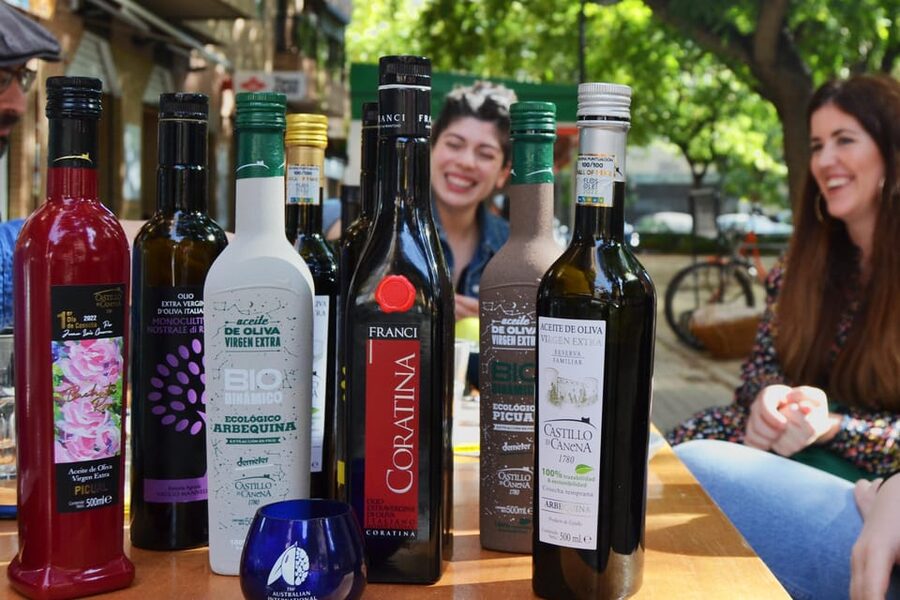
Olive oil can taste wildly different. At Johnny Madge Olive Oil Tastings in Valencia, you learn why from an International Olive Oil Competition judge, not from a producer trying to sell you one particular bottle. The one-hour session costs $23 per person and takes place at La Ola Fresca, a cafe in the Benimaclet neighborhood.
I like the tasting’s carefully chosen oils and Johnny’s ability to make technical details easy to follow. I also like the relaxed format: you can taste in the proper competition style or use bread, including gluten-free bread. The main consideration is that one hour passes quickly, especially if you want to ask about milling, health, cooking, and food pairings.
- International judging experience: Johnny selects at least three oils from Spain and other producing countries, rather than presenting only his own products.
- Proper tasting technique: You smell the oils in special biodegradable corn cups and learn the method used in international competitions.
- Flexible level of detail: Johnny can keep things light and friendly or explain the technical side of oil mills, production, and defects.
- Useful food advice: The session covers cooking with olive oil, matching oil with food, and how to use the oils at home.
- Easy central meeting point: La Ola Fresca sits on a leafy square in Benimaclet, away from passing cars.
- Good value at $23: You receive at least three high-quality tastings plus an hour of expert guidance and questions.
Meeting Johnny at La Ola Fresca in Benimaclet
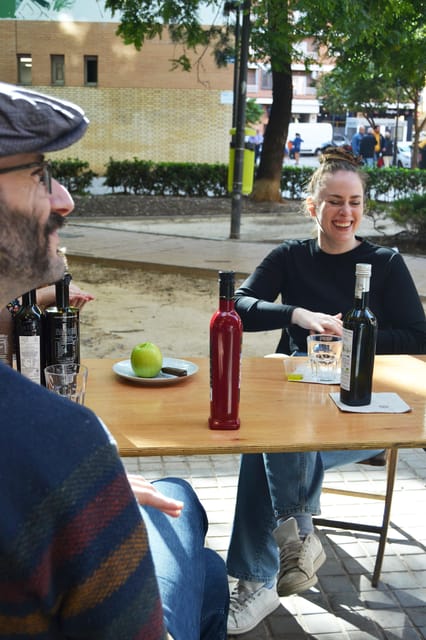
The experience begins at La Ola Fresca, a cafe with a large, visible sign outside. The cafe sits on a square filled with trees rather than directly on a car road, which makes the meeting point calmer than a typical city-street cafe.
You should allow a little time to find the square, especially if Benimaclet is unfamiliar to you. The location is wheelchair accessible, and the activity is offered in English, Italian, French, and Spanish. Water is provided at no extra cost, but coffee, tea, and other drinks are separate.
The setting matters because this is not presented as a formal lecture in a conference room. You sit down in a cafe and spend an hour talking about food. That helps the tasting feel social and approachable, even when Johnny gets into the technical side of olive production.
Why an International Judge Changes the Tasting
Many olive oil tastings are run by a producer who pours the oils made by that producer. That can still be enjoyable, but the selection naturally has a sales angle. Johnny’s format is different. He chooses oils as an experienced international judge, with access to highly rated examples from Spain and other countries.
That gives you a useful comparison. Instead of tasting one oil and being told that it is excellent, you can notice how good oils vary in aroma, flavor, strength, freshness, and balance. The point is not simply to identify your favorite. You begin to understand that extra virgin olive oil is not one fixed taste.
Johnny has held tastings for about 20 years, and that experience shows in the way the class is described. He knows that some people arrive eager to learn every technical detail, while others simply want to taste good oil and understand what they are buying. You can ask for the level of explanation that suits you.
The experience also has a strong personal element. Adam, from the United Kingdom, described Johnny as welcoming and passionate, while Callum called him kind, courteous, and experienced. That combination is important in a food class. An expert who makes you nervous can turn tasting into an exam. Johnny’s aim is to make you feel at ease.
More Olive Oil Tours around Spain:
- Ronda: LA Almazara LA Organic, Olive Oil Museum and Tasting
★ 4.6 · 435 reviews - Guided tour and olive oil tasting in Alhaurin el Grande (Málaga)
★ 5.0 · 200 reviews - Guided Tasting Tour in 16th century House and Olive Oil Factory
★ 5.0 · 169 reviews
Smelling the Oils in Competition-Style Cups
The tasting begins with smell, an important step that is often skipped when people pour oil directly onto bread. You use special olive oil cups made from biodegradable corn, then examine the aromas before tasting.
Johnny explains the technique used in international olive oil competitions. The cup helps concentrate the smell, giving you a better chance to notice the character of each oil. You may find that one has a grassy aroma, another seems more fruity, and another has a sharper or more peppery quality. The exact oils change, so the point is comparison rather than memorizing a fixed menu.
This part may feel unfamiliar at first. Olive oil is usually treated as a supporting ingredient, not something to smell and assess on its own. Johnny’s guidance gives you a simple method for paying attention to what is in the bottle.
You do not need a trained palate. The class is built for ordinary food lovers, and Johnny explains the process clearly. If you prefer not to taste oil in the traditional professional manner, bread is available. Local sourdough is normally offered, and gluten-free bread can be provided as well.
Tasting at Least Three of the World’s Best Oils
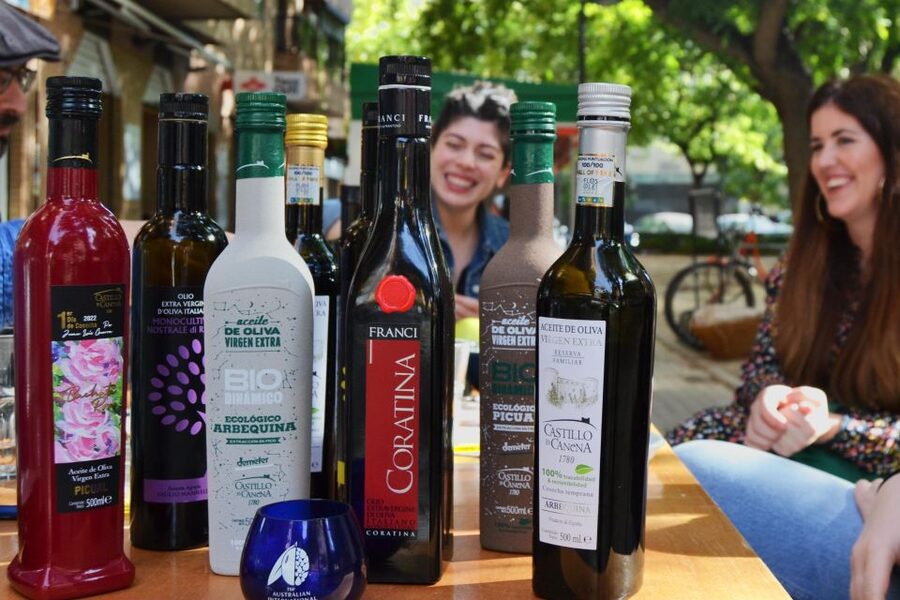
At least three oils are included. They are selected from what Johnny considers among the world’s best, with Spanish oils joined by examples from other countries. That international range is one of the strongest reasons to book this rather than simply buying a bottle at a shop.
The tasting lets you compare oils side by side. You can think about how each one smells, how it feels in your mouth, and how long the flavor remains. Some may seem gentle and rounded, while others may have a stronger bitter or peppery edge. Those traits are not automatically faults. In a good oil, bitterness and pepper can signal freshness and character.
Johnny explains how professionals judge quality and how flaws develop. You learn that extra virgin is not just a fancy label. The term refers to standards involving production and quality, and the oil must meet those requirements. The class also tackles a common source of confusion: first cold pressed.
That phrase sounds impressive, but Johnny explains why it can be misleading in modern olive oil production. You come away better prepared to read labels and ask sensible questions instead of relying on marketing language.
The tasting is also useful if you cook regularly. Johnny addresses the question many people still ask: can you cook with olive oil? His answer is yes. He can explain how to use oil with food and discuss health questions, so the session goes beyond tasting for its own sake.
From Olive Groves to the Oil Mill
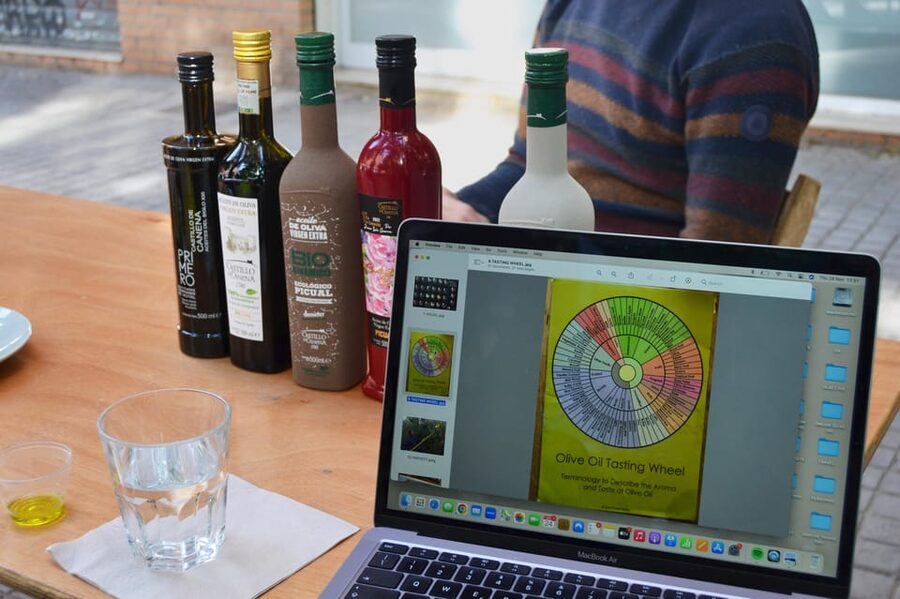
For people who want the technical side, Johnny can explain how oil mills work and show photographs. This helps connect the flavor in the cup with the process behind it.
You learn how excellent oil is made and how poor oil is produced. That distinction is valuable because quality depends on more than the olive variety or the country printed on the label. Harvesting, handling, milling, storage, and freshness all affect the final product.
The class does not require you to become an oil-making specialist. Johnny can keep the discussion relaxed if you are mainly interested in food. But if you want the details, you can ask about milling technology and the decisions that separate a top oil from a low-quality one.
This flexibility is a real strength. A couple visiting Valencia for a few days may want an entertaining introduction. Someone already interested in olive oil may want to ask more exact questions about defects, production, and judging. The same one-hour class can accommodate both, although people seeking every technical answer may find the time short.
Same groves, a different afternoon:
- Visit of the olive grove, olive oil tasting and snack
★ 4.9 · 111 reviews - Visit Oil Mill Museum and Olive Oil Tasting in Ronda
★ 4.5 · 105 reviews - Private Tasting of Olive Oil in Córdoba
★ 5.0 · 93 reviews - Olive Oil tasting breakfast & Tour in Cordoba
★ 4.5 · 84 reviews
Bread, Food Pairings, and Practical Advice
Bread is available for anyone who prefers a familiar way to taste. That option makes the session less intimidating, especially if you are not comfortable sampling oil directly.
The bread is normally locally made sourdough, with gluten-free bread available. You can dip and compare, then discuss how the oil might work with food. Johnny focuses on practical use rather than treating the oils as museum objects.
You can ask which oil suits particular foods, how to use it at home, and how cooking affects your choice. The class also covers health questions and storage-related topics as part of the wider conversation about olive oil.
The best takeaway may be confidence. After tasting several oils with an expert, you are less likely to buy a bottle based only on a grand-sounding label. You can also recognize that a strong oil is not necessarily a bad oil, and a mild oil is not necessarily a better one. Personal taste still matters.
Donna, from the United States, appreciated that Johnny shaped the session around the questions she wanted answered. That is a useful clue for planning your own visit: arrive with a short list. Ask about frying, salads, bread, health, label terms, or the kind of oil you usually buy. The hour will be more useful if you make it interactive.
How Much Value Do You Get for $23?
At $23 per person, this is a reasonably priced specialist food experience in Valencia. You receive at least three premium oils, professional tasting instruction, bread if wanted, water, and an hour with a judge who has two decades of tasting experience.
The value is strongest if you are curious about olive oil or plan to buy bottles during your trip. A single expensive bottle can cost more than the activity, and poor shopping choices can waste money. Learning what quality tastes like gives you a practical benefit after the class.
The value is less clear if you want a full meal or a long food tour. This is a focused one-hour tasting, not a visit to an olive farm, an oil mill, or a large market. You should not expect a full lunch or a broad tour of Valencia’s food scene.
Coffee, tea, and other drinks are not included. That is a small extra cost if you want to remain at the cafe afterward. Water is free.
The experience has received a 4.9 rating from 10 reviews, with especially strong praise for Johnny’s welcome, clarity, and passion. Rebecca from Spain described both the guide and location positively, while Donna’s only real complaint was a funny one: after the class, inexpensive olive oil may no longer satisfy you.
Who Will Enjoy This Most
I would recommend this for food-minded visitors, curious cooks, couples, and anyone who wants a more focused experience than a standard sightseeing tour. It also suits people who already use olive oil but do not understand the differences between bottles.
It is a good choice for a rainy hour, a break from museums, or a relaxed activity between meals. The cafe setting and friendly approach make it suitable for beginners, while the oil-mill photographs and technical explanations give experienced food fans something to work with.
Families may need to judge the fit based on attention span. The activity lasts only an hour, but smelling and tasting oil requires some concentration. The supplied information does not specify a minimum age or a child price, so you should check those details before booking if children are part of your group.
People with gluten concerns can request gluten-free bread. People who do not want bread can taste the oil directly, and people who want a lighter class can avoid the more technical material.
Timing, Language, and Cancellation
The tasting lasts one hour, with starting times available according to the date you choose. It is offered in English, Italian, French, and Spanish, so you can select the language that lets you ask questions most easily.
You can reserve now and pay later, which helps if your Valencia plans are still shifting. Free cancellation is available up to 24 hours in advance for a full refund.
The meeting point is wheelchair accessible. Since the cafe is on a square rather than a road used by cars, it should be straightforward to identify once you reach the area, thanks to the large La Ola Fresca sign.
Should You Book Johnny Madge Olive Oil Tastings?
Book it if you want to understand what you are tasting, not just sample another local product. The strongest reasons are Johnny’s 20 years of tasting experience, his work as an international competition judge, and the chance to compare at least three carefully selected oils from different countries.
Skip it if you are looking for a full meal, a countryside outing, or a tour of olive farms and mills. This is a compact, cafe-based lesson with tasting at its center.
For $23, I think it offers unusually good value for anyone interested in Spanish food. Come ready with questions, especially if you cook with olive oil or feel confused by labels. You may leave with better shopping habits, a sharper palate, and a new suspicion of the cheapest bottle on the shelf.
FAQ
Where does the olive oil tasting take place?
It takes place at La Ola Fresca, a cafe in Benimaclet, Valencia. The cafe has a large visible sign and is located on a tree-filled square away from a road used by cars.
How long does the experience last?
The tasting lasts one hour.
How much does the tasting cost?
The price is $23 per person.
How many olive oils will I taste?
At least three of the world’s best olive oils are included.
Who selects the oils?
Johnny Madge selects the oils. He is an International Olive Oil Competition judge with about 20 years of tasting experience.
Can I taste the oil with bread?
Yes. Bread is available for people who prefer it, including locally made sourdough and gluten-free bread.
Can I taste the oils without bread?
Yes. Johnny teaches participants how to taste the oils directly using the techniques used in international competitions.
What languages are available?
The experience is offered in English, Italian, French, and Spanish.
Is the activity wheelchair accessible?
Yes, the activity is wheelchair accessible.
Is water included?
Yes, water is provided free of charge. Coffee, tea, and other drinks are not included.
Can I cancel for a full refund?
Yes. You can cancel up to 24 hours in advance for a full refund.
Just added around Spain
- XXI Century Olive Oil Mill Tour★ 5.0 · 3 reviews
- Visit to an olive oil mill and oil tasting with aperitif and food and wine pairing.★ 5.0 · 2 reviews
- Treurer: Tapas Gourmet and Extra Virgin Olive Oil★ 4.7 · 3 reviews
- Ulldecona: Guided Tour of the Millenary Olive Trees of Arión★ 5.0 · 2 reviews
- Olive Oil and Winery Tour from Zaragoza City★ 5.0 · 4 reviews
- Treurer: Olive Oil Night. Gastronomic experience★ 5.0 · 15 reviews
- Olive Oil Private Full-Day Tour with Tasting in Valencia★ 5.0 · 2 reviews
- Olive Oil Tour and Visit to Belchite Old Town★ 5.0 · 16 reviews
Spain Olive Oil Tours, compared.
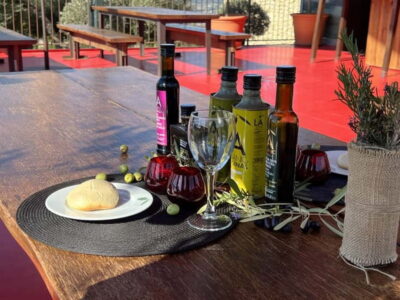
LA Almazara LA Organic, Olive Oil Museum and Tasting
Read our review →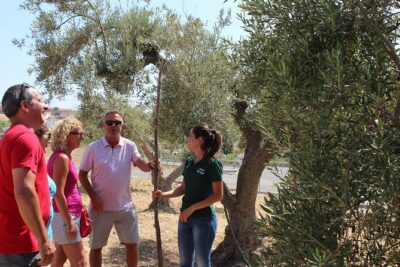
Guided tour and olive oil tasting in Alhaurin el Grande (Málaga)
Read our review →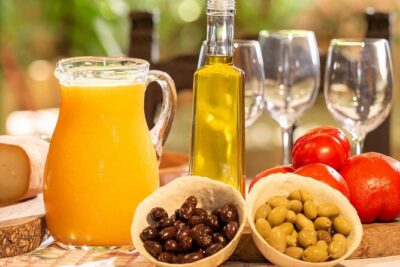
Guided Tasting Tour in 16th century House and Olive Oil Factory
Read our review →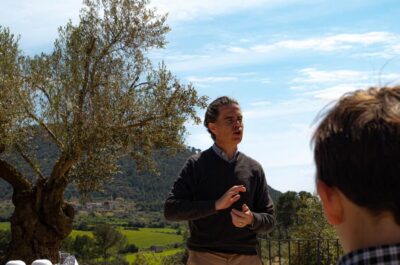
Visit of the olive grove, olive oil tasting and snack
Read our review →
Visit Oil Mill Museum and Olive Oil Tasting in Ronda
Read our review →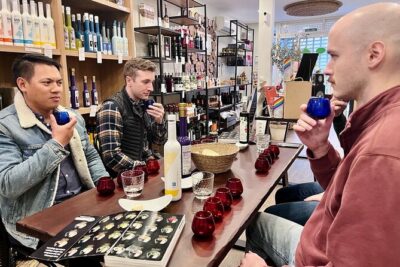
Sóller: Olive Oil Guided Tour and Tasting at Can Det Estate
Read our review →Browse the lists this tour appears in